-

What are the control methods for licorice rust disease?
① Pathogen The pathogen of licorice rust (Uromyces glycyrrhizae) belongs to Basidiomycota → Teliomycetes → Uredinales → Pucciniaceae → the genus Uromyces. ② Disease pattern a. Urediniospore stage In the seedling stage of licorice, infected plants show a light brown uredinium at the tip of leaves that have not yet unfolded. As the young leaves flatten and grow, the spore masses appear densely along the leaf tip and the underside of the leaf, and finally the entire underside of the leaf is covered by spore masses, appearing as a sheet of yellow rust color; generally all leaves of the whole plant become diseased, and diseased plants are noticeably dwarfed.
-
Identification of Honeysuckle Disease Symptoms and Control Methods
Brown spot disease is a common leaf disease that causes plants to grow weakly. It mostly occurs in the middle and late growth stages, with August and September being the peak period of onset, and it is severe under rainy and humid conditions. In the early stage of onset, small brown spots form on the leaves, then expand into brown round lesions or irregular lesions. Grayish-black mold-like substances grow on the underside of the lesions. When the disease is severe, the leaves fall off, affecting plant growth and flowering. Control method: prune diseased leaves, then spray with 1:1.5:200 Bordeaux mixture, once every 7 to 10 days, for 2 to 3 consecutive times. Powdery mildew occurs under warm and dry
-
Honeysuckle cultivation helps farmers increase income and achieve prosperity
Honeysuckle is also known as "double flower"; because it is a climbing woody plant, it is also called honeysuckle vine or mandarin duck vine. The flowers are snow-white when they first open and turn golden yellow after 2-3 days, hence the name honeysuckle. Because its leaves do not wither through winter, and in spring the old leaves slowly fall only as new leaves emerge, it is also called Japanese honeysuckle (Lonicera japonica), a semi-evergreen perennial climbing woody plant. Honeysuckle is one of the 70 precious and commonly used traditional Chinese medicinal materials designated by the State Council. It has wide uses, an extremely high prescription usage rate, a large clinical formula volume, and a very large demand as a raw material for Chinese patent medicines. In the Chinese patent medicines produced year-round by major pharmaceutical enterprises at home and abroad, honeysuckle
-
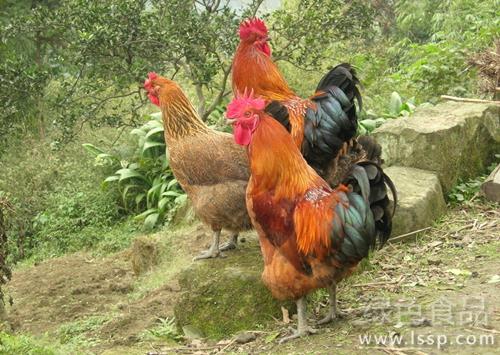
Chicken diseases affect weight gain and egg production, folk remedies to help you
Chicken diseases affect weight gain and egg production, chicken raising requires disease prevention, folk remedies to help you
-
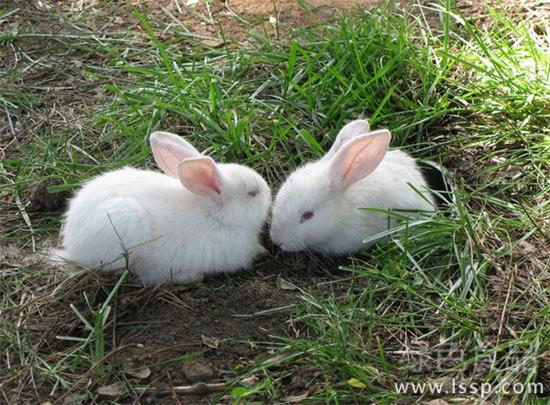
Young rabbits have weak constitutions and poor disease resistance, and are prone to death: an analysis of key points in feeding and management
Young rabbits have weak constitutions and poor disease resistance and are prone to death: key points in the feeding and management of young rabbits
-
Diagnostic Methods and Technical Key Points for Newcastle Disease in Chickens
Since Newcastle disease (ND) was recognized in 1926, many countries have regarded ND as an endemic disease. Except for a few countries that produce poultry at a commercial level, all countries carry out preventive immunization. One of the most characteristic properties of different strains of chicken Newcastle disease virus (NDV) is that their pathogenicity to chickens varies greatly. Based on the clinical symptoms caused in infected chickens, NDV strains can be divided into 5 groups or pathotypes, which are: the viscerotropic velogenic type, characterized by high pathogenicity, with intestinal hemorrhagic lesions commonly seen;
-
What four diseases can pig bile treat? Detailed explanation of its effects and functions
1. Treating indigestion. Take one pig bile, 15 grams of mashed garlic, add some mung bean powder and mix evenly, make into pills the size of apricot kernels, feed each pig 2 times a day, 1 pill each time, 3 days as one course of treatment. 2. Treating gastroenteritis. Stuff soybeans into the pig bile, dry in the air, then take them out, feed each pig soybeans 2 times a day, 20-30 grams each time. 3. Treating pneumonia. Take one fresh pig bile, stuff crushed alum into the bile, filling it appropriately, dry in the air, then grind into powder for later use. For pigs over 50 kg, administer 9-12 grams
-
How to prevent and control sheep hard tick disease? Detailed explanation of practical technical points
Dense infestation of hard ticks on sheep can cause goats to become emaciated, some pregnant ewes to abort, and mortality is very high among lambs and ewes after lambing. Expert disease analysis. (1) Pathogen: The pathogen of this disease is 6 genera of the family Ixodidae, namely Ixodes, Hyalomma, Haemaphysalis, Dermacentor, Rhipicephalus, and Boophilus. Their common morphological features are: the adult body is elongated oval, slightly convex on the dorsal side and flat on the ventral side; there is no distinction between head, thorax, and abdomen, and the three are fused into one body, with a false head at the front end; the false head is composed of a pair of chelicerae, one hypostome, and a pair of palps
-
What are the prevention and treatment methods for rotten foot disease in soft-shelled turtles?
Rotten foot disease in soft-shelled turtles is a turtle disease with a relatively high mortality rate in factory-style turtle farming in recent years. It not only has a long course and is difficult to cure, but even if cured, it easily leaves scars that affect its @#@136@#@ appearance. It is one of the turtle diseases that currently gives turtle farming enterprises the most headaches. Based on many years of practice combined with relevant research, the author introduces the causes and prevention and treatment methods of rotten foot disease in soft-shelled turtles for reference and application by farming units. I. Symptoms of rotten foot disease in soft-shelled turtles At the beginning of the disease, the sick turtle eats normally. As the disease progresses, activity decreases, reactions become sluggish, appetite declines, and it may even stop eating.
-
Prevention Methods and Technical Key Points for Diseases of the European Eel
(1) Do a good job of water disinfection, using effective drugs and methods to kill parasites, viruses and bacteria in the water: ① Evenly splash the whole pond with 0.3 g/m3 (cubic meter) Yuchongqing No. 2 once every 6 days, to kill parasites and eggs in the water and prevent dactylogyrosis; ② Splash the whole pond with 0.2 g/m3 of chlorine-rich disinfectant once every 6 days, to kill viruses and bacteria in the water; ③ Splash the whole pond with 0.3 g/m3 of Manjing once every 6 days, to kill bacteria, fungi and protozoa in the water. Note: the above three
条件筛选