-
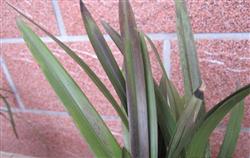
What are the common physiological diseases in orchid cultivation?
What physiological diseases occur in orchid cultivation? Please introduce them and provide guidance on prevention and control methods. For physiological diseases during orchid cultivation, you can refer to the following introduction and prevention and control methods: 1. Sunscald: also known as sunburn, mainly caused by scorching from strong direct sunlight in midsummer. It can be blocked with a shade net to ensure that no direct...
-
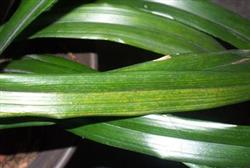
What are some simple pest and disease control methods for orchid growing?
What are some simple pest and disease control methods for orchid growing? Please provide an introduction to the methods. Orchids have quite a few pests and diseases. For example, orchids grown at home are not convenient to treat with pesticides, so the following specifically summarizes methods for controlling orchid pests and diseases at home for reference: common orchid diseases include viral disease, southern blight, leaf...
-

What are the common diseases in orchid cultivation and their prevention and treatment methods?
What diseases need to be prevented and treated in orchid cultivation? Please advise. There are quite a few diseases that need to be prevented and treated in orchid cultivation, and they are listed in detail below for your reference: 1. Orchid anthracnose: also known as brown spot disease, mainly harms orchid leaves. Its symptoms are oval-shaped lesions appearing on the leaf surface, growing from small to large and turning from yellow to black, and in severe cases rotting in continuous patches. ...
-

How can you tell whether rice seeds carry disease?
How do you tell whether rice seeds carry disease? Is there a way to identify it? We ask knowledgeable readers to help guide us. The Zhondi website has compiled methods for identifying whether rice seeds carry disease, listed below for readers' reference. Generally, if rice seeds contain diseased grains infected with bakanae disease, these become seedlings; some have a linear stripe at the suture of the outer glume of the grain, while the surface of the grain shows no symptoms.
-

How is Trichogramma used to control corn pests and diseases?
What is Trichogramma? How does Trichogramma control corn pests and diseases? A netizen asked for an introduction, so Zhongdiwang compiled information on Trichogramma and methods for using Trichogramma to control corn pests and diseases, listed below for netizens' reference. Introduction to Trichogramma: Trichogramma is a type of parasitic natural enemy in nature...
-

What methods can be used in mushroom cultivation to increase yield?
What methods can increase yield in mushroom cultivation? We also ask experienced netizens to help guide. Zhongdiwang has compiled several methods for increasing mushroom yield, listed below for netizens' reference. Method one: Collect the mushroom stems and broken mushrooms cut off during harvesting and processing, wash them clean, cut them into thin slices, add 1-1.5 kg of water per kg and boil...
-

How to Increase the Number of Female Flowers on Cucumbers: Practical Cultivation and Management Methods
How can you increase the number of female flowers on cucumbers? Are there methods to increase the number of female flowers on cucumbers? We would also like experienced growers to share their methods, because cucumbers are a crop that bears both male and female flowers on the same plant, and the number of female flowers can be increased by changing environmental conditions, thereby effectively boosting cucumber yields. Therefore, Zhongdi Web has compiled several ways to increase the number of female flowers on cucumbers...
-

What is Salvia miltiorrhiza southern blight? Growers of Salvia miltiorrhiza need to understand this disease
What is Salvia miltiorrhiza southern blight? What harm does Salvia miltiorrhiza southern blight cause? How to prevent and control it well? Please give guidance. The harm of Salvia miltiorrhiza southern blight: southern blight mainly damages the roots of Salvia miltiorrhiza. In the early stage of the disease, white silky sclerotia appear from the stem base to near the main root in the surface soil layer, the roots suffer from wet rot, and in the later stage the aboveground...
-

What is Atractylodes rhizome root rot? Disease knowledge that Atractylodes growers need to know
What is Atractylodes rhizome root rot? How should Atractylodes rhizome root rot be prevented and controlled? Please explain that in Atractylodes rhizome root rot, the fine roots of the underground part of affected plants generally turn brown and rot, then spread to the upper fleshy rhizome and stems, showing dark brown sunken rotting spots, and the aboveground part begins to wilt. On the cut surface of the rhizome and stem, the vascular bundles show an obvious discoloration ring; in the later stage, the root...
-

Control Methods for Leaf Spot Disease and Silver Y Moth on Achyranthes bidentata
How to control leaf spot disease and silver Y moth on Achyranthes bidentata? Please describe the methods. Leaf spot disease of Achyranthes bidentata: also known as bacterial black spot, mainly affecting leaves and petioles. In the early stage of leaf infection, many water-soaked dark green round to polygonal small spots appear on the leaf surface, which later gradually expand, forming brown to dark brown poly...
条件筛选