-

How to Identify Poisonous Mushrooms? 5 Practical Methods to Teach You
First, look at the color. Poisonous mushrooms have brightly colored caps, with colors such as red, green, ink black, and purple-blue; purple ones in particular are often highly toxic and tend to change color after being picked. Second, look at the shape. Non-poisonous mushrooms have relatively flat caps, smooth surfaces, no rings on the cap surface, and no volva at the base. Poisonous ones have oddly shaped caps, thick and hard cap surfaces, rings and volva on the stem, and thin or thick elongated stems that break easily. Third, look at the secretions. Non-poisonous mushrooms have thick, concentrated secretions that are reddish-brown and tend to change color in the air after being torn apart. Fourth, smell the odor. Non-poisonous mushrooms have a distinctive fragrance, while poisonous mushrooms have a strange
-
Double mushroom showcase: two mushroom varieties each display their strengths
The Horticulture Research Institute of the Provincial Academy of Agricultural Sciences used single-spore hybridization, single-spore systematic selection and molecular marker-assisted selection techniques to breed the low-temperature-tolerant, high-quality, high-yield new brown button mushroom (Agaricus bisporus) variety "Zongxiu No. 1" and the new white button mushroom variety "Yingxiu No. 1", which have passed the first national batch of edible fungi variety certification. The new brown button mushroom variety "Zongxiu No. 1" has a cap surface of natural brown, with white stipe and flesh. The mushroom quality is excellent, the fruiting bodies are round and neat, the caps are thick and firm, and not sunken at the top; the flavor is delicious and the texture is tender. Because its cap is naturally brown, it requires no
-
How to control edible mushroom pests? A few clever methods to teach you
(1) Mix sugar, vinegar, baijiu (Chinese liquor), dichlorvos and water in a ratio of 2:3:4:1:90 to make a sweet-and-sour medicinal solution. Soak gauze or cotton balls in the solution, take them out and wring them dry, then cover them on the surface of the substrate. When the pests smell the sweet-and-sour odor, they crawl onto the medicated cloth or cotton and are poisoned to death. (2) Mix vinegar, sugar, dichlorvos and stir-fried yellow bran in a ratio of 1:5:10:84, and sprinkle it around the mushroom bed and on the substrate surface for the pests to eat. (3) Because pests like to move about in bright, well-lit places, spray Miehailing liquid on light-transmitting plastic film, 1-2 times a day, for 3 consecutive
-
How to trap and kill mushroom mites? Four practical methods to teach you
1. Rapeseed cake trapping method: On the bed surface where mushroom mites are causing damage, lay several pieces of wet cloth, and place gauze on top of the wet cloth. Sprinkle freshly roasted rapeseed cake powder on the gauze. After the mushroom mites gather on the gauze, take it off and scald them to death with boiling water. 2. Sugar and vinegar trapping method: Mix 1 kg of vinegar with 1 kg of water, add 10 g of sucrose, drip in 2 to 4 drops of dichlorvos, mix well, soak the gauze in the prepared sugar and vinegar solution, then lay the gauze on the mushroom bed to trap and kill mushroom mites. 3. Pig bone trapping method: Place fresh pig bones at intervals on the bed surface to attract and gather mushroom mites
-
Detailed explanation of the production process and technical operations at each stage for the nameko mushroom
Production process: ingredient mixing - sterilization - tray filling - cooling and inoculation - mycelial growth - summering - mushroom management - harvesting and processing - flush transition - insulation for fruiting. 1. Ingredient mixing: the most critical requirement for ingredient mixing is to mix raw materials of different compositions evenly, mix dry and wet materials evenly, so that the nutritional ratio of each tray of substrate is uniform, with a water content of 60%. 2. Sterilization: there are mainly two sterilization methods for nameko mushroom substrate: bag steaming and loose material steaming. The vast majority of growers in all areas of the county still follow these two methods, but each has its advantages and disadvantages, and attention should be paid when choosing.
-
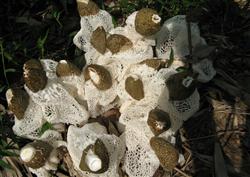
A detailed guide to bamboo fungus (Dictyophora indusiata) cultivation techniques, teaching you how to grow bamboo fungus well
Bamboo fungus cultivation can be carried out by referring to the following methods: 1. Field spawn production. As long as growers purchase bamboo fungus raw materials, they can make their own cultivation spawn at the field edge. From late December to early January, choose a corner of the field and prepare a compost bed for breeding. Use 80% mixed wood sawdust and 20% wheat bran as the culture medium for bamboo fungus spawn, add 110% water, then put it into woven bags, sterilize under normal pressure for 10 hours, take it out and flush water into the bags with clean water to let it drain, then mix in 1% gypsum powder, pile it onto the breeding bed, adopt the method of 2 layers of material and one layer of spawn sowing, and sprinkle some spawn on the surface of the last layer of material. For each sq m of bed, use 20 kg of dry material and 3-4 bottles of bamboo fungus stock spawn. To cultivate 100 sq m of area, only 4 sq m of field spawn production is needed, equal to 25:1. After sowing, cover the surface with woven bags, shade with rice straw, and finally cover with film supported by bamboo strips arched over. After sowing, uncover the film for ventilation once every 3-5 days. After 40-50 days of cultivation, when the mycelium covers the material pile, it becomes field bamboo fungus spawn.
-

High-temperature mushroom cultivation methods and techniques: teach you to grow good mushrooms
How to grow high-temperature mushrooms well? Please advise. High-temperature mushrooms are also known as large fat mushrooms, high-temperature button mushrooms, and double-ring mushrooms, which are taxonomically different from Agaricus bisporus. High-temperature mushrooms have the following characteristics: First, they have stronger adaptability than Agaricus bisporus and are more heat-tolerant; their mycelial growth temperature is 5°C higher than that of Agaricus bisporus, that is...
-
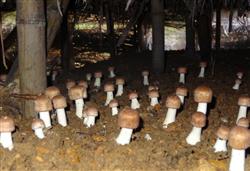
A detailed guide to Agaricus blazei cultivation techniques, teaching you how to grow it with ease
How do you grow Agaricus blazei? Here is the method. You can refer to the following cultivation methods for growing Agaricus blazei: (1) Cultivation materials. The most suitable cultivation material for Agaricus blazei is sugarcane bagasse. Rice straw, wheat straw, cottonseed hulls, corn stalks, thatch, sawdust and the like can also be used as raw materials for cultivation. In one or a mixture of several of the above raw...
条件筛选