-

How to Prevent Heatstroke and Cool Down Pigs in Summer? A Detailed Guide to Practical Methods
Pigs are afraid of heat. In the hot summer, if heatstroke prevention and cooling methods are improper, pigs will suffer heatstroke and in severe cases die, causing unnecessary losses. The heatstroke prevention and cooling methods are as follows: 1. Suitable temperature: Because pigs vary in body weight, their growth and development requirements for suitable temperature differ. For a pig weighing about 20 kg, the suitable ambient temperature is 24°C; for 50 kg, 23°C; for 100 kg, 20°C. In general, the temperature suitable for pig growth is 15-28°C, and the optimal temperature is 22°C. If the temperature reaches 35°C and cooling work cannot keep up, pigs weighing 45 kg
-
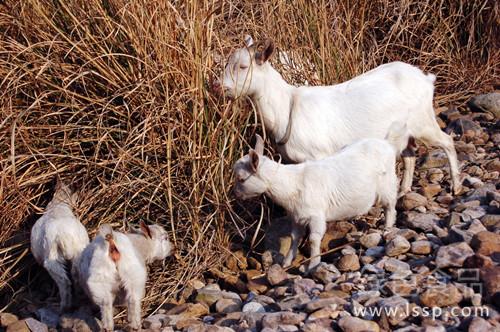
Lamb with arched back, lying down, weak limbs, not moving? White muscle disease prevention and treatment methods are here
Arched back, preferring to lie down, weak limbs, not moving: prevention and treatment methods for lamb white muscle disease
-
How to prevent and control rose downy mildew? These methods you need to master
Downy mildew is a fungal infectious disease. Rose downy mildew develops quickly and is extremely harmful, making it a devastating disease. It mainly affects new shoots and leaves in the middle and lower parts of the plant. In the early stage, chlorotic spots appear on the underside of the lower leaves, and the spots are irregular and covered with a frost-like mold layer. Later they turn dark purple, resembling water-soaked areas, until they become brown. The spots are polygonal and gradually become scorch-like. When the damage is severe, all the leaves drop and the plant dies. Control measures 1. Plant at a reasonable density, no more than 12 plants per square meter, and
-
How Are Candied Jujubes Processed? A Full Breakdown of the Production Flow
Candied jujubes are dried preserves made from fresh jujubes. The processing technique is as follows: 1. Raw material selection: Generally, varieties with large fruit, small pits, loose flesh, thin but tough skin, and relatively little juice should be chosen. The best fruit maturity is when the green color begins to fade and the fruit turns milky white. 2. Grading: Grade the jujube fruits by size, removing deformed fruits, fruits affected by pests or disease, overripe fruits, and damaged fruits. 3. Slitting: To facilitate sugar penetration and flattening into shape, the fruit surface is usually slit. The jujube fruits are fed into the channels of a jujube cutting machine (slitting machine) to be slit, with the cutting depth
-
How to grow Dawn Redwood (Metasequoia glyptostroboides) from seed? A full breakdown of the key techniques
The techniques for growing Dawn Redwood from seed are: 1. Seed collection: Dawn Redwood flowers in early to mid-March, and the cones reach maturity from mid-October to early November of the same year. When the cone scales turn from green to yellowish-brown, crack slightly, and a small amount of seed falls out, the seeds are ready to collect. After the cones are collected, spread them out to air-dry or expose them briefly to the sun; the scales open and the seeds fall out. 2. Seed treatment: Before sowing, soak the seeds in cold water for 3 to 5 hours so they absorb water and swell fully, which aids germination and ensures even emergence. 3. Sowing: From late March to early April,
-
How to grow azaleas? A full breakdown of cultivation and management key points
(1) Potting and repotting: Use yellow mud + leaf mold as the main components, mix in a little river sand as the growing medium, ensure the soil is on the acidic side, and avoid heavy clay soil. When first potting, choose as small a pot as possible, then gradually move to larger pots; azaleas do not need repotting every year, and repotting and soil replacement should only be considered when the roots have filled the pot and water no longer drains out easily. (2) Cutting propagation: The plum rain season is the best time for cuttings, when the new azalea shoots are already semi-lignified and the temperature and humidity are suitable, which is very favorable for the rooting and survival of the cuttings. Take healthy new shoots about 5-7 cm long, remove the lower leaves, keep 3-4 top leaves, and use mountain soil mixed with yellow sand as the base
-
How to Store and Keep Sweet Potatoes Fresh? A Full Breakdown of the Technical Points
Sweet potato (Ipomoea batatas) is a traditional product of Shanting District. Since 2000, 3 townships in this district have processed sweet potato jujube for foreign trade companies every year, with an annual processing volume of 1.6 million kg of sweet potato jujube, and have thus developed a set of sweet potato cellar storage and preservation techniques with very good results. The key technical points are introduced as follows: 1. Cellar. Choose a place with relatively high terrain and soil mainly of red loam to build the cellar. The depth of the cellar is preferably about 3 m, and the two storage chambers for sweet potatoes should be no less than 1.8 m in height and no less than 2.5 m in length and width.
-
Symptoms and control methods of downy mildew in codonopsis (Codonopsis pilosula)
Irregular brown lesions appear on the leaf surface, and a gray mold-like growth (conidiophores and conidia) appears on the underside of the leaves, which can cause the plant to die. Control method: remove diseased plants and fallen leaves and burn them in a centralized manner; during the disease period, spray 300-fold dilution of 40% Shuangyiling or 1000-fold dilution of 70% chlorothalonil, once every 7 to 10 days, for 2 to 3 consecutive times.
-
How to Safely Transport Live Fish? A Full Breakdown of Practical Methods
1. Sealed transport: Sealed transport places the fish and water in a sealed, oxygen-filled container for transport. Its characteristics are small volume and easy portability; for general adult fish transport, within 8 hours there is no need to change the water midway, the seal is tight, and the survival rate is high. A single oxygen fill can keep fry alive in the container for more than 20 hours, and it is even more convenient for long-distance transport of large quantities of fry and fingerlings. Methods such as oxygen-filled sealed transport in plastic bags and oxygen-filled sealed transport in plastic buckets can be used. 1. Oxygen-filled sealed transport in plastic bags: Fill the plastic bag with clean clear water, with the water volume accounting for 1/3 of the bag's total capacity
-
What are the methods for collecting goose down and feathers, and what points should be noted?
1. Plucking from the carcass means collecting all the goose down and feathers at once after slaughter, and it is further divided into three collection methods: hot-water scalding, steam plucking and dry plucking. The hot-water scalding method is also called the soaking-and-scalding method or the scalding-and-defeathering method. After the goose is slaughtered, collect the goose blood and drain it as completely as possible to ensure the quality of the goose carcass and internal organs, so that the carcass has no residual blood, the body surface is clean and attractive, and the meat quality is good. It is best to pull out the large quills on both wings (tip quills, blade quills, nest quills) before scalding and store and sell them separately. Otherwise, once mixed into the feathers, they not only affect down quality but are also treated as waste and wasted. After slaughter, use
条件筛选