Lamb with arched back, lying down, weak limbs, not moving? White muscle disease prevention and treatment methods are here
Lamb white muscle disease is mainly characterized by degeneration and necrosis of skeletal muscle, myocardial fibers, and liver tissue. It is named for the affected muscles being pale in color or even white. This disease occurs mostly in autumn-winter and winter-spring when the climate changes abruptly and green feed is lacking. Affected lambs show an arched back, weak limbs, difficulty moving, and a preference for lying down.
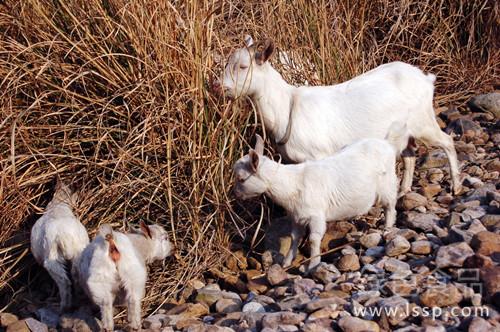
Lamb
(1) Causes: This disease is mainly caused by a deficiency or insufficiency of selenium and vitamin E in the feed, or by excessively high levels of trace elements such as cobalt, zinc, and silver in the feed, which affect the lamb's absorption of selenium. When the selenium content in feed and forage is less than one part per ten million, selenium deficiency can occur. Vitamin E is a natural antioxidant. When storage conditions are poor, with high temperature, excessive humidity, rain exposure or direct sunlight, and prolonged storage, turning rancid and deteriorating, vitamin E is easily decomposed and destroyed. In selenium-deficient areas, the incidence in lambs is high. When selenium and vitamin E are deficient in the sheep's body, normal physiological fat undergoes excessive oxidation, free radicals damage cells and tissues, and tissue cells undergo degenerative changes and necrosis, and may become calcified. The lesions affect the whole body, but the skeletal muscle and myocardium are most severely damaged, which can cause movement disorders and myocardial necrosis.
(2) Symptoms: The main feature is degeneration of skeletal muscle and myocardium. The affected muscles are pale, as if boiled, or even white, hence the name white muscle disease. It mostly occurs as an endemic disease. Lambs aged 3-5 weeks are susceptible, and the mortality rate can sometimes reach 40-60%. The faster a lamb grows, the more susceptible it is to the disease, and the faster it dies.
(3) Prevention and treatment: ① Prevention: a. In selenium-deficient areas, newborn lambs each year should first be given 0.2% sodium selenite solution by subcutaneous or intramuscular injection at 20 days after birth, 1 milliliter each time, and after an interval of 20 days, inject 1.5 milliliters again. The injection start date should be no later than 25 days of age; b. Strengthen the feeding and management of ewes, supply legume forage, and supplement pregnant ewes with 0.2% sodium selenite solution by subcutaneous or intramuscular injection at a dose of 4-6 milliliters, which can prevent lamb white muscle disease.
② Treatment: For affected lambs, 2-3 milliliters of 0.1% sodium selenite solution can be injected subcutaneously in the neck, and after 20 days, inject once more. If 10-15 milligrams of vitamin E is also injected intramuscularly at the same time, the effect is even better.