-
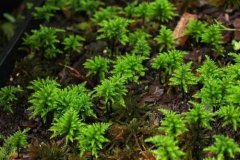
Common bryophyte: Climacium dendroides, how does Climacium dendroides reproduce, can Climacium dendroides be kept underwater, and is it easy to grow?
Climacium dendroides is a medicinal bryophyte. Its main medicinal effect is to relax muscles and stimulate blood circulation, and it also clears heat and removes dampness. Its distribution range is fairly wide, and it can be found in many regions of China, such as Jiangsu, Anhui, Zhejiang and other places. Climacium dendroides mainly grows in damp
-

Duoduo moss is the most beautiful among common mosses. What environment does it suit, and is it easy to grow?
Duoduo moss is a type of bryophyte. Among bryophytes, this moss is known as the most beautiful of all mosses, Duoduo moss. Do you know Duoduo moss? Have you ever seen Duoduo moss, and what do you think of Duoduo moss? Duoduo moss is a drought-tolerant type that dislikes moisture.
-
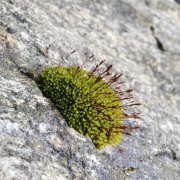
Does wall moss have leaves? A detailed explanation of its living environment, reproduction method and conducting tissue
Wall moss is a bryophyte, belonging to the family Pottiaceae among bryophytes, and is a clump-forming plant, mainly growing on soil under forests or on rocks at an altitude of about 1200 m. This moss is also very widely distributed; in China its main distribution areas are Xinjiang, the northern and southern
-
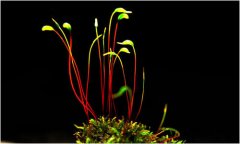
What kind of plant is funaria hygrometrica, and does it bloom and produce seeds?
Funaria hygrometrica is a type of moss plant. This kind of plant reproduces by spores, so it does not bloom and has no seeds. Funaria hygrometrica is currently a relatively popular plant on the market, used to make micro-landscapes. The structure of funaria hygrometrica is rootless, with stems and leaves.
-
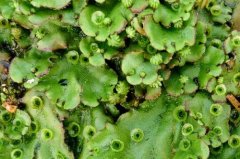
What kind of plant is liverwort? Analysis of rhizome and leaf characteristics and growing environment
Liverwort is a spore plant of the genus Marchantia in the family Marchantiaceae, belonging to the bryophytes. Its appearance is very small, so some people ask whether liverwort has rhizomes and leaves. In fact, it does have stems and leaves, and its roots are rhizoids. Plants of the division Marchantiophyta are generally very small, so they are often overlooked. But
条件筛选