-

Does more dried flowers in jasmine tea mean better quality?
True scented tea is made by scenting the tea base (the raw tea leaf material for scented tea) with fresh flowers. Scenting means the tea base is dried and cooled, then an appropriate amount of fresh jasmine flowers is added, and it is left sealed for a certain time so that, using the tea's adsorption, it fully absorbs the flowers' fragrance; then the flowers are sifted out, and the tea is dried again, giving the finished jasmine tea. High-grade jasmine tea must be scented 3-5 times, even 7 times. The sifted jasmine flowers no longer have fragrance and are called dried flowers or flower dregs. High-grade jasmine tea has no jasmine flower dregs; lower-grade tea, for the sake of appearance, is mixed with a small amount of jasmine flower dregs. From this it can be seen
-
How does the planting density of open-field potatoes affect yield?
Potatoes in Tongren City are mainly grown as an early-maturing vegetable. In order to explore the optimal density for open-field cultivation of virus-free potatoes, the Tongren City Agricultural Technology Station conducted a density trial on open-field cultivation of virus-free potatoes from 2006 to 2007. 1 Materials and Methods 1.1 Overview of the trial site The trial site was selected in the contracted field of Yang Xiuming, Hongdong Group, Mulong Village, Bahuang Town, Tongren City, at an altitude of 260 m. The trial field had sandy loam soil with medium fertility, and the previous crop was Houttuynia cordata (fish mint). 1.2 Trial materials The test variety was first-grade seed potatoes of "virus-free Mira", provided by
-
What disease does a chicken have if it passes white watery droppings?
Based on your description, it may be pullorum disease. Pullorum disease is an infectious disease caused by Salmonella pullorum. After newly hatched chicks are infected, they show listlessness, sensitivity to cold, drowsiness, refusal to eat, and difficulty breathing. The vent is often blocked by white pasty droppings, making defecation difficult. If not treated promptly, most die within 2 weeks. Chicks that recover become carrier birds. Adult chickens often have latent infection and generally show no clinical symptoms; in hens, only reduced egg laying or no egg laying is seen, the ova are shrunken, and the contents are greasy in appearance, with severe cases turning pale bluish or lead-black, and sometimes yolk peritonitis also occurs;
-
What living conditions does the shiitake mushroom need to grow?
The living conditions required for the growth and development of the shiitake mushroom generally include water, nutrients, temperature, air, light, and pH level. 1. Nutrients. The shiitake mushroom is a wood-decaying fungus that lives by decomposing and absorbing the nutrients within wood. In sawdust cultivation, adding some nutrients to the substrate, such as rice bran, wheat bran, sugar, and trace elements, can promote good mycelial development and help achieve high quality and high yield of shiitake mushrooms. 2. Temperature. The shiitake mushroom is a low-temperature, temperature-variable fruiting fungus. The optimum temperature for its spore germination is 22-26°C; the mycelium
-
What does licorice look like? A detailed introduction to its morphological characteristics
Licorice is a perennial herb, reaching 30-80 cm in height, with rhizomes that mostly creep horizontally. The main root is very long and thick, with reddish-brown outer bark. The stems are upright, bearing short white hairs and bristle-like glands. The odd-pinnate compound leaves have 7-17 leaflets, ovate or broadly ovate, with acute or obtuse tips and rounded bases, bearing short hairs and glands on both surfaces. The papilionaceous corolla is pale purple. The pods are flat, sickle-shaped or curved into a ring, densely covered on the outside with bristle-like glands. The flowering period is June to July, and the fruiting period is July to September.
-
Why Does Schisandra Drop Its Flowers and Fruit? Causes and Control Methods
I. Causes of flower and fruit drop 1. Low-temperature freezing damage causes flower drop. In some areas of the east, the last frost period occurs in mid-May, and cold air masses cause physiological chilling injury, causing some flower buds to drop. 2. Herbicide drift causes flower drop. Field herbicides are mostly used in late April and early May, which is exactly the flowering period of Schisandra. Herbicide drift directly damages Schisandra petals, preventing female flowers from pollinating normally and causing flower drop. 3. Pests and diseases cause fruit drop. The main diseases are root rot, leaf blight, and powdery mildew, which cause fruit drop when they occur severely;
-
What ecological characteristics does Lycoris radiata have? A comprehensive analysis of its growth habits
Lycoris radiata, also known as cockroach flower and crow garlic, is a perennial herbaceous flower with persistent roots belonging to the Amaryllidaceae family. It is native to China south of the Qinling Mountains, and is most commonly found in the Yangtze River basin and the southwestern region. It mostly grows in cool, damp rock crevices containing humus, prefers fertile and moist soil, is cold-tolerant, and requires good drainage. It propagates by bulbs, and division replanting is best done once every 3~4 years. When planting, break off the daughter bulbs beside the mother bulb by hand or cut them off with a sharp knife for division replanting. After planting, keep the soil moist; do not water too much, so as to prevent the bulbs from rotting. Before sprouting, topdress
-
Why does Schisandra chinensis experience flower and fruit drop?
I. Flower drop caused by herbicide damage. (1) Symptoms: In spring, newly grown functional leaves curl; in severe cases, the leaves turn black, wither and fall off. When herbicide drift damage occurs during the flowering period, the petals wilt and drop early, pollen viability declines or the pollen dies, pollination becomes difficult, and flowers fail to set fruit; (2) Cause: damage from 2,4-D butyl ester herbicides; (3) Preventive measures: (1) It is recommended to use 2,4-D isooctyl ester instead of 2,4-D butyl ester. (2) If symptoms are found, spray with Kompo Kaipuke 500-fold fulvic acid foliar fertilizer. II. Flower and fruit drop caused by low temperature and freezing damage
-
Why does a tree rose (standard rose) bloom little?
A tree rose refers to a single-stem, tree-like arbor form of rose produced through artificial horticultural techniques, giving it a trunk and a crown, and it retains the rose's characteristic of blooming profusely. However, after many tree roses are planted, they not only fail to retain the rose's profuse-blooming characteristic, but may even fail to bloom at all. Based on years of observation, study and exploration of tree roses, the author summarizes the reasons as follows. 1. Insufficient light and poor ventilation. As everyone knows, the rose is a strong sun-loving flower, and tree roses are no
-
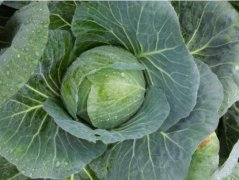
Does Cabbage Contain Sugar? A Detailed Look at Cabbage's Nutritional Value and Benefits
Is cabbage also an anti-cancer crop? Some say it is the best anti-cancer crop - is that true? Let's take a look. Cabbage, also known as "wrapped-heart cabbage" because its leaves roll into a head, is the stem and leaf of the cruciferous plant cabbage, also called "cabbage greens." It originated
条件筛选