-

What does licorice look like? A detailed introduction to its morphological characteristics
Licorice is a perennial herb, reaching 30-80 cm in height, with rhizomes that mostly creep horizontally. The main root is very long and thick, with reddish-brown outer bark. The stems are upright, bearing short white hairs and bristle-like glands. The odd-pinnate compound leaves have 7-17 leaflets, ovate or broadly ovate, with acute or obtuse tips and rounded bases, bearing short hairs and glands on both surfaces. The papilionaceous corolla is pale purple. The pods are flat, sickle-shaped or curved into a ring, densely covered on the outside with bristle-like glands. The flowering period is June to July, and the fruiting period is July to September.
-
Why Does Schisandra Drop Its Flowers and Fruit? Causes and Control Methods
I. Causes of flower and fruit drop 1. Low-temperature freezing damage causes flower drop. In some areas of the east, the last frost period occurs in mid-May, and cold air masses cause physiological chilling injury, causing some flower buds to drop. 2. Herbicide drift causes flower drop. Field herbicides are mostly used in late April and early May, which is exactly the flowering period of Schisandra. Herbicide drift directly damages Schisandra petals, preventing female flowers from pollinating normally and causing flower drop. 3. Pests and diseases cause fruit drop. The main diseases are root rot, leaf blight, and powdery mildew, which cause fruit drop when they occur severely;
-
Why does Schisandra chinensis experience flower and fruit drop?
I. Flower drop caused by herbicide damage. (1) Symptoms: In spring, newly grown functional leaves curl; in severe cases, the leaves turn black, wither and fall off. When herbicide drift damage occurs during the flowering period, the petals wilt and drop early, pollen viability declines or the pollen dies, pollination becomes difficult, and flowers fail to set fruit; (2) Cause: damage from 2,4-D butyl ester herbicides; (3) Preventive measures: (1) It is recommended to use 2,4-D isooctyl ester instead of 2,4-D butyl ester. (2) If symptoms are found, spray with Kompo Kaipuke 500-fold fulvic acid foliar fertilizer. II. Flower and fruit drop caused by low temperature and freezing damage
-

How much does a Luo Han Guo seedling cost per plant? With planting methods
Luo Han Guo seedling prices and planting methods
-
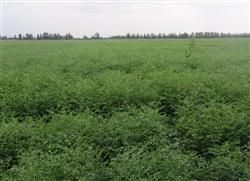
What Does Licorice Look Like? A Detailed Guide to Its Morphological Characteristics and Suitable Growing Environment
[Morphological Characteristics]Licorice (Glycyrrhiza) is a perennial herb, 30-100 cm tall. The entire plant is covered with short white pubescence and glandular hairs. The above-ground stem is upright, woody at the lower part, and the branchlets are angular and green. The leaves are alternate and odd-pinnately compound. There are 3-8 pairs of leaflets, ovate or ovate-elliptic, with entire margins, and the terminal leaflet is larger. The raceme...
条件筛选