-

Detailed Explanation of Licorice Trench-Sowing Direct-Seeding Cultivation Technology
Licorice is a deep-rooted plant. Adopting trench-sowing direct-seeding cultivation technology can solve unfavorable factors such as licorice seedling raising, transplanting, low yield, and long growth cycle, greatly improving its economic benefits. **Tekes County in Ili belongs to the northern temperate continental climate type, and its natural geographical environment is very suitable for licorice growth. In 2005, we used the deep-rooted plant trench-planting machine for licorice cultivation for the first time in the whole of Xinjiang, changing the conventional licorice planting model. The trench-sowing direct-seeding cultivation technology is now introduced as follows. 1 Site selection, base fertilizer application, land preparation Select fertile
-
Current Status, Existing Problems and Future Development Directions of Sericulture in Guizhou
1 Current Status of Development As a traditional export industry of China, the cocoon and silk industry, since entering the "10th Five-Year Plan" period, has adhered to a market-oriented approach, taken development as its theme, and relied on reform, opening up and scientific and technological progress as its driving forces. By comprehensively applying the state's reform and development policies, strengthening macro-control, and intensifying structural adjustment, it has effectively overcome the phenomenon of "drastic fluctuations," enabling the entire industry to emerge from the trough and basically maintain sustained and steady development. The quality of economic operation has improved markedly, with production capacity, efficiency and export earnings surpassing the best historical years. "Chinese silk
-
Can African violets tolerate strong direct sunlight?
The native environment of the African violet is beneath large trees on high mountains, where the climate is stable and shady, and sunlight only reaches the leaves after being filtered through the foliage. Therefore, when growing African violets, you must take their own characteristics into account and must not treat them like ordinary flowering plants. Most flowering plants need more than 4 hours of direct sunlight each day in order to bloom. But the African violet is a rare exception: if you place it in a window with direct sunlight, the result is either yellowed, withered leaves or a blooming season with no flowers. Because the Af
-
Detailed Explanation of Key Techniques for Direct Seeding and Seedling Cultivation of Schisandra chinensis in Open Fields
Select a sunny plot with loose soil, flat terrain, moist soil and no water accumulation, and make a low bed 1.2---1.4m wide, 10m long, with a level surface. Sowing uses the drill method. Before the autumn freeze, open shallow furrows 2-3cm deep on the prepared seedbed at a row spacing of 15cm, sow 100g of seeds per bed, cover with soil 3---4cm thick, water thoroughly, press down lightly, then cover with 10cm of leaves or a layer of rice straw to maintain moisture and protect against cold, and remove it when the seedlings emerge. To prevent damping-off and other soil-borne diseases,
-
Water-seeded direct-seeded rice has many advantages; what exactly are they?
Depending on the soil moisture conditions at the time of land preparation and the method of land preparation and sowing, direct-seeded rice can be divided into dry direct seeding and water direct seeding. Dry direct seeding can further be divided into methods such as sowing on stubble first followed by shallow rotary tillage, and rotary tillage first followed by sowing. The land preparation and sowing procedure for water direct seeding is roughly as follows: after applying base fertilizer, add water and rotary tillage, open furrows, level the field with water, then sow and press the seeds into the soil. Compared with dry direct-seeded rice, water direct seeding has the following advantages. First, more seedlings emerge and emergence is uniform, which is conducive to cultivating strong seedlings. In water direct-seeded fields, the bed surface is level, and there is mud slurry on top; after pressing the seeds into the soil, no seeds are left exposed, emergence is fast and
-
Detailed Explanation of Key Techniques for Directional Cultivation of Amur Maple Seedlings
Amur maple (Acer ginnala) is a deciduous large shrub or small tree of the genus Acer in the family Aceraceae. Its leaves and fruits are ornamental, and the leaf shape is beautiful. In autumn the leaf color turns brilliant red, particularly eye-catching; in summer the newly formed samaras are pink, very delicate and distinctive. It is an excellent ornamental greening tree species in northern regions, suitable for specimen planting, row planting, group planting, or pruning into hedges and topiary trees. In Heilongjiang Province it is mainly produced in the Xiaoxing'anling Mountains and the mountainous areas to the south; it is distributed in the northeastern, northern and northwestern provinces and regions of China; in addition, it is also distributed in Japan, Korea, eastern Siberia of Russia and Mongolia. 1 Planting
-
Producing Rhododendrons for Landscaping: Topiary Is the Direction, Don't Use Wild-Collected Rootstock
Regarding the phenomenon of some nursery growers using wild rhododendrons as rootstock to cultivate topiary rhododendrons for landscaping projects, Li Yong, secretary-general of the Rhododendron Branch of the China Flower Association, recently stated: topiary is currently an effective way to increase the added value of landscaping rhododendrons, but the practice of using wild-collected rootstock for grafting is not advocated. It is understood that although there are not many nurseries in China mainly growing rhododendrons for landscaping projects, many places in the south have already achieved year-round supply. Therefore, in the absence of disasters, the domestic supply of landscaping rhododendrons is currently basically saturated
-
Why can't fresh wheat chaff be fed directly to livestock?
After the wheat is harvested in wheat-producing areas, large livestock have fresh wheat chaff to eat. Many farmers are accustomed to feeding fresh wheat chaff directly to livestock, but this feeding method is not good. Because when livestock eat untreated fresh wheat chaff, the oral mucosa is often punctured by wheat awns, causing stomatitis. After livestock develop stomatitis, they want to eat but refuse food; they take feed into their mouths but dare not chew, or after chewing a few times they spit the feed back out; white turbid mucus continuously flows from the mouth; in the oral cavity, wheat awns can be seen stuck all over the tooth roots and the base of the tongue. To prevent oral
-
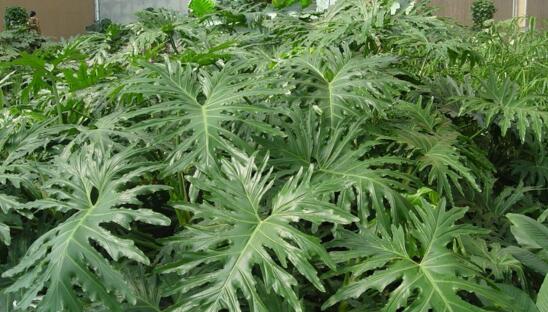
How to grow Philodendron bipinnatifidum? Care methods and things to note, avoid direct strong sunlight
As a foliage plant, Philodendron bipinnatifidum has long been deeply loved by people. It can be placed in living rooms, gardens and many other places, and can be said to be a very easy plant to grow, but if you want to grow it well, you still need some techniques
-
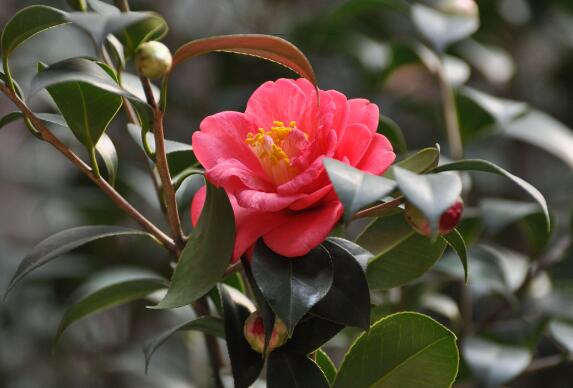
How to Grow and Care for Camellia sasanqua: Avoid Direct Strong Light
Camellia sasanqua and plum blossoms are certainly familiar to everyone; they are among China's top ten famous flowers. But do you know about Camellia sasanqua? It is said that Camellia sasanqua gets its name because its leaves resemble those of tea and its flowers resemble plum blossoms. It is a beautiful flowering plant. In daily life, many beginners want to know how to grow Camellia sasanqua. In response,
条件筛选