-

What management work needs to be done before planting mangoes in the field?
1. Marking out Marking out and digging holes: The orchard is first plowed twice and harrowed twice, with deep turning and ripening to a depth of 30cm. For orchards on hillsides, planting is done along the contour. First, from top to bottom, establish a vertical baseline, and according to the baseline and the plant spacing, mark out the planting points for two contour planting rows at the middle and foot of the hillside to the left and right. Then, using two points to form a line, mark out the planting points for the other contour planting rows. For flatland orchards, use the main road and branch roads as baselines and mark points according to the specified plant and row spacing, with each planting row parallel or perpendicular to the roads. The planting hole size is 80×70×60cm, and holes should be dug 2-3 months before planting.
-
How to Select and Dig Bamboo Shoots? Master the Scientific Harvesting Techniques
Bamboo shoots have been regarded as a rare delicacy among vegetables in China since ancient times. Bamboo shoots are a traditional Chinese delicacy, fragrant in taste and crisp in texture, with an extremely long history of consumption and cultivation. In the Book of Songs there are verses such as "the substance added to the beans, pickled bamboo shoots and minced fish" and "what sound does the flute make, only bamboo shoots and cattails," indicating that the Chinese people have a history of eating bamboo shoots dating back 2500 to 3000 years.
-
How to Grow Chinese Yam with the Suspended-Hole Method? A Detailed Guide Anyone Can Follow at a Glance
Abstract Digging holes for suspended planting means making holes of a suitable size according to the tuber length of the Chinese yam. The hole-digging tool can be a ring-shaped soil shovel. Choose a field with high, dry terrain, a low groundwater table, and convenient drainage and irrigation. Dig the holes in late autumn or early winter, and place the cut Chinese yam segments
-
What are the basic points of grape growing?
Summary Digging holes and raising seedlings: Before planting, first dig the seedling holes and apply an appropriate amount of fertilizer. Before sowing, the seeds can be pre-germinated, and transplanting can be done around April-May. Timely watering: After planting, water reasonably according to different growth stages and climate conditions. Trellising and guiding vines: Set
-
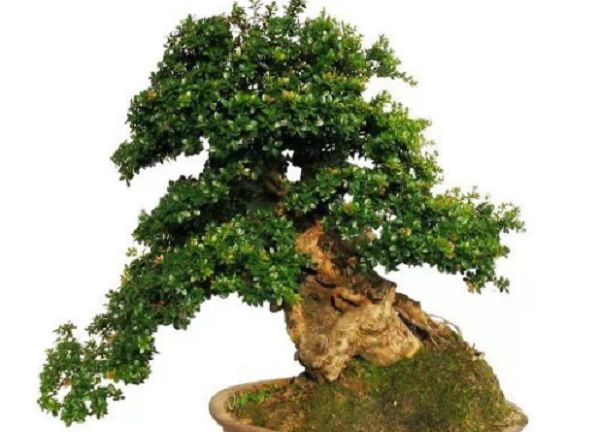
What are the precautions for digging up Syzygium buxifolium stumps in the wild
Precautions for digging up Syzygium buxifolium stumps in the wild
-
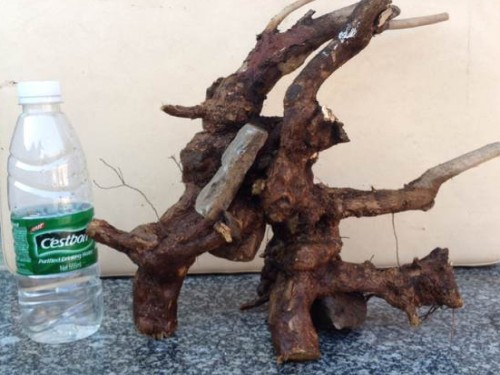
Methods and techniques for digging bonsai stock from the wild
The older a bonsai, the higher its value. Although collecting wild stumps cannot serve as the main material source for mass production because such material is hard to obtain, it can be used as an auxiliary means of creating distinctive bonsai. Its characteristics are rapid formation and an easy ability to embody the quaint, elegant charm of bonsai, but it destroys wild plant resources. Therefore
-
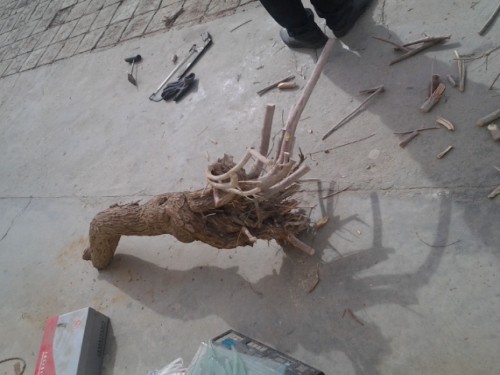
Detailed Explanation of Field Digging Techniques for Bonsai Stump Material
The classification of stump bonsai should include wild stumps and nursery-grown types. The former refers to bonsai made from dug-up wild stumps, whose main characteristic is aged and archaic simplicity; the latter refers to bonsai made from artificially cultivated seedlings, whose main characteristic is rigorous composition. The two must not be lumped together. To dig up tree stumps in the field, first do the preparatory work before digging.
-
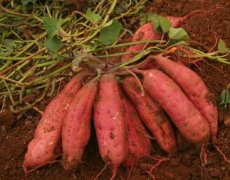
Sweet potato mechanical harvesting is highly efficient, making vine removal, digging and harvesting simple and labor-saving
Traditional sweet potato harvesting is extremely labor-intensive, and imported sweet potato harvesters have many drawbacks. The Taoyuan District Agricultural Improvement Station developed the "vine removal and harvesting combined operation machine." The model is smaller than imported sweet potato harvesters, costs less than half as much, and is 60 to 80 times faster than manual harvesting.
-
20171226 Complete Guide to Crayfish Farming Techniques! Trench digging, embankment building, grass planting, and moss treatment are all covered. How much can you earn from farming 20 mu of crayfish? Baidu Zhidao, 1 answer. Answer date: August 7, 2018.
Australian freshwater crayfish farming and breeding techniques [Readership: 6606] 03-29 The Australian freshwater crayfish was introduced into China from Australia in 1992. It has a large body size, fast growth rate, omnivorous feeding habits, tolerance to low oxygen, strong adaptability, and a high meat yield [More]. In recent years, many places have been promoting techniques for farming crayfish in rice fields, and many places have escaped poverty and become prosperous because of farming crayfish in rice fields. By adopting rice-field crayfish farming, grain growth is ensured while crayfish farming can also generate income, achieving two goals at once. There are [More]
-
Turning corncobs from waste into treasure, digging gold out of small waste material
Digging "gold" out of corncobs
条件筛选