What are the precautions for digging up Syzygium buxifolium stumps in the wild
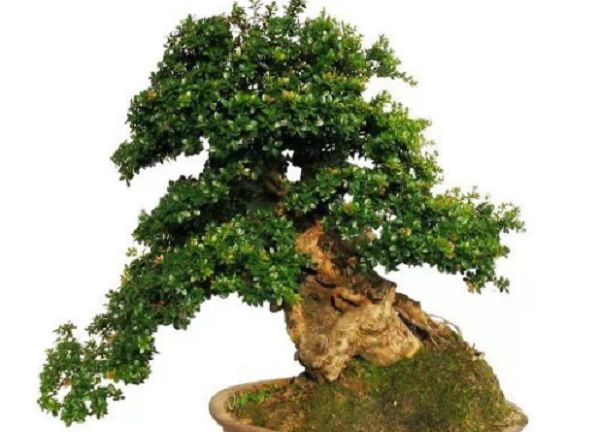
There are many varieties of Syzygium buxifolium, more than 20 in total. Their classification is mainly based on differences in leaf type, leaf color, and leaf arrangement. Syzygium buxifolium of different leaf types and leaf colors grows differently and has somewhat different habits. After more than ten years of observation, we have found that Syzygium buxifolium native to low-altitude places has a stronger ability to adapt to potting than those from high altitudes; those with dark leaf color have a stronger ability to adapt to potting than those with light leaf color; those with small leaves have a stronger ability to adapt to potting than those with large leaves; those with pointed leaf shapes have a stronger ability to adapt to potting than those with round leaf shapes.
Some friends fail as soon as they start keeping bonsai, and the reason often lies in improper collection of the stump or improper initial cultivation of the rough stock. A good pot of Syzygium buxifolium bonsai must pay attention to the protection and care of the root system and branches and trunk starting from the moment the stump is dug. If buying at the market, you must choose stump material with healthy branches (new branches of sufficient length) and bright bark color. Generally speaking, only stumps that have been off the mountain for more than 4 years make it easy to tell their quality. Therefore, it is very important to ask clearly about the number of years since the stump was collected before buying.
Syzygium buxifolium is evergreen all year round, and its dormant period is not obvious. Syzygium buxifolium itself has sufficient nutrients and strong regenerative ability. Except in summer, it can be collected in spring, autumn, and winter, with the period around Qingming being the best. When digging up stumps in the wild, pay attention to the following points:
1. Because Syzygium buxifolium likes sunlight, it generally grows in sunny, wind-sheltered barren hills and poor land, and ideal stumps can often be found on mountain roadsides, cliffs, and other places.
2. When digging up stumps in the wild, choose old stumps that are aged and peculiar, vigorous and twisted, with exposed roots and knots. Syzygium buxifolium mostly grows in clusters, and its root masses are endlessly varied, so they can be used to create forms in which roots replace the trunk.
3. When collecting Syzygium buxifolium, it is not necessary to keep a soil ball. After digging, if there is water on the mountain, the roots of the stump can be soaked in water, and when coming down the mountain, wrap the stump in plastic and transport it back. For larger stumps, field mud can be used to make a false soil ball around the roots, and then it can be wrapped in plastic and transported back.
4. Treatment of the stump. After the stump is dug back, cut off the damaged roots, and saw the bottom to the final position in one go according to the requirements of the bonsai. However, note that the upper branches should be left 5cm longer, because Syzygium buxifolium generally sprouts 5cm below the saw cut. After the shaping and pruning are completed, place the roots of the stump into muddy slurry mixed with rooting powder, and then plant it.
5. Cultivation of the rough stock. Planting is divided into two types: field planting and pot planting. Syzygium buxifolium does not have high soil requirements; sandy loess, vegetable garden soil, and pond mud are all fine. During the rough stock cultivation stage, especially in the early period, it must be planted deep, that is, bury the soil to about 10cm-15cm above the roots, spray clear water on the branches every morning, noon, and evening, and use a shade net to block sunlight. Generally, sprouts will appear in about one month. When the base of the new sprouts and the leaves turn dark green, it proves that the stump has grown new roots, and after that, light can be gradually increased.