-

What are the similarities and differences between Chinese and American cotton grading standards?
The United States is a major cotton-producing and cotton-consuming country, with half of its annual cotton production used for domestic consumption and half for export. As a result, American cotton standards have an important influence worldwide and are used by 24 countries and regions; they are also known as the universal cotton standards. Below is a brief introduction to the similarities and differences between Chinese and American cotton grading standards: Cotton grade is a reflection of the overall quality performance of cotton, and the cotton standards of most cotton-producing countries in the world include a cotton grade inspection item. In the U.S. cotton standard
-
How large are the DNA differences between different breeds of dogs?
In an issue of the journal Science, researchers wrote that the genetic differences between different breeds of dogs are unusually pronounced, so much so that they can determine a dog's breed based solely on its DNA. This phenomenon is related to humans controlling inbreeding in dogs over the past 300 years to obtain different dog characteristics. This shows that humans can indeed play an important role in the field of species evolution. When researchers analyzed the DNA genetic code of dogs in an attempt to further understand the genetic factors of human diseases, they were surprised to find that, in just the past few hundred years, not
-
Pear storage methods are different and require tailored treatment
Master the storage characteristics of pears. Generally, early-maturing varieties do not store well, while mid- and late-maturing varieties and white pear varieties (such as Ya pear) store relatively well. The storage temperature for pears is generally -1°C to 3°C, and the relative humidity is 90% to 95%. Ya pear, Xuehua pear, Ci pear, Changba pear and others are extremely sensitive to carbon dioxide and low oxygen, and are not suitable for controlled atmosphere storage. During storage, be careful to prevent water loss. Pear fruits contain a lot of water, and once they lose water severely during storage, rotten spots, rotten fruit or hollow dried fruit will appear. Therefore, attention should be paid to increasing the humidity in the warehouse
-
Differences Between the Brown Marmorated Stink Bug and the Yellow-Spotted Stink Bug and Their Identification
The brown marmorated stink bug and the yellow-spotted stink bug both belong to the order Hemiptera, superfamily Pentatomoidea, family Pentatomidae, and both are pests that cause relatively serious damage to ornamental garden plants. The brown marmorated stink bug, scientific name Halyomorpha picus, is also known as the stinkwood stink bug, the stink bug, and the tea-colored stink bug. Host: this species has a wide diet and harms many garden plants such as black locust, elm, fig, lilac, pomegranate, paulownia, peach, and crabapple. Damage symptoms: adults and nymphs suck the sap of tender leaves, tender stems, and fruits, and in severe cases cause leaves to turn yellow and dry, and to fall
-

What are the management methods for foxes at different stages?
Management methods for foxes at different stages
-
Key Points on the Differential Diagnosis, Prevention and Control of Newcastle Disease and Avian Influenza in Chickens
Newcastle disease and avian influenza in chickens are both highly contagious diseases caused by viruses. They can occur in all four seasons, and both are more common in winter and spring. In poultry farming production, both diseases occur frequently, and the losses they cause are very serious. The vast majority of farmers attach great importance to this and have intensified various prevention and control efforts, but they are not very clear about the differences between these two diseases. The following is a comparison of Newcastle disease and avian influenza in chickens from several aspects including pathogens, clinical symptoms, and pathological changes. Pathogens: fowl plague and avian influenza
-

Detailed Guide to Management Methods for Sunflowers at Different Growth Stages
Management of Sunflowers at Different Growth Stages
-
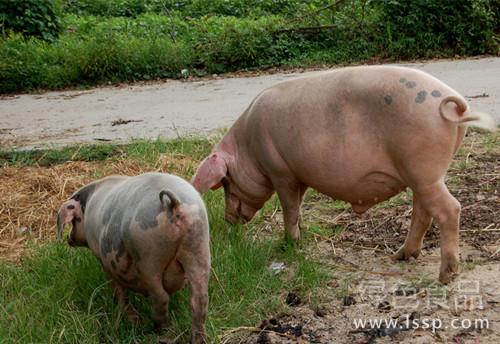
Detailed Explanation of Body Condition and Feed Formulas for Sows at Different Stages
Body Condition of Sows at Different Stages and Feed Formulas for Sows at Different Stages
-
Differences Between Pleione and Aspidistra and How to Identify Them
Scientific name: Pleione bulbocodioides. Alternative name: Yiyelan (one-leaf orchid). Family and genus: Orchidaceae, perennial herb. Morphological features: When Pleione blooms, a single leaf grows beside the flower, which is why it is also called Yiyelan (one-leaf orchid), while the name Pleione comes from its garlic-like pseudobulb. It is terrestrial or epiphytic; the pseudobulb is ovoid or conical, 2 cm to 3 cm long; the flowering period is April to June; the upright inflorescence is 15 cm tall to
-
Planting Performance and Application Prospects of Different Simplified Rice Cultivation Methods
1 Planting performance of several simplified rice cultivation methods 1.1.1 Actual harvested yield. The actual harvested yield was highest for machine-transplanted rice, with an average yield of 9000 kg/hm2; followed by hand-transplanted rice, with an average yield of 8850 kg/hm2; third was seedling-throwing rice, with an average yield of 8700 kg/hm2; fourth was wheat-intercropped rice, with a yield of 8400 kg/hm2; direct-seeded rice had the lowest yield, averaging 8250 kg/hm2. 1.1.2 Number of panicles per unit. Direct
条件筛选