-
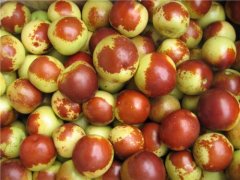
Will winter jujubes turn fully red as their color develops? Selection methods and the use of rapid-reddening agents
Winter jujubes generally have a color that is a mix of green and red, but some winter jujubes are purple-red. Why is that? Why are winter jujubes so sweet? Many people think that only red jujubes count as ripe. Some vendors, in order to attract consumers, treat green jujubes to make them red.
-
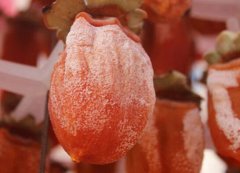
How to Make Homemade Dried Persimmons That Develop a Sugary Frost? The Complete Guide to Making Them
Delicious dried persimmons always have a naturally formed white frost on their surface. This comes from the persimmons naturally releasing it during the air-drying process. Generally speaking, as long as the persimmons are air-dried by hand and naturally, this layer of frost is fairly easy to produce. The method for making dried persimmons is as follows: 1. Harvest
-
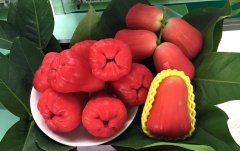
New wax apple variety "Honey Peach Wax Apple" from Taiwan, China hits the market, developed by the Kaohsiung Agricultural Improvement Station
The Kaohsiung Agricultural Improvement Station has bred a new wax apple variety, "Kaohsiung No. 2 - Spring Peach," which is currently the largest-fruited wax apple variety, with an appealing pink-peach color, known as the "Honey Peach Wax Apple," and its fiberless texture makes it very suitable for the elderly; it is now available in small quantities. Kaohsiung District Agricultural
-

How many years does it take for a sea buckthorn tree to bear fruit?
The sea buckthorn has a well-developed root system and the characteristic of producing nitrogen-fixing root nodules, and is extremely tolerant of drought, poor soil, and salinity and alkalinity, so it is used as an excellent tree species for windbreaks and sand fixation, water and soil conservation, and soil improvement, and has been promoted for planting in many areas across the country, and its fruit is also edible.
-
How to treat continuous cropping diseases in vegetables? These control methods are very practical
The development of greenhouse production has brought obvious economic benefits to farmers, but after greenhouses have been used for many years, various diseases, especially soil-borne diseases, have become increasingly serious, and this has become a problem that must be taken seriously in greenhouse vegetable production. The best way to solve continuous cropping disease is to adopt comprehensive measures.
-
What Soil Is Best for Growing Mint? A Detailed Guide to Soil Selection Tips
With the development of agricultural technology, more and more plants have entered countless households as potted plants, and among them mint has become a favorite potted plant thanks to its fresh scent and ease of cultivation. So when growing mint, what soil is best?
-
What to Do About Herbicide Damage in Tomatoes? A Detailed Guide to Practical Remedies
Tomatoes can suffer herbicide damage when pesticides are applied improperly during growth, so what should you do when tomatoes develop herbicide damage? 1. Tomato growth habits. Tomato is a plant of the Solanaceae family and the Solanum genus. The tomato fruit is rich in nutrients and has a distinctive flavor. It can be eaten raw, cooked, or processed into tomato paste, juice, or canned whole fruit.
-
How to Grow Bamboo? A Detailed Guide to Care Methods
With the development of the economy, more and more people like to grow one or two plants indoors to improve the environment and cultivate their character. So when growing bamboo indoors, what points need attention? 1. How to grow bamboo. If you want potted bamboo to survive and grow strong
-
What to Do When Clivia Leaves Develop Spots? Common Disease Prevention and Control Methods
Nowadays many people like to grow some plants at home, which not only helps pass the time but also makes the home feel more cozy. More and more people like to keep clivia at home. You can often hear people say that the leaves of their clivia have developed spots.
-
Why Bear's Paw Loses Leaves and Develops Black Spots in Summer, and How to Fix It
Bear's Paw (Cotyledon tomentosa) has a very cute appearance. It is not only small and compact, but each fleshy leaf looks like a little bear paw. Under sunlight, the very tip of each paw slowly turns reddish-brown, and paired with its fuzzy surface, it is especially cute and delicate, deeply loved by plant enthusiasts.
条件筛选