-

How to Manage Houttuynia cordata? Detailed Explanation of Key Planting Techniques
How Should Houttuynia cordata Be Managed
-

-

Avian Influenza Prevention and Control Research Center Officially Unveiled! Big Data Monitors High-Risk Areas, Establishes Epidemic Prevention Model
Avian Influenza Prevention and Control Research Center Officially Unveiled! Big Data Monitors High-Risk Areas, Establishes Epidemic Prevention Model
-
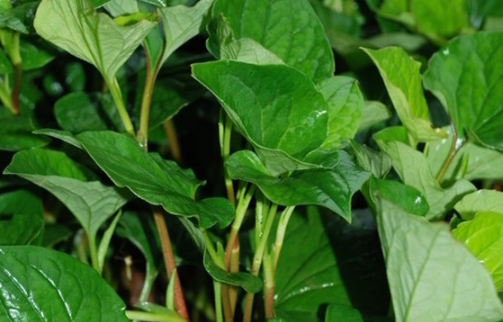
How to grow Houttuynia cordata? Planting methods and precautions
1. Light Houttuynia cordata is rather afraid of sunlight, and it fears it even more when the light is intense. If the plant is grown on a sun-facing balcony, to let it grow healthily, you need to shade it, or place the plant on the shady side or the side with weaker light. 2. Temperature Although Houttuynia cordata is fairly shade-tolerant
-

What are the cultivation methods and precautions for Houttuynia cordata
Houttuynia cordata (houttuyniacordata) Aliases: fish mint, stinky grass, etc. Family and genus: Saururaceae, Houttuynia Genus. Morphological characteristics: perennial herb, 15-50 cm tall, the whole plant has a fishy odor. The lower part of the stem creeps on the ground and roots, the upper part is upright, usually hairless. Simple leaves alternate, leaf blades heart-shaped
-
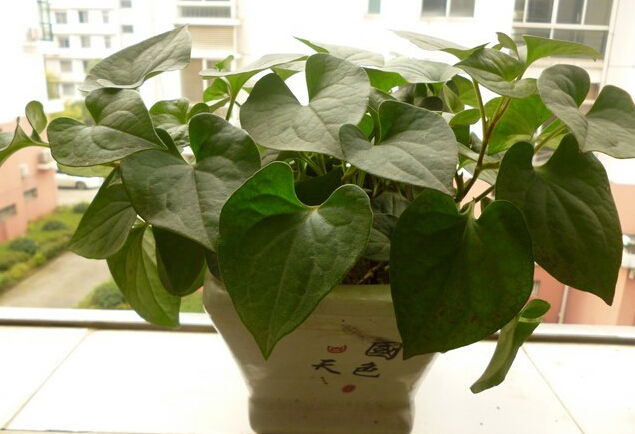
What are the cultivation methods and precautions for Houttuynia cordata (fish mint)
The seed germination rate is not high; germination is best at an alternating temperature of 17-25°C, with a germination rate of about 20%. Propagation by division, cuttings and rhizomes is all possible. Division propagation is done from late March to April: dig out the mother plant, divide it and transplant the divisions into a sandy soil seedbed to raise seedlings, or transplant them directly. Cuttings can be taken in spring and summer
-

The agricultural and rural big data platform is planned to be launched for construction
**Aims to build an agricultural and rural big data platform
-

A Detailed Guide to Magnolia denudata Propagation Methods and Key Techniques
1. Seed propagation. Magnolia denudata seeds mature in September to October in northern regions. Harvest them when the fruit turns red and partially splits open, and select plump, brightly colored seeds for sowing. Magnolia denudata seeds are rich in oil and cannot be stored, so they should be sown immediately after harvest. Because the red seed coat is fragrant and easily eaten by rats, before sowing the seeds must be treated with a rodent-repellent agent, or layered in a wooden bucket or vat with one layer of river sand and one layer of seeds, laid out layer by layer, keeping a certain temperature and humidity for germination. Once the red coat has rotted away and no longer smells fragrant, plant the sprouted seeds in the soil. Fresh seeds can also be placed in
-
A Detailed Guide to Practical Techniques for Cutting Propagation of Japanese Yew (Taxus cuspidata)
Japanese yew, also known as yew, red cypress pine, and vermilion tree, is a tree or large shrub of the Taxaceae family. Its bark is reddish-brown, thin, with shallow fissures. The leaves are arranged irregularly on two sides, slightly sickle-shaped, dark green on the surface, with two gray stomatal bands on the underside. One-year-old branches are smooth and hairless, dark green. It can reach a height of 20 m and a diameter at breast height of 1 m. The crown is ovate, broadly ovate, or triangular-ovate, with densely growing branches. The seeds are purplish-red, ovate, with a fleshy aril. The flowering period is May to June, the fruit ripening period is October, and the lifespan is 200 to
-
Detailed Explanation of Artificial Cultivation Techniques for Taxus cuspidata
Taxus cuspidata (Taxus cuspidata sieb. et Zucc.), also known as yew, red cypress pine, zhumu, and rice tree. It is a plant of the genus Taxus in the family Taxaceae. An evergreen tree, a shade-tolerant species. It is distributed in southeastern Jilin Province, eastern Heilongjiang Province, and eastern Liaoning. It is also found in Japan, Korea, and Russia (Far East region). There is a very small distribution in the central Zhongshan plant resource area of Ji'an City. At elevations between 600 m and 1200 m, in forests with humus and
条件筛选