-

Prevention Methods for Tailocyst Disease in Mandarin Fish Aquaculture
Mandarin fish tailocyst disease was widespread in our province last year, causing significant economic losses to farmers. Mandarin fish tailocyst worms parasitize the gills of fish. The cysts are round or tumor-shaped, white, formed by the aggregation of multiple small oval capsules. The sites where the cysts parasitize cause localized
-
How to prevent and control pests and diseases during soybean cultivation?
I) Control of cyst nematode. 1. Strengthen quarantine and protect disease-free areas: it is forbidden to transfer soybean seeds from diseased areas. 2. Agricultural control: implement crop rotation of soybean with gramineous crops or non-host plants such as cotton; where conditions permit, paddy-upland rotation is best, and this is currently the most important
-
Causes, Symptoms, and Prevention and Treatment of Cystitis in Dogs
[Causes] First, infection by pathogenic microorganisms, such as Escherichia coli, Staphylococcus, Streptococcus, Proteus, etc. Second, spread of inflammation from adjacent organs. Such as nephritis, ureteritis, prostatitis, urethritis, especially in female dogs with vaginitis or endometritis, the inflammation very easily spreads to the bladder and causes cystitis. Third, mechanical injury. Such as catheter injury, bladder stones, etc. can all stimulate the mucosa and cause inflammation. [Key Points of Diagnosis] The typical symptoms are
-
What to Do About Soybean Cyst Nematode (Dahuolong Yangzi)? A Detailed Guide to Prevention and Control
Soybean cyst nematode disease, also known as Verticillium wilt, yellow dwarf disease, and root nematode disease, is called "dahuolong yangzi" (fire dragon seedling) by farmers. According to reports, more than 22.5 million mu of soybeans in 14 provinces, municipalities, and autonomous regions in China have been infected with this disease. Soybean cyst nematode disease damages the soybean root system, causing poor growth and development of the aboveground parts of the plant, shortened and dwarfed internodes, yellowing leaves, reduced pod set, and lower yield, with general yield reductions of 10%-30%. Severely affected fields may suffer almost total crop loss. After soybeans are parasitized by nematodes, the main root and lateral roots develop poorly, and fibrous roots increase,
-
Detailed Explanation of Prevention and Treatment Methods for Chicken Oviduct Cysts
Content: In recent years, a disease characterized by low egg production rate and poor development or fluid accumulation in the oviduct has appeared in laying hen flocks. This disease mostly occurs between 150-200 days of age, and once it occurs, there is no cure, only culling, resulting in huge losses. Through epidemiological research and experimental testing, it is believed that this disease is caused by infectious bronchitis virus. I. Epidemiology This disease can occur in chicken flocks of all breeds. Before 2000, it was mostly found in parent breeder flocks. In recent years, the incidence rate in commercial flocks has increased significantly. After the flock begins laying
-
What are the prevention and treatment methods for porcine cysticercus tenuicollis disease?
After a pig is slaughtered, there is a transparent cyst-like object on the intestines, resembling a blister, ranging in size from a soybean to an egg, commonly known as a "water bell". If examined carefully, a milky-white segment can be seen inside. It is a parasite of livestock, known in veterinary medicine as cysticercus tenuicollis disease. When a dog swallows the still-living cysticercus tenuicollis, the scolex extends from the dog's small intestinal mucosa, attaches to the intestinal wall, and gradually develops into an adult worm - Taenia hydatigena. The adult worm consists of 250-300 proglottids, reaching 150-50
-
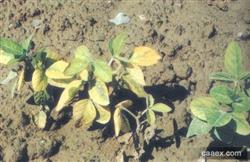
Identification and Control Methods of Soybean Cyst Nematode Disease
Soybean cyst nematode disease, also called "huolongyangzi" disease, is caused by nematodes parasitizing the roots of soybean. Diseased plants have poorly developed root systems, with a marked reduction in lateral roots, slow growth, stunted plants, yellowing stems and leaves, small pods with shriveled seeds, or no seed set, and even death of the entire plant. When diseased plants are pulled up and examined, many needle...
-
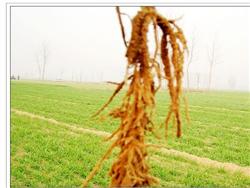
What Is Soybean Cyst Nematode Disease? A Detailed Guide
What is soybean cyst nematode disease? How to prevent and control soybean cyst nematode disease: (1) Damage and symptoms Soybean cyst nematode disease is also called verticillium wilt, commonly known as "fire dragon seedling". It is a worldwide soybean disease, and large areas of occurrence are found in the major soybean-producing countries: the United States, Brazil, China and Japan. In China it mainly occurs in...
-
Diagnosis and Treatment Experience of One Case of Cysticercosis in Domestic Rabbits
One Case of Diagnosis and Treatment of Cysticercosis in Domestic Rabbits
-
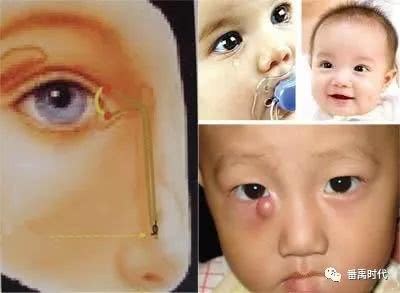
What are the symptoms of rhinitis complicated by dacryocystitis
Rhinitis causes sinusitis, otitis media, dacryocystitis (dacryocystitis), pharyngitis, and can even cause encephalitis, meningitis, etc. In particular, repeated episodes of rhinitis and colds increase the probability of complications. Rhinitis complicated by dacryocystitis is only one of its...
条件筛选