-

When is the best time to plant taro in the south, and can it be planted after cutting into pieces?
Is taro a vegetable you like to eat? Would you like to know some planting tips about it? Let's take a look at the questions and answers below. When is the best time to plant taro? It is generally planted in spring. That is around January to
-
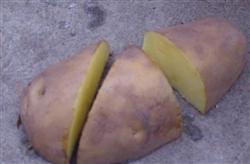
The correct method for cutting seed potatoes and sprouting them
How do you cut seed potatoes and sprout them? What should you pay attention to? Is there any fellow gardener who can help explain? Zhongdiwang has compiled the methods for cutting seed potatoes and sprouting them, and a detailed introduction is given below for fellow gardeners' reference. Seed potato cutting methods: 1. Size of seed potato pieces: generally...
-

Key Techniques for Four-Season Multi-Cutting Cultivation of Stem Garlic
Stem garlic was introduced from Europe and is a perennial crop of the genus Allium in the lily family. Necklace garlic is sown from seed like Welsh onion. Its stems, leaves and scapes resemble those of common garlic, but it is larger and more robust than common garlic, with strong adaptability; it can withstand high temperatures of 40°C and low temperatures of -15°C, and can be sown in spring and autumn in most parts of our country, remaining evergreen all year round. For four-season multi-cutting cultivation, it can be sown from seed like Welsh onion and the seedlings harvested for market, with 1 cutting harvested 60-80 days after sowing, yielding about 2500 kg per mu. If harvesting garlic scapes, seedlings can be raised in summer and autumn, and after 30 days transplanted at a row spacing of 20 cm x 8 cm; scapes bolt in May of the second year after transplanting, with more than 10 tillers per plant, and every tiller can bolt; scapes can be harvested 4-6 times a year, with continuous growth for 5-8 years, during which excess tillers can be pulled out along with their roots for market; the usual yield is about 1500 kg of garlic scapes per mu and more than 5000 kg of stems and leaves.
-
A Detailed Guide to the Stubble-Cutting Regeneration Cultivation Technique for Eggplants
Many years of practice have proven that stubble-cutting regeneration cultivation of eggplant plants is an effective measure for increasing yields, lowering production costs, boosting economic returns, and regulating the peak and off seasons for eggplants. This technique is simple and easy to carry out, and its methods are as follows. 1. Timing of stubble cutting. In spring and autumn, eggplants fetch high prices but yields are low, while in midsummer they enter a period of high yields and low prices. Therefore, the height of summer when the dog days begin is the best time to cut back eggplant plants. In addition, eggplants have the characteristic that the fruits of the main-stem eggplant, the first eggplant, and the four-direction eggplant are large and plump, while the fruits on the upper part of the plant are small and thin and are not welcomed by the market. Through cutting back the plants for regeneration, the high-yield, low-price period is pushed back by exactly 30-40 days, and when the market is short of eggplants, the regenerated eggplants from cutting back are in exactly their high-yield, high-price period, so the high-yield, low-price period for eggplants is the best time for cutting back the plants.
-
What are the latest rice breeding technologies? A full analysis of the world's cutting-edge methods
Research on salt-tolerant rice breeding The aims of this research are: 1. To enable new salt-tolerant rice to adapt to cultivation in saline-alkali land. 2. To make full use of seawater irrigation when freshwater is scarce. Abroad, there have been reports of salt-tolerant crops such as tomato, melon and barley. Salt-tolerant rice bred by the University of Sussex in the UK can grow vigorously in the field, but the complexity of regulating salt content in the field must be recognized. Research on genetic engineering of salt-tolerant rice is quite active in the UK. Researchers insert genes from salt-tolerant rice into rice,
-
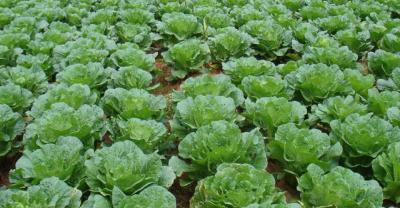
Balcony vegetable cutting propagation methods for a bountiful harvest
These days, growing vegetables on the balcony is a method of vegetable gardening deeply admired and loved by the broad masses of people. The vegetables you grow yourself are green and pollution-free, and eating them is very healthy,...
-

-
Detailed Explanation of the Timing and Methods for Wheat Root Cutting
Timing and Methods for Wheat Root Cutting
条件筛选