-

Can tulips be propagated by cuttings? The survival rate of cuttings is not high; a detailed explanation of three propagation methods
Tulips should be familiar to flower lovers. They are the national flower of the Netherlands, have extremely strong ornamental value, and attract countless tourists to view them every year. In daily life, when propagating flowers, people generally use cuttings, so can tulips be propagated by cuttings? According to research, there are three main propagation methods for tulips
-

Potted baby's breath: transplanting into soil after cuttings, 2 propagation methods to fill the house with blooms
Baby's breath (Gypsophila) is a very fresh and delicate flower, most commonly seen in many floral art arrangements. Earlier we explained how to grow baby's breath and how to prune it after flowering, and now let's talk about its propagation methods. Many common plants in daily life can be propagated, and of course baby's breath is no exception
-
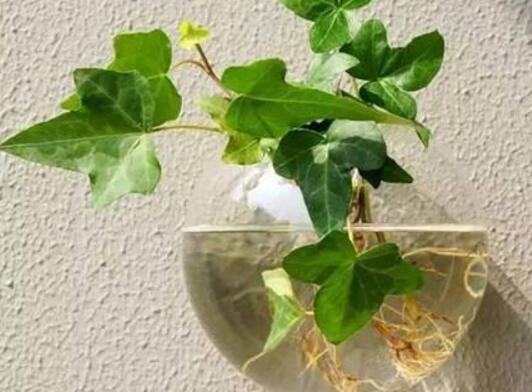
Can Ivy Be Grown in Water? The Stem Cutting Water Propagation Method Is the Most Practical
As a common indoor foliage plant, ivy (Hedera helix) has always been much loved, and among all growing methods, hydroponics can maximize the ornamental value of ivy's benefits and uses. But can ivy be grown in water? The answer is yes. Today we will introduce the hydroponic method for ivy.
-
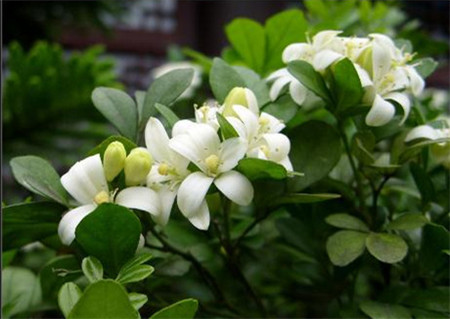
How to propagate night-blooming jasmine (Cestrum nocturnum) by cuttings? Detailed methods and steps
The main propagation methods for night-blooming jasmine include cutting propagation, layering propagation, division propagation and seed sowing, among which cutting propagation is the most commonly used. Apart from winter, cutting propagation can be carried out at any time; keep it in a suitably warm and humid climate, and cultivate it in fertile soil, preferably sandy loam
-
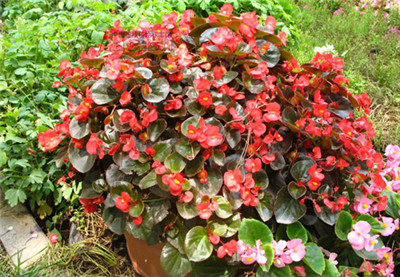
How to Propagate Wax Begonia from Cuttings with a High Survival Rate? Detailed Methods and Steps
Wax begonia (Begonia semperflorens) has delicate, glossy leaves, clustered flowers with vivid colors, and blooms in all four seasons, making it an excellent houseplant. The cuttings of wax begonia do not need to be too long; generally, it is recommended to keep them under 10 cm. Cuttings that are too long can lead to difficulty in water transport, difficulty in supporting the branch, and easy rotting.
-
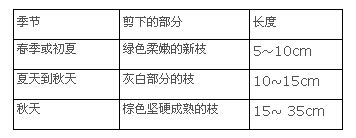
How to Propagate Rosemary from Cuttings? A Full Breakdown of the Detailed Method and Steps
Rosemary cuttings can be rooted in soil or in water, then planted in soil once roots form. Gardeners can choose whichever propagation method they prefer. I. Rosemary water-rooting method: 1. Using clean scissors, cut new slender shoots from a healthy, vigorous rosemary plant. Be careful to avoid shoots with flowers.
-

Detailed Explanation of Cutting Propagation Methods for Japanese Yew in Courtyard
Japanese yew, also known as zi shan or chi bai song, is a precious medicinal and ornamental tree species. The taxol it contains is the most effective anticancer drug in the world today. It stays evergreen year-round, and its peculiar red fruits contrast beautifully with the green leaves, giving it an elegant, refined look with strong ornamental value. Japanese yew can also release various alkaloid gases that kill bacteria and purify the air, providing certain health benefits. It has broad prospects for development in landscaping, bonsai making, and creating green indoor spaces. The author conducted cutting propagation experiments in a courtyard to cultivate seedlings for bonsai and afforestation, and now summarizes the cutting propagation
-
How to propagate yew (Taxus) by cuttings? Detailed cutting method
The cutting method for propagating yew (Taxus) by cuttings is: insert the treated cuttings into a prepared seedbed or a substrate of vermiculite plus weathered sand (1 to 1) and sawdust, with a cutting depth of 3 to 5 cm and a plant-to-row spacing of 8 to 10 cm. After inserting, water thoroughly, and use a plastic film arch cover to retain moisture; at first, spray water 2 times a day, and after 2 weeks, once a day. Shade the same as for seed propagation. Roots form 45 to 50 days after insertion; with careful management, the seedling survival rate can reach more than 90%.
-
Detailed Explanation of Rapid Cutting Propagation Methods and Techniques for Yew
Yew is a national first-class protected plant, an evergreen tree, mostly distributed in the Northern Hemisphere. From its bark, stems, leaves and roots, a substance with special efficacy in treating cancer can be extracted - taxol. We successfully introduced yew in the spring of 1996. Its cutting propagation techniques are briefly described as follows: 1. Cutting period. In our area, yew can be propagated by cuttings 3 times a year, in March, July and November. 2. Building a cutting bed. If the number of yew cuttings is small, pots can be used; if the number is large, a cutting bed should be built. Cutting
-
Dawn Redwood (Metasequoia glyptostroboides) Cutting Propagation Methods and Key Technical Points
Dawn redwood propagation by cuttings: from late March to early April, take cuttings and insert them immediately. Cut cuttings from 1- to 2-year-old seedling stock plants or from new shoots sprouted in the current year. Treat the lower end of the cuttings with naphthaleneacetic acid at a concentration of 0.5 per 10,000 (0.005%), soaking for 20 to 24 hours to promote rooting and improve survival. Insert about 120 cuttings per sq m. After insertion, keep the seedbed moist. New roots sprout in about 40 days; apply diluted human urine and manure once every 10 days, for 3 to 5 consecutive applications. In June, nitrogen fertilizer may be applied in small amounts several times, at 3 to 4 kg of urea per mu, diluted with water and poured on. In early August, apply phosphorus and potassium fertilizer once; per mu use
条件筛选