-
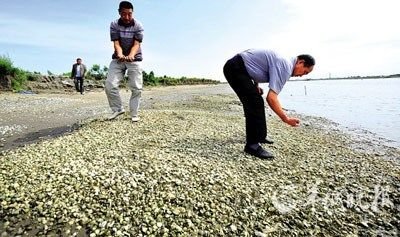
Oysters off the coast of Guangdong exceed copper limits by 740 times, multiple seafood species exceed heavy metal limits
Multiple seafood species off the coast of Guangdong exceed heavy metal limits; oysters exceed copper limits by 740 times
-
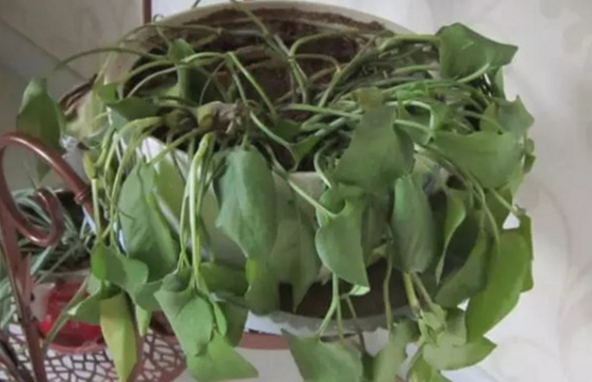
Rescue methods for copper coin grass and pothos that have died from drought, drowning, fertilizer burn, or pests
Many people grow plants, but due to neglect, plants always end up dying in all kinds of ways. So do you know that even when a plant has not completely died, there are still other ways to save it? What exactly are those methods? Let's take a look. Death from drought: if flowers and plants are not watered in time, the leaves will begin to wilt from the top downward
-

Green copper emulsion is highly effective against rice bacterial leaf streak
In an average epidemic year, the control efficacy reaches 85-91%, which is 10-15 percentage points higher than that of Japanese-made chlorothalonil. Method of use: in an average epidemic year, spraying twice is sufficient. The first spray is applied at stages 2-4 of young panicle differentiation in rice; 7 days after treatment the disease tends to stabilize, new acute lesions decrease significantly, and the original lesions stop developing after turning yellow. The second spray is applied 10 days later, using 100 mL of 12% green copper emulsion per mu each time, diluted 500-600 times for spraying. After 20 days, the rice leaf color turns noticeably greener, and the newly emerged flag leaf and the second leaf from the top have no
-
Is copper hydroxide effective for treating rice bacterial leaf streak?
How effective is copper hydroxide for treating rice bacterial leaf streak? How many applications are needed? Please answer objectively. Thank you for your question. The answer is as follows: Copper hydroxide can control rice bacterial leaf streak, bacterial leaf blight, rice blast, sheath blight and rice false smut, etc. Before or at the early stage of disease onset, spray with a 53.8% dry suspension concentrate at 900-1100 times dilution, with 2 consecutive applications.
-
Identification and Control Methods of the Copper-Green Chafer
The copper-green chafer (Anomala corpulenta Motschulsky) belongs to the order Coleoptera, family Scarabaeidae. It occurs in all regions. It damages cruciferous crops, solanaceous crops, cucurbits, legumes and other crops. [Field identification] The larvae damage the roots and stems of seedlings, causing missing plants and broken rows, and often occur mixed with the larvae of the Northeast black chafer. Adults prefer to feed on the leaves of fruit trees, forest trees and other crops. The adult body is about 20 mm long. The head, pronotum, scutellum and elytra are copper-green with a metallic sheen,
-
Be on Guard Against Copper and Zinc Poisoning in Koi Keeping
I believe none of you will be surprised by this: copper and zinc in the water will kill koi. Of course, this is not news to me either. What I mean is, before you heard the story about a copper-connected heater releasing a large amount of copper into the water and thus killing all the koi, had you ever thought that copper and zinc could kill your koi? Perhaps many of us have not yet heard such a story. Before telling you these things, let me first review some of my own history. Of course, I have been keeping koi for quite a long time.
-
Basic copper sulfate can be used to control cotton diseases
Copper Gaoshang 27.12% basic copper sulfate suspension concentrate can be used to control multiple cotton diseases. For seedling-stage application, after cotton is sown and covered with soil, drench with Copper Gaoshang 27.12% basic copper sulfate suspension concentrate at 600-800 times dilution to disinfect the seedbed soil, which can effectively prevent soil-borne diseases. When the cotton seedlings have all emerged and the cotyledons are flat and spread out, spray with Copper Gaoshang 27.12% basic copper sulfate suspension concentrate at 1000 times dilution, which can effectively control seedling-stage diseases such as cotton damping-off and anthracnose. 3-5 days before transplanting the cotton seedlings, use Copper Gaoshang
-
What are the causes of copper sulfate-induced fish poisoning?
Copper sulfate is a commonly used drug for treating fish diseases, but because some users are unfamiliar with its properties, it often causes harm. 1 Case reports Case 1: In March 1987, Liantang Aquatic Farm used copper sulfate at 0.7g/m3 to kill algae in a broodstock pond, and three days later all the broodstock died. Water quality analysis showed an ammonia content of 0.35g/L. Case 2: From August 30 to 31, 1999, a 0.67hm2 fattened fry pond with a water depth of 1m owned by a farmer in Bayi Township, Nanchang County, due to sultry weather
-
Identification and control methods for the copper-green chafer
[Control methods] (1) Controlling adults The adults of the above several species of chafers all have the habit of supplementary feeding, mainly feeding on the leaves of trees, fruit trees, legumes and other crops. On young fruit trees, manual control can be used to capture adults to reduce damage. (2) Chemical control 2.5% trichlorfon powder can be used, broadcast at 30 kg per hectare on field crops. 40% dimethoate or omethoate emulsifiable concentrate at 1000 times dilution, or 20% fenvalerate 300
-
How to control the copper-green chafer? Practical methods shared
(1) Manual control: During the peak emergence period of adults, in the evening, kill the adults by combining artificial tree shaking with light traps outside the orchard. (2) Chemical control: In the early emergence period of adults, spray 2.5% trichlorfon powder on the tree disks of orchards with high insect density, then shallow hoe and mix it in, which can kill the adults that have emerged from the soil; during the peak period, before dark, spray the trees with 80% dichlorvos emulsifiable concentrate at 1000-1500 times dilution, adding 20% fenvalerate emulsifiable concentrate at 2000 times dilution, and spray again after 7-10 days (avoiding the flowering period), which can control the damage. Other chafer species can be controlled by
条件筛选