-

A Detailed Explanation of the Causes and Control Methods of Orchid Two-Rot Disease
Two-rot means soft rot and stem rot. Soft rot starts rotting from the new shoot, while stem rot starts rotting from the old shoot. In my personal opinion, there is no essential difference between soft rot and stem rot. The difference lies in the fact that a plant with stem rot is beyond saving, while a plant with soft rot sometimes does not suffer total wipeout, but this is only the surface appearance. The occurrence of stem rot comes down to a few causes. One: the plant itself...
-
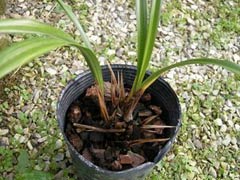
What to Do When an Orchid Gets Soft Rot? Detailed Guide to Prevention and Control
Orchid soft rot actually cannot be treated well. From item 6 of the characteristics of plant pathogenic bacteria, it can be known that by the time symptoms are visible to the naked eye, the invaded orchid plant is already in the late stage, and no medicine is of any use, so prevention is the key to orchid soft rot....
-

What are the common pest and disease control methods for Dendrobium orchids?
1. Diseases: (1) Soft rot: also known as bacterial brown spot, it mostly infects from the rhizome, but can also occur on leaves. It starts as small water-soaked dark green spots, which gradually expand into brown, softened, rotting lesions. A secretion oozes from the rotting area and is accompanied by a foul odor. The pathogen can spread through watering. High temperature and high humidity favor the development of the disease,...
-
Orchid Pest and Disease Control Methods and Key Technical Points
I. Anthracnose. This disease is the most common disease of orchids, mainly affecting the leaves. In the later stages, black dots appear on the lesions, eventually causing the diseased leaves to wither and turn yellow. The disease occurs frequently from May to June, during the plum rain season, or in years with abundant autumn rain or frequent typhoons from September to October....
-
What are the methods for controlling viral diseases in orchids?
For the foreseeable future, viral diseases will remain a stubborn and difficult problem for orchid growers. The difficulty lies first in the value of orchids. Whether in batches or as individual plants, ornamental orchids are perhaps the most expensive artificially cultivated plants. Potted flowering orchids retail for about 5 to more than 100 US dollars per pot...
-
How to prevent and control the two rots in spring and summer?
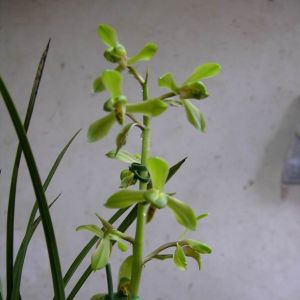
Selected from a street stall at the 2000 Yixing Huilan Exhibition. When selected, it had 18 flowers in bloom, hence the name "Chongjiu". It is a red-to-green huilan orchid, with neat, round-tipped outer three petals. Its shortcomings are a small pointed tongue and slightly thin petals.
-
Main Causes of Rotten Shoots and Soft Rot and Their Prevention and Control Methods
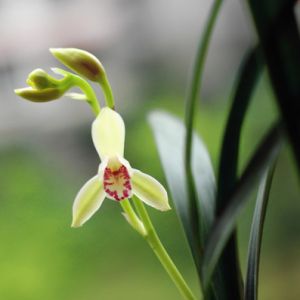
A variety bred by Tianlong Orchid Garden, with short and round outer petals, thick and soft, tender yellow color, plain and clean, with good contrast between petals, tongue, and stem. Thick leaves, rich fragrance, elegant and graceful.
-
A detailed guide to the correct use of Magic Fertilizer and Hi-Control
First, the formulas are different. Hi-Control is 13-13-13-TE, a balanced type usable all year round, and there is also 18-6-8, a high-nitrogen type, for use during the orchid growing season. Magic Fertilizer is 7-40-6-12, a high-phosphorus formula mainly to promote root growth and flowering. Second, the fertilizer duration is different. Hi-Control is a resin-coated fertilizer that uses water molecule pressure...
-
Identification and Control Methods for Soft Rot and Stem Rot
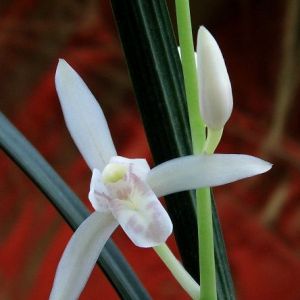
A newly collected white-flowered variety (collected in Pingyuan, Meizhou), with snow-white outer petals and a faint red blush on the petals and lip, like a shy young girl~~
-
What are the prevention and control methods for orchid stem rot?
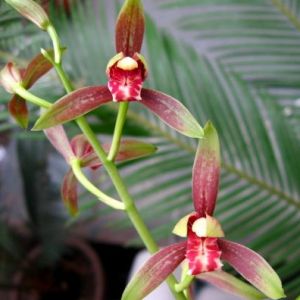
The color flower "Half-Gram Red" from Rong County usually blooms with only a "half" red, so orchid growers in Rong County call it "Half-Gram Red". Most of the seedlings were taken by the greenhouse and named "Flower-Heart Radish".
条件筛选