-
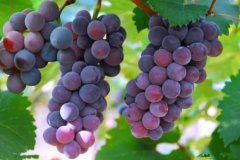
What are the nutritional benefits and dietary contraindications of grapes?
Do you like eating grapes? Then do you know what benefits they have? What components do grapes contain? Let's take a look together. Grapes are plants of the Vitaceae family and have been consumed by humans since prehistoric times. After the discovery of the New World, European grapes were immediately introduced to the Americas; grape cultivation in China began in the Western Han Dynasty, and legend has it that Zhang Qian, on his mission to the Western Regions, brought back European grape varieties from the Kingdom of Dayuan.
-

Can mugwort foot soaks help with weight loss? What are the benefits and contraindications?
Every Dragon Boat Festival, people gather mugwort and place it in their homes, and dried mugwort is also used for soaking and fumigation. So can mugwort foot soaks actually help with weight loss? What are the benefits and contraindications? Let's take a look below. 1. Can mugwort foot soaks help with weight loss? Mugwort foot soaks can
-
How much is a jin of cape gooseberry now? Benefits and contraindications explained in detail
Cape gooseberry, also known as Chinese lantern plant fruit (niangguo), is a fairly well-known wild fruit from South America. It can be found in Yunnan, Guangzhou and other places in China, and some markets currently sell it too, so how much is a jin of cape gooseberry? What are its benefits and contraindications? 1. Introduction to cape gooseberry: 1. Chi
-
Red-Fleshed vs. White-Fleshed Dragon Fruit: Differences, Benefits and Contraindications
Dragon fruit rarely appears at small street stalls; it is generally sold in fruit shops and supermarkets. This also shows a certain level of "class." Below, we introduce the benefits and contraindications of dragon fruit, as well as the differences between the red-fleshed and white-fleshed types. 1. Red-fleshed dragon fruit and white-fleshed dragon
-
What are the usage contraindications for the rice herbicide Daijie?
Daijie is a commonly used herbicide for rice, and can effectively control barnyardgrass (including barnyardgrass resistant to propanil, quinclorac and acetyl-CoA carboxylase inhibitors), annual cyperaceae weeds, etc. However, because it is toxic, care should be taken when using it. So what are the usage contraindications of Daijie?
-
What are the contraindications for calcium ammonium nitrate? Keep these precautions in mind
When using ammonium nitrate, do not smoke or use open flames, and also avoid contact with reducing agents, organic matter, flammable materials or metals. Operators should avoid direct contact when using calcium ammonium nitrate, and need to wear protective clothing and protective gloves. Introduction to calcium ammonium nitrate
-
What are the benefits, effects, and pairing contraindications of lettuce?
Lettuce is a crisp, refreshing introduced species that is widely cultivated in our country and has high edible value. So what are its benefits and effects? What should it not be eaten with? 1. What are the benefits and effects of lettuce? Lettuce is the common name for leaf lettuce, also
-
Glossy Privet Fruit: Benefits, Uses, Contraindications, and Precautions Explained
Glossy privet fruit is a common traditional Chinese medicinal herb. It is the fruit of the glossy privet (Ligustrum lucidum), an evergreen tree, harvested when ripe in winter and dried in the sun. So what are the benefits and uses of glossy privet fruit? Who should not take it? What precautions are there? 1. Benefits and uses of glossy privet fruit
-
How to Eat Ginseng: A Detailed Guide to Methods, Timing and Contraindications
Ginseng is the fleshy root of the perennial herbaceous plant ginseng in the Araliaceae family, produced in northeastern China, and is one of the widely renowned "Three Treasures of the Northeast". It usually flowers at 3 years and bears fruit at 5-6 years, and its medicinal value is quite high, earning it the name "King of a Hundred Herbs". So, how do you eat ginseng? When
-
What are the benefits, effects and contraindications of Lalang grass rhizome?
Lalang grass rhizome, a plant whose name immediately sounds like a traditional Chinese medicine, is also called mao gen and ru gen. It is taken from the dried rhizome of Lalang grass. It is mainly produced in northern regions such as Xinjiang, Henan and Hebei. Presumably everyone does not know much about the benefits and effects of Lalang grass rhizome, or its side effects. So
条件筛选