-

Ministry of Agriculture pushes for continuous improvement of national agricultural financial work service levels
Ministry of Agriculture: push for continuous improvement of service levels in national agricultural financial work
-
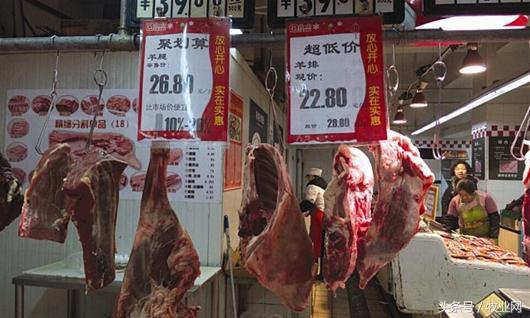
Will the continuous decline in mutton prices bottom out? 2017 market analysis
Why do mutton prices keep falling, and have they bottomed out? 2017 mutton price market analysis
-
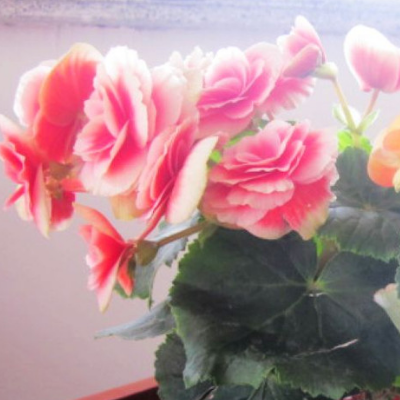
Is glass begonia toxic? Grow it this way to keep it blooming continuously
Glass begonia is a plant whose flowers are as beautiful as those of begonia. How do you grow glass begonia so it blooms continuously? Is glass begonia toxic: How do you grow glass begonia so it blooms continuously: (1) Temperature and light. Glass begonia is a sun-loving plant, so it should be placed in a spot with ample light.
-
How to mitigate continuous and alternate soybean cropping? Integrated measures are key
To minimize yield losses from continuous and alternate cropping, continuous and alternate soybean planting should be avoided as much as possible, rational crop rotation should be maintained, alternate cropping should be reduced, and continuous cropping should be controlled. In the long term, the area of continuous and alternate soybean cropping should not be expanded without limit, so as to avoid declining soil productivity and creating a vicious cycle. When continuous and alternate cropping is unavoidable, alternate cropping should be arranged first, and continuous cropping should be used only when alternate cropping cannot be arranged, and continuous cropping must not exceed two years. In response to the causes of yield reduction under continuous and alternate cropping, with emphasis on regulating nutrition and controlling pests and diseases, existing scientific
-
Why do continuous and alternating soybean cropping reduce yields? Cause analysis and countermeasures
With China's accession to the WTO and the opening-up policies of the grain market, the problem of continuous and alternating soybean cropping has become increasingly serious, and the yield reduction increases as the number of consecutive cropping years rises. According to surveys and research, alternating cropping reduces yield by 6.1%, one year of continuous cropping by 9.9%, two years of continuous cropping by 13.8%, and three years of continuous cropping by 19.0%. Moreover, in continuous and alternating cropping soybeans, the 100-seed weight decreases, the rate of diseased seeds and insect-damaged seeds increases, and commercial quality drops significantly. With long-term continuous cropping of more than 3 years, the protein content of soybeans increases markedly while the fat content decreases markedly. According to research by scientific research departments
-
Reasons for Yield Reduction in Continuous and Alternate Soybean Cropping and Yield-Preserving Techniques
I. Reasons for Yield Reduction in Continuous and Alternate Soybean Cropping Continuous and alternate soybean cropping causes plants to grow slowly and become short, with yellowing leaves, fewer pods, and fewer seeds, ultimately leading to a significant reduction in yield. In the short term, continuous and alternate cropping intensifies the damage from cyst nematodes, root maggots, root rot, pod borers, gray leaf spot, and malignant weeds, causes unbalanced depletion of soil nutrients, leads to deficiencies in soil nutrient elements, increases pathogenic fungi and decreases beneficial bacteria in the soil, and produces certain toxins, resulting in a severe decline in soybean yield and quality. In the long term, after long-term accumulation and reproduction, diseases, insects
-
Major progress made in project to control soybean yield reduction from continuous and alternating cropping
The reporter learned from relevant departments that the project "Research and Demonstration of Key Technologies for Controlling Soybean Yield Reduction under Continuous and Alternating Cropping," tendered by the Municipal Science and Technology Bureau, has achieved major progress after two years of scientific research. The project was carried out in Yilan and Bayan counties, the two counties with the largest soybean area in Harbin. Through key technology research, soybean varieties resistant to continuous and alternating cropping were selected, including Kenfeng 16, Heinong 48, Kangxian 4, and Hefeng 47. A formula fertilization technique was proposed with 45 kg of nitrogen, 60-67.5 kg of phosphorus, 67.5-75 kg of potassium, and
-
Why can't soybeans be planted in continuous cropping?
Soybeans are commonly known as yellow beans. Farmers have a traditional habit of planting soybeans this year and continuing to plant them next year, which results in stunted growth, shortness, yellowing leaves, susceptibility to pests and diseases, fewer pods and small seeds, and significantly reduced yield in continuously cropped soybeans. According to surveys, under normal circumstances, continuous cropping of soybeans reduces yield by 20%-30% or more. The main reasons for the yield reduction: pests and diseases are prone to occur. Several diseases parasitic on soybeans, such as bacterial spot disease, black spot disease, damping-off, and yellow wilt, have suitable conditions for occurrence in continuously cropped soybean soil and will inevitably occur in large numbers
-
Why soybeans should not be grown in continuous or alternate-year cropping
Soybean continuous and alternate-year cropping control techniques can reduce the impact on yield. Impact on soybean yield. Different environments have different effects on soybean yield. ①Continuous cropping is severe, alternate-year cropping is mild; ②severe in the west and southwest, mild in the north and east; ③severe on poor land, mild on fertile land; ④severe on ridge slopes, mild in low-lying wet areas; ⑤severe in dry years, mild in rainy years; ⑥severe with no or little fertilizer, mild with more fertilizer; ⑦severe with original-ridge sowing, mild with plowed new ridges; ⑧severe with many soil-borne diseases and pests, mild with few diseases and pests; ⑨severe on long-cultivated land, mild on newly reclaimed land; ⑩severe under drought, mild with irrigation. The four eastern leagues of the Inner Mongolia Autonomous Region are each similar to their adjacent provinces, among which the Hulunbuir League area is similar to the northern part of Heilongjiang Province, and the continuous cropping phenomenon is also very severe. Today I want to discuss three issues: first, the impact of continuous and alternate-year soybean cropping on soybean yield and quality; second, the reasons for continuous and alternate-year soybean cropping; third, control techniques.
-
How to Achieve High Quality and High Yield in Continuous Oyster Mushroom Cultivation
In some old mushroom-growing areas where oyster mushrooms are cultivated continuously, devastating diseases such as oyster mushroom walnut disease and button disease often occur, reducing yields by 50% in mild cases and causing total crop failure in severe cases, bringing certain economic losses to mushroom farmers. Therefore, changing traditional cultivation techniques is very important. 1. Select disease-resistant varieties. Through experimental comparison, choose Keda Heiping and Xide 99, which are both disease-resistant and high-yielding; next are Jiangdu 5526 and Xinyi No. 1. 2. Prepare a high-yield substrate. The recommended formula is: cottonseed hulls 75%, corncob 15%, wheat bran 7%, quicklime 3%, diammonium phosphate 0.50
条件筛选