Will the continuous decline in mutton prices bottom out? 2017 market analysis
In previous years, as autumn and winter arrived and the weather turned cold, mutton sales also entered their peak season. However, in nationwide farmers' markets in 2016, mutton prices in many places continued to remain sluggish. For sheep farmers, this year has been the most extraordinary year, and also the year with the greatest fluctuations in mutton sheep prices. The continuous fall in mutton prices has left some sheep farmers complaining bitterly; for us consumers at large, although lower prices are good for consumption, this has also greatly affected the enthusiasm of farmers, causing turbulence in the development of the mutton sheep breeding industry, and in the long run this is not a good thing for consumers either.
Why do mutton prices remain sluggish? So have mutton prices already fallen to the bottom?
Why have mutton prices fallen? Looking back at the mutton price market, we can see that 2013-2014 was undoubtedly a period when mutton prices continuously hit new highs, but starting in 2014, mutton prices began to decline gradually. This downward trend continued until 2016 and up to now.
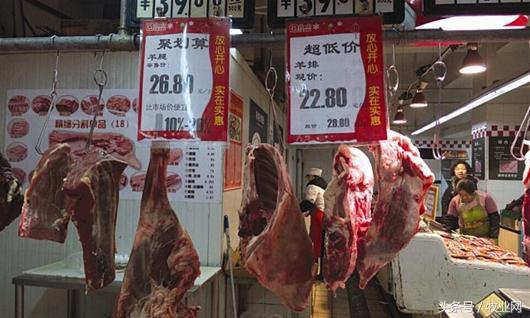
According to farmers' market data: in November 2013, the mutton price at Beijing Yuegezhuang was 52 yuan/kg, the mutton price at Chifeng Xicheng in Inner Mongolia was 56 yuan/kg, and the **Urho mutton price was 65 yuan/kg. According to the price market data for November this year shown on the National Agricultural Products Business Information Public Service Platform, the mutton price at Beijing Xinfadi Agricultural Products Wholesale Market was 33.3 yuan/kg, the mutton price at Chifeng Xicheng in Inner Mongolia was 44 yuan/kg; in November this year, the **Urho mutton price was 42 yuan/kg.
The industry generally believes that the peste des petits ruminants outbreak in the first half of 2014 was the trigger for the fall in mutton prices in 2014. To control and eliminate the epidemic, relevant departments strengthened the supervision of live sheep transportation, strictly prohibited the transportation of live sheep from high-risk areas to low-risk areas, causing live sheep in major producing areas to be held back from the market. After the epidemic was eliminated, the held-back sheep were concentrated on the market, and the mutton supply surged in a short time, causing prices to fall.
However, the epidemic was only a trigger for the fall in mutton prices. The actual cause was weak market consumption, a decline in residents' consumption level, and insufficient purchasing power.
First, affected by slow macroeconomic growth, urban residents' purchasing power for mutton declined; at the same time, high-end consumption was also declining, and residents' consumption of mutton, grilled lamb chops and the like decreased noticeably, while the sluggish catering industry also reduced demand for mutton; another important factor is that since 2000 mutton prices had continued to rise and remained high, residents' purchasing power was insufficient, so they switched to eating pork and chicken, and the low prices of pork and chicken strengthened their substitution for mutton consumption, which also caused the consumer base to shrink.
During the golden period when mutton prices continued to rise, the number of mutton sheep raised also increased continuously. According to statistics: in 2014 China's mutton output was 4.28 million tons. At the same time, the volume of imported mutton also increased rapidly. In 2009 China's imported mutton volume was about 66,000 tons, and in 2012 it reached 120,000 tons; while in 2013 imported mutton volume rose to about 250,000 tons.
While supply exceeded demand, affected by the broader domestic economic environment, mutton demand decreased. Supply continued to increase, but demand continued to decrease, thus causing mutton prices to fall.
In recent years, the sluggish mutton market has made it not only hard for sheep farmers to earn money, but many of them have even lost money. An 8-month-old lamb sells for more than 500 yuan. Because of this year's drought in China, even grazing flocks still require us farmers to supplement forage, and forage prices have also continued to rise in recent years. For many sheep farmers, input exceeds return. Raising sheep means losing money, and the more you raise, the more you lose.
Have mutton prices already reached the bottom, and will they fall further? Perhaps this is the issue of greatest concern to sheep farmers at present. Looking at the current state of the mutton sheep market, prices may have already reached the bottom. Since mutton prices have continued to fall for nearly 3 years, mutton prices have bottomed out, and afterward prices will rebound somewhat, but a return to very high prices within the next 2 years is unlikely.