-

How to grow cacti? Growing methods and feng shui considerations
I have a best college classmate named Wang Jia. I heard he was a child prodigy when he was little. A few days ago he came back from studying in California, USA, and it just so happened that his girlfriend was still traveling in North Korea...
-
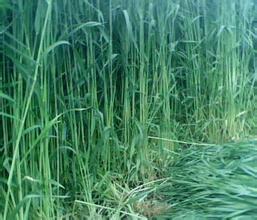
What are the considerations for growing forage grass for sheep?
I. Suitable varieties You can choose high-yielding, high-quality, highly adaptable forage varieties such as alfalfa, Wintergrazer 70 rye, cup plant, clover, comfrey, and Rumex.
-

-

Five Considerations for Formulating Rabbit Feed
Select ingredients according to local conditions. The selected raw materials must not only meet the nutritional needs of domestic rabbits, but also be adapted to local conditions, using locally available forage as much as possible. Pay attention to the diversity of feed. Combining multiple feeds can play a role in nutritional complementation. Pay attention to seasonal differences. In most areas of China, green fodder is scarce in winter and spring, and domestic rabbits are prone to vitamin deficiency, so supplementation should be noted. Pay attention to the palatability of feed. Domestic rabbits like bitter chicory, alfalfa (Medicago sativa), and soybean, and refuse moldy-smelling and fishy-smelling forage. Pay attention to the
-
What are the considerations when formulating feed for rabbits
Pay attention to selecting ingredients according to local conditions. The selected raw materials must not only meet the nutritional needs of domestic rabbits, but also suit local conditions, using locally available forage as much as possible. Pay attention to feed diversity. Combining a variety of feeds can play a role in nutritional complementation. Pay attention to seasonal differences. In most regions of China, green succulent feed is scarce in winter and spring, and domestic rabbits are prone to vitamin deficiency, so supplementation should be noted. Pay attention to feed palatability. Domestic rabbits like bitter lettuce, alfalfa (Medicago sativa), and soybean, and dislike forage with a musty or fishy smell. Be economical and practical. Fish meal
-
Several Considerations for Fine Management of Nursery Pigs
In today's large-scale farms, most use excellent breeds and lines with high production performance, and sows have relatively high litter sizes and survival rates. So what is the key stage that determines whether farming succeeds? Practice shows it is the nursery stage of piglets. The nursery stage is a transfer station, generally starting 7-10 days after weaning and ending at a body weight of 30 kg. This is the key stage affecting the profitability of the entire farm. This stage is a turning point in the pig's physiology and individual changes, a process of gradual growth from small to large. This stage both
-
What are the considerations for building a snake enclosure?
A good snake farm should have a spacious activity area set aside, that is, an exercise yard for the snakes. However, climbing vines such as Boston ivy cannot be planted in the exercise yard.
-

Sugarcane Planting Time and Key Considerations Explained
Sugarcane Planting Time and Key Considerations
-
The layout of a goose farm requires careful consideration; only scientific planning allows for successful goose rearing
1. Site selection. The site should be close to a water source, with the water surface as wide as possible, a water depth of 1-2 m, and good water quality, and a bit far from residential areas; the soil is best if it is sandy loam, with convenient transportation and a south-facing orientation. 2. Scale determination. The production scale is determined by investment capacity, rearing conditions, technical strength, sources of goslings, and product @#@136@#@, etc. Only by achieving batch production can greater rearing benefits be obtained. 3. Overall planning. First, the buildings should be divided into a production area and an administrative area and living area, with the two areas separated by more than 50 m and separated by a wall. Production
-
Cotton expansion requires careful consideration, and farmers should make decisions cautiously
1. Cotton fields are growing steadily, and blind expansion is not advisable. In recent years, China's cotton field area has fluctuated greatly, farmers have suffered many losses, and the lessons are very profound. First, price fluctuations are large due to the influence of the international cotton market; second, domestic cotton prices are unstable, making it difficult for farmers to judge; third, the forecasting standards for cotton production area and output are very inconsistent, the reliability of information is poor, and it is difficult for farmers to determine how much cotton is best to plant. In view of past lessons, this year's cotton field area should only see restorative growth, with an increase of 10% being appropriate, and no more than 15% at most. Of course, each region should adapt to local conditions.
条件筛选