-

What animal is the "chong" in "wolf, chong, tiger, leopard"? Common knowledge about fierce beasts in old rural sayings
"Wolf, chong, tiger, leopard" was a general term in ancient times for fierce wild beasts. The "chong" here is not an insect, but refers to venomous snakes and pythons; in many dialects, snakes are simply called "changchong". This article explains clearly what animal each of the four characters refers to, and includes practical reminders for preventing animal and snake encounters when working in the fields in rural areas.
-
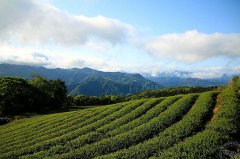
Taiwan's Pouchong Tea King Emerges! New Taipei Good Tea Pouchong Results Announced
During the COVID-19 pandemic across Taiwan, the New Taipei Good Tea Spring Pouchong Tea Evaluation became one of the few competitions to be held smoothly as scheduled, and its results are now out. Farmer Zhong Wenqing from Pinglin District stood out and won the top prize, the honor of "Pouchong Tea King." In addition, in response to the severe pandemic this year, the Pinglin District Farmers' Association also responded to the stay-at-home economy by listing the Wenshan Pouchong Tea spring competition tea on the "Pinglin District Farmers' Association - Taiwan Yellow Pages" mall for sale. Free shipping is available on purchases of 2,000 yuan or more, allowing people to stay at home and still safely enjoy seasonal tea delivered directly from the place of origin. It is currently the spring tea production season. Due to the severe COVID-19 pandemic, all kinds of local specialty tea evaluations across Taiwan have been affected. In consideration of epidemic prevention, measures such as postponement or cancellation have been adopted. Because Wenshan Pouchong Tea is an important local specialty tea of New Taipei City, and Pinglin District is the main production area of pouchong tea, accounting for 60% of the city's output, the "New Taipei Good Tea - Wenshan Pouchong Tea Evaluation" held every spring and winter production season is the largest-scale evaluation competition in northern Taiwan. However, because either cancellation or postponement would seriously affect tea farmers, in order to protect farmers' livelihoods, the New Taipei City Agriculture Department guided the evaluation organizer, the Pinglin District Office, to formulate relevant epidemic prevention guidelines for the evaluation process. The evaluation process strictly followed the epidemic prevention regulations of the Central Epidemic Command Center. The number of people in the evaluation space was reduced to fewer than 5, and it was not open to the public, ensuring epidemic prevention while also protecting tea farmers' livelihoods.<br /> <img alt="" src="/uploads/allimg/210610/1-2106102022533M.jpg" style="width: 600px; height: 400px;" /></div> <div> </div> <div> After the beginning of spring this year, cold air continued to move southward. The cool temperatures allowed the tea leaves to grow fully, and the harvest period coincided with dry weather, increasing spring tea output. Therefore, this year's spring evaluation had a total of 1,517 tea entries. It took judges 9 days to conduct tasting and screening, and finally Zhong Wenqing, a farmer born in 1967 from the fifth tea production and marketing class in Pinglin District, took home the spring Tea King title.</div> <div> </div> <div> </div> <div> Zhong Wenqing left Taipei in 2016 and returned to Pinglin to take over the family tea-making business. Although he is a fourth-generation tea maker, because he had no contact with tea production before returning home, he also learned from scratch under Chen Wenqing, chairman of the Pinglin Farmers' Association. In just 5 years, he honed a fine tea-making skill, and in recent years he also began to appear in Wenshan Pouchong Tea evaluations. From winning first prize in last year's (2020) winter evaluation, this year not only did all the tea samples he entered win awards, he also brought home the top prize honor. Zhong Wenqing said, "Only healthy tea trees can produce good tea. Of course, tea-making involves a lot of knowledge, and I am still learning." At present, Zhong Wenqing's tea garden area is about 2 hectares, mainly producing Wenshan Pouchong Tea, with an annual output of about 800 jin.</div> <div> </div> <div> Chen Guoren, former director of the Tea Research and Extension Station under the Council of Agriculture, now retired and holding a tea-tasting license, said that the production process of Wenshan Pouchong Tea greatly tests technique. It is necessary to control the color, aroma and taste of the tea liquor through the degree of fermentation of the tea leaves. Therefore, the withering and stirring process determines the quality of the tea, and this year's top prize winner was excellent in color, aroma and taste.</div> <div>⟦NL> </div> <div> Li Wen, director of the New Taipei City Agriculture Department, said that due to the severe impact of the COVID-19 pandemic, in order to protect tea farmers' income, the Pinglin District Office was guided to formulate an epidemic prevention plan for the evaluation, and the manpower at the competition venue was also simplified so that the evaluation could be held smoothly. If people want to drink good tea, they can go to the Pinglin District Farmers' Association's "Pinglin District Farmers' Association - Taiwan Yellow Pages" mall to buy seasonal competition tea. The website currently offers a promotion with free shipping on purchases of 2,000 yuan or more, making it more convenient for friends who love the floral aroma of pouchong tea to obtain fresh good tea delivered directly from the place of origin.</div> <div> </div>
-
Detailed Introduction to 25 Types of Wild Vegetables in Chongqing
China is rich in wild vegetable resources, widely distributed, with characteristics such as unique flavor, natural pollution-free, safe with no pesticide residue, high nutritional value, and homology of medicine and food, with high nutritional value, medicinal efficacy and health care functions. Wild vegetables are distributed all over the country. In Chongqing, due to its terrain
-

Thoughtful Shuttle Service at the Pingtung Sichongxi Hot Spring Season Satisfies Visitors Who Want to Soak in the Springs and Stroll Kenting Street
Coming to the southernmost tip of Taiwan, China, do you want to soak in the Sichongxi hot springs and enjoy the beautiful scenery, and also stroll along Kenting Street? This year's Sichongxi Hot Spring Season shuttle service has been thoughtfully planned, with two routes satisfying visitors' dual wishes, and the one-way fare is only a 30-yuan coin price, saving money and...
-
Differences Between Chongming Qingshui Crab and Chinese Mitten Crab, Incompatible Foods, Prices, and How to Eat Them
Chongming Qingshui Crab, namely the Chinese mitten crab (Eriocheir sinensis), also known as river crab, hairy crab, crab, Chinese mitten crab, Qingshui crab. So what is it incompatible with? What is the price? How is it usually eaten? According to Huang Chun, president of the Shanghai River Crab Industry Association, this year the main size of Chongming Qingshui Crab is adult crabs of 3.5 liang to 4 liang, with 3.5 liang crabs selling for about 200 yuan per kilogram, 4 liang crabs at about 300 yuan per kilogram, larger Qingshui crabs costing more, and half-jin crabs selling for 168 yuan each.
-
What kind of fish is the filefish, and why do only people in Chongqing love to eat it?
I believe anyone who has been to Chongqing or grew up in Chongqing knows the filefish. It can not only be cooked in hot pot, but also has few bones and can be prepared in many ways, so it is very popular in the market. However, because it is rarely seen in other regions, some people simply do not know the filefish. So what kind of fish is the filefish?
-
What are the alternative names of Chonglou? Latest names summarized
Chonglou is the dried rhizome of Paris yunnanensis or Paris polyphylla, plants of the genus Paris in the Liliaceae family. It has the effects of clearing heat and detoxifying, reducing swelling and relieving pain, and cooling the liver to calm fright. It is often used for boils and swollen painful sores, sore swollen throat, snake and insect bites, bruises and traumatic pain, convulsions and spasms, and so on. Below we will
-
What are the latest propagation methods for Chonglou (Paris polyphylla)?
Chonglou is the dried rhizome of the Liliaceae plant Yunnan Chonglou (Paris polyphylla var. yunnanensis) or Qiyeyizhihua (Paris polyphylla), with effects of clearing heat and detoxifying, reducing swelling and relieving pain, and cooling the liver and calming convulsions. It has high planting prospects. The propagation methods generally include seed propagation and rhizome propagation. Below we will
-
What medicinal herb is Chonglou? The latest answer is here
Chonglou is also known as Hua Chonglou, Qiye Lian, Tiedengtai, etc. Medicinal Chonglou generally refers to the two species recorded in the Chinese Pharmacopoeia, Yunnan Chonglou and Qiye Yizhihua. It grows in shaded, damp places under mountain forests or in grass along roadsides. In China, it is distributed in Yunnan, Guizhou, Guangdong, Guangxi, Hubei and other places
-
What should be noted when planting Chonglou (Paris polyphylla)? A detailed explanation of the latest cultivation points
None of us is unfamiliar with the term Chonglou, because in a very popular TV drama a few years ago there was a character named Chonglou, and everyone felt very sorry for him, but what I am introducing to you today is not this Chonglou. Today I want to
条件筛选