-

What to Do When Dieffenbachia Leaves Turn Yellow? 9 Methods to Teach You
What to do when dieffenbachia leaves turn yellow - many plant lovers have encountered the problem of yellowing dieffenbachia leaves. When faced with a sudden yellowing problem, they do not know how to handle it. Below are 9 methods for dealing with yellowing dieffenbachia leaves.
-
A Detailed Guide to Three Propagation Methods for Dieffenbachia amoena
Dieffenbachia amoena can be said to be a relatively common variety among dieffenbachias, and because Dieffenbachia amoena has fairly strong shade tolerance, it is also very suitable for growing indoors. Friends who like Dieffenbachia amoena often propagate it at home, and generally the cutting propagation method has a higher success rate for Dieffenbachia amoena
-
How to propagate Lysimachia christinae? Detailed introduction to propagation methods
Because the appearance of Lysimachia christinae closely resembles ancient coins and it has certain medicinal value, people affectionately call it "jinqiancao" (money grass) or "tongqiancao" (copper coin grass). Lysimachia christinae also carries very good symbolism, and it is not difficult to cultivate, so it is grown by many flower enthusiasts. The editor will now introduce the propagation methods of Lysimachia christinae for you
-
How to propagate Dieffenbachia? Propagation methods and precautions
Dieffenbachia is a foliage plant that many gardening enthusiasts love very much, often used to improve indoor environments. Some enthusiasts find that their Dieffenbachia grows very tall after reaching a certain size, and at that point they can choose to propagate a new pot of Dieffenbachia themselves. Dieffenbachia is generally propagated by two methods: division and cuttings
-
Cutting Propagation Methods and Technical Key Points for Dieffenbachia amoena
Dieffenbachia amoena is actually a species in the Dieffenbachia genus; its leaves are very large, and it is often kept by flower enthusiasts as a feng shui plant. Dieffenbachia amoena is not difficult to cultivate, and artificial propagation can be done by cuttings.
-
What are the prevention and treatment methods for clonorchiasis in pigs?
1. Pathogen: caused by Clonorchis sinensis parasitizing the bile ducts of the liver. Besides pigs, dogs, cats and humans can also be infected. Clonorchis sinensis is a relatively small and transparent fluke, 10-20 cm long and 2-5 mm wide, shaped like a willow leaf. The eggs are passed with the feces, are swallowed in water by the first intermediate host, freshwater snails, and develop inside the snail, emerging as cercariae. The cercariae enter the body of the second intermediate host, freshwater fish, and form metacercariae, and the final host (pigs, etc.) becomes infected by eating undercooked fish containing metacercariae. In the pig's small intestine, the metacercarial wall membrane is digested
-
How to Diagnose and Prevent Canine Clonorchiasis
Canine clonorchiasis is a parasitic disease caused by Clonorchis sinensis (C. sinensis) of the genus Clonorchis, family Opisthorchiidae, parasitizing the gallbladder and bile ducts of dogs. The disease is widely distributed in China, with reports from more than 20 provinces and municipalities, and it is most severe in the southern provinces. There have been few reports of this disease in the northern Liaoning region. Since the summer and autumn of 2001, the author has noticed that the disease occurs from time to time in this region and should be taken seriously.
-
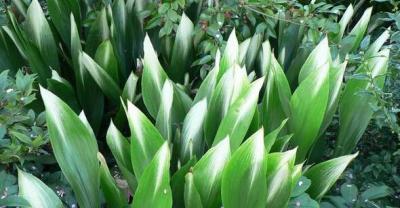
What are the cultivation methods and precautions for potted evergreen (Dieffenbachia)?
Evergreen is very common in our lives. There are many varieties of evergreen; what we usually call evergreen is just the general name for this large category. Common evergreen varieties include...
条件筛选