-
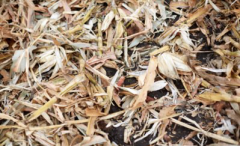
How do you separate and sift out chaff? It can also be used as fertilizer for growing flowers
Before we get to the definition of chaff, some background on grain crops such as wheat, rice, barley, oats and other components is helpful. Cereal crops consist of the seeds or grains we eat, surrounded by an inedible husk or rice hull. Seeds and grains
-

Why can't fresh wheat chaff be fed directly to livestock?
After the wheat is harvested in wheat-producing areas, large livestock have fresh wheat chaff to eat. Many farmers are accustomed to feeding fresh wheat chaff directly to livestock, but this feeding method is not good. Because when livestock eat untreated fresh wheat chaff, the oral mucosa is often punctured by wheat awns, causing stomatitis. After livestock develop stomatitis, they want to eat but refuse food; they take feed into their mouths but dare not chew, or after chewing a few times they spit the feed back out; white turbid mucus continuously flows from the mouth; in the oral cavity, wheat awns can be seen stuck all over the tooth roots and the base of the tongue. To prevent oral
-
Key Technical Points and Application Methods of Wheat Straw and Wheat Chaff Mulching
Wheat straw and wheat chaff mulching involves evenly spreading wheat straw or wheat chaff around autumn crops or between rows to form a certain mulch layer, with an appropriate amount of soil pressed onto it in spots, so as to mulch and preserve soil moisture. For wheat straw and wheat chaff mulching, it is necessary to grasp the timing and mulching amount well, and to apply chemical fertilizers reasonably and according to other such principles. 1. Timing. The relatively suitable mulching time is from late June to early to mid-July. Too early makes it easy to press down the seedlings, while too late means the crop plants are tall and difficult to work with. After mulching, if there is no rain or insufficient rainfall, it will affect the rotting and decomposition of the straw, and the effect will be poor, so watering should be done in time. It can also be done at
-
Why can't fresh wheat chaff be fed to livestock? Farmers should pay attention
As soon as wheat is harvested, there is fresh wheat chaff. However, freshly threshed wheat chaff cannot be used directly to feed livestock (cattle, horses, donkeys, mules). Otherwise, if livestock eat untreated fresh wheat chaff, their mouths are easily punctured and inflamed by the wheat awns. If fresh wheat chaff is to be used to feed livestock, it can be soaked in 0.3%-0.5% fresh limewater for 4 hours to alkalize and soften the fresh wheat chaff, then rinsed clean with water before feeding. In this way, it is easy for livestock to digest, and it can increase calcium to make livestock strong and sturdy; the fresh wheat chaff can also be stored under natural conditions for 1 month, and fed after the wheat awns
-
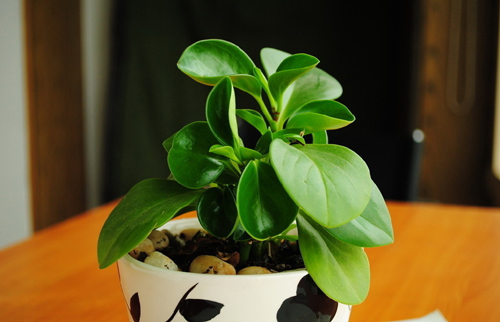
How to Grow and Care for Peperomia verschaffeltii (Red-Edged Peperomia)
Peperomia verschaffeltii, also called pepper elder, belongs to the genus Peperomia in the family Piperaceae and is a perennial herb. It is native to the West Indies, Panama and northern South America. It prefers a warm, humid, semi-shaded environment. The optimum growing temperature is around 25°C, and it must not drop below 10°C. It does not tolerate high temperatures, requires relatively high air humidity, and dislikes direct sunlight.
-
The role and application methods of wheat straw and wheat chaff mulching
Wheat straw and wheat chaff mulching is the even scattering of wheat straw or wheat chaff around autumn crops or between rows to form a certain mulch layer, with an appropriate amount of soil pressed over it in spots so as to cover and preserve soil moisture. For wheat straw and wheat chaff mulching, it is necessary to properly grasp the principles of timing, mulching amount, and rational application of chemical fertilizers, etc. 1. Timing. The relatively suitable mulching time is from late June to early and mid-July. Too early makes it easy to press down the seedlings, while too late means the crop plants are tall and not easy to work with. After mulching, if there is no rain or the rainfall is insufficient, it will affect the rotting and decomposition of the straw, and the effect will be poor, so timely watering is needed. It is also possible to water at the first topdressing at the end of June.
-
Embarrassing childhood stories from poverty: dreaming of digging up eggs in a pile of wheat chaff to get rich
Embarrassing childhood stories from poverty: dreaming of digging up eggs in a pile of wheat chaff to get rich
-
How to Choose and Use a Chaff Cutter and Kneading Machine? A Worry-Free Guide to Feed Processing for Cattle and Sheep Farms
A chaff cutter and kneading machine can cut and knead straw and forage grass, improving feed palatability and utilisation rate, and is a common machine on cattle and sheep farms. This article introduces the working principle, purchasing tips, operating steps and maintenance points of the chaff cutter and kneading machine, helping farmers avoid detours.
-
How to Choose a Diesel Chaff Cutter? Livestock Farmers Should First Look at the Basic Parameters
The diesel version of the chaff cutter is a common forage processing machine in livestock farming. This article explains the meaning of the basic parameters of the chaff cutter and key points for choosing one, helping farmers understand indicators such as power and productivity, master usage and maintenance precautions, and select a suitable model.
-
条件筛选