-

What are the precautions for autumn mushroom cultivation?
The growth and development of mushrooms is very sensitive to temperature, and higher temperatures are unfavorable for mushroom growth and development; therefore, the suitable period for cultivating mushrooms is generally winter and spring. In order to meet market demand, in recent years some places have been trying autumn mushroom cultivation. For this reason, this article introduces several prominent issues that should be noted in autumn mushroom cultivation as follows: 1 Cultivation season and altitude. According to the biological characteristics of mushrooms, the temperature range for mycelial growth is 6-32°C, and the temperature range for fruiting body growth and development is 7-25°C. Therefore, most mushroom cultivation areas
-
What are the precautions for giving injections to sick snakes?
Practice has proven that giving injections to sick snakes is the best way to cure snake diseases, but the following points must be noted. (1) Avoid injecting the tail. Many novice snake keepers, influenced by the fact that people receive injections in the buttocks when ill, believe that the best site for injecting a snake is the tail, not realizing that the snake's tail is densely packed with nerves. A slight mistake can cause nerve damage to the tail, making the sick snake uncomfortable, and in severe cases leading to death. Therefore, when injecting a sick snake, one should choose the muscle-rich areas below the heart and on both sides of the spine. (2) Avoid using a thick needle. Using a thick needle to inject a sick snake
-
What are the precautions for spraying foliar fertilizer on rice?
Timing: Generally, spraying at the late booting, initial heading, grain-filling and full heading stages of early rice is most suitable, and spraying once per mu takes over an hour. If spraying fertilizer coincides with the heading and flowering stage, it should be done in the morning before the flowers open and after 4 p.m. Preparing liquid fertilizer: Various quick-acting nitrogen, phosphorus and potassium fertilizers, monopotassium phosphate, triacontanol, borax, silkworm droppings and human and livestock urine can all be used as foliar fertilizer. The amount used per mu is small, but they must first be processed into liquid fertilizer. Quick-acting chemical fertilizers should be dissolved in 5-10 times their amount of water the day before spraying to prevent burning the rice leaves from over-spraying. Human and livestock urine should first be left
-
What are the precautions for pig immunization? Pig farmers need to master these key points
Pig farmers immunize their pigs once, twice or more times every year, but the pigs still contract infectious diseases they have been immunized against, causing huge losses. What is the reason? This has a great deal to do with neglecting the precautions for immunization. Therefore, we offer a reminder to pig farmers. First, be careful to buy vaccines from reliable sources. Vaccines or bacterial vaccines need to be managed by special methods so they do not lose their efficacy. Before buying a vaccine or bacterial vaccine, confirm whether the department selling the vaccine has a certain level of technical capability, so as to ensure the efficacy of the
-
Use Sulfonamides with Caution When Treating Infectious Coryza in Chickens
The pathogen of infectious coryza in chickens is Haemophilus paragallinarum, and it is an acute upper respiratory tract disease with highly contact-based transmission. The disease tends to become epidemic in humid seasons, mostly occurs as mixed infections, and the incidence rate is high in adult chickens. Symptoms: nasal discharge, which forms scabs after drying and blocks the nostrils. Facial swelling, with swelling on one side of the face in most cases, head shaking, closed eyes and listlessness, preference for lying down, reduced feed intake, decreased egg production, and greenish watery droppings. Some chickens show respiratory symptoms such as coughing and sneezing. Treatment: Sulfonamides are highly effective, but they inhibit egg production, and laying
-
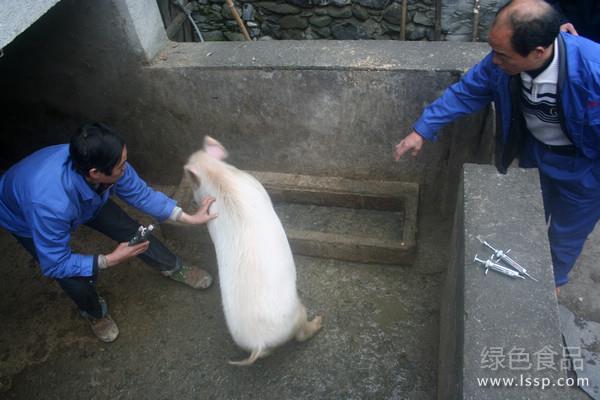
Precautions for Preventing Adverse Reactions During Livestock Immunization
Precautions for Preventing Adverse Reactions in Livestock Immunization
-
Geranium Winter Care Methods and Precautions
Geraniums like warm winters and cool summers. Indoors in winter, keeping them at 10-15°C during the day and above 8°C at night allows them to bloom normally. However, the optimal temperature is 15-20°C. Geraniums like dry conditions and dislike dampness, so watering should not be excessive in winter; water should be given intermittently, allowing the soil to dry between waterings. When the soil is wet, the stems become soft and tender, which is unfavorable for the sprouting and opening of flower stems; prolonged excessive moisture will cause the plant to grow leggy, the flower stems to be positioned higher up, and the leaves to gradually yellow and drop. Geraniums need ample sunlight during their growing period, so in winter they must be placed in a sunny spot. With insufficient light, the stems and leaves grow leggy
-
8 Precautions for Selecting Superior Soybean Seeds
1. Pay attention to the seed purity and germination rate. 2. Pay attention to whether free consultation and technical guidance are promised. 3. Pay attention to whether sales outlets have been set up indiscriminately. 4. When mail-ordering seeds, pay attention to sending money via the local post office (branch); do not enclose cash in the letter. Clearly write your detailed address and name, and note the variety and quantity purchased in the remarks column. 5. Pay attention to clearly identifying the trademark and packaging marks. 6. Pay attention to agreeing on the seed price. 7. Pay attention to whether seed quality is guaranteed. 8. Pay attention to contacting by phone or letter before introducing a variety, and you may also consult the relevant units.
-
How to Raise and Care for a Whippet: Methods and Precautions
In the feed, there should be 350-400 grams of meat every day, plus the same amount of dry vegetarian material such as oatmeal. The meat should first be cooked and chopped, then mixed with cooked vegetarian food before feeding (add an appropriate amount of water). The food provided must be given in the right amount: feed too little and it will not eat enough, will not grow well, and will lose its healthy and lively demeanor; feed too much and there will be excess energy, it will become fat and heavier, thereby affecting its health and appearance. At the same time, clean drinking water should be provided 1 or 2 times a day. This dog has Italian Greyhound blood, and although its disease resistance is relatively strong, it must
-
Pug Care Guide and Daily Precautions
For the food fed to Pugs, the meat (beef, chicken, fish) must be fresh, and fish bones must be removed. The amount can be adjusted according to the dog's body weight, with 180-220 grams being appropriate. Do not overfeed, otherwise it will become overweight and lose its cute appearance. In addition to meat, also feed some vegetables and cooked beans or sugar-free or low-sugar biscuits and other vegetarian foods. The meat should first be boiled in a small amount of water for 15-20 minutes, then chopped before feeding. The reason the meat must be cooked is, first, to enhance the aroma and stimulate appetite; second, to kill bacteria and
条件筛选