-
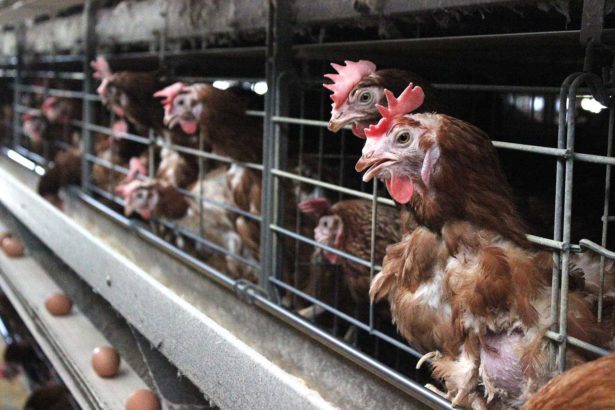
The truth behind the egg shortage: A vaccine problem at a domestic breeding chicken farm caused millions of chickens to die suddenly, and the Bureau of Animal and Plant Health Inspection and Quarantine had no grasp of it
(Exclusive) The truth behind the egg shortage! For the first time in the country, a vaccine problem at a breeding chicken farm caused millions of chickens to die suddenly, and the Bureau of Animal and Plant Health Inspection and Quarantine had no grasp of it at all
-

Mass fish deaths at Sanya Bay caused by fishermen's illegal bottom trawling that led to nets spilling their catch
Mass fish deaths at Sanya Bay caused by fishermen using illegal bottom trawls, leading to nets spilling their catch
-

How to legally obtain compensation for agricultural losses caused by floods
How to legally compensate for agricultural losses in the face of floods
-

Hibiscus Flower Cultivation Methods, Precautions, and the Harm Caused by the Pest Slug Moth
Hibiscus grows in sparse mountain forests. It grows easily and has strong stress resistance. It prefers a warm, humid climate, is not cold-tolerant, and requires ample sunlight. It likes light and is not shade-tolerant. It is suited to slightly acidic soil rich in organic matter with a pH of 6.57. Cultivation Methods for Hibiscus - Potted
-
Symptoms and Control Methods of Tulip Bulb Rot Caused by Sclerotium tuliparum
Symptoms: The disease affects tulip seedlings and bulbs. In the early stage of the disease, the outer scales of the infected bulbs develop soft rot, and many white silky mycelial strands grow on the diseased parts and the nearby soil surface. In the later stage of the disease, many sclerotia form. The sclerotia are round or irregular in shape, initially white, later turning brown to black, with a lighter interior color and tightly packed tissue. After seedlings are infected, the small leaves die as soon as they emerge. Pathogen: The pathogen is Sclerotium tuliparum Kleb, belonging to the Deuteromycotina, Hyphomycetes.
-
Fish fungal disease is caused by water molds
Signs of infection The obvious sign of infection is cotton-wool-like growths, usually white, but sometimes grayish black to green. The fungus usually starts on the body and trunk, but it may also originate at a site with some injury, and it can spread to attack the fins, mouth, eyes and gills. Affected fish All fish may be harmed. Details of infection Fungi are plants that grow on dead organic matter. The typical fungal body, or mycelium, is made up of very fine filaments or external hyphae, and the external hyphae pierce dead or decaying
-
How is chicken gout diagnosed? It is mostly caused by feeding high-calcium feed
In recent years, the phenomenon of chicken gout caused by high-calcium feed has occurred from time to time, with a long disease course and high mortality. Two cases of gout diagnosis are reported as follows. 1. Incidence situation In May 2000, a chicken farmer in Jinhu Town raised 1000 chickens. After 30 days of age, believing that the content of calcium hydrogen phosphate was insufficient, the amount was increased from 1% in the original formula to 3%. After 20 days of feeding, chicken deaths were found, and a total of 210 chickens died successively, with a mortality rate of 21%. After changing the feed, there was improvement. Through testing, it was confirmed
-
Control methods for damage caused by bean blister beetles on potatoes
Bean blister beetles have currently been found causing damage on plastic-mulched potatoes in Longhu District, Shizuishan City, over an area of about 30 mu, with leaves in some fields severely damaged, affecting the normal growth of potatoes. There are three species of blister beetles, namely the white-striped bean blister beetle (Epicauta gorhami Marseul), the yellow-black flower blister beetle (Mylabris cichorii Linne), and the large yellow-black flower blister beetle (Mylabris phalerata Pallas), which are widely distributed across the country. They mainly damage beans,
-
Analysis of Neurological Symptom Diseases Caused by Calcium-Phosphorus Metabolism Disorders in Chickens
Strictly speaking, the neurological symptom disease caused by calcium-phosphorus metabolism disorders should be described as chondropathy (rickets/osteomalacia). It is characterized by deformation of the keel bone, weak expansion of the ribs, and legs that are brittle and easily broken. Affected chickens walk weakly and have difficulty breathing, and when held, they show no struggling response. It is commonly seen in chicks and also readily occurs in various caged chicken flocks. Besides an imbalanced calcium-to-phosphorus ratio, deficiencies of vitamin A and D3 are also among the causes of calcium-phosphorus metabolism disorders. The most common lesions found on pathological necropsy are vertebral hyperplasia of the ribs and severe deformity at the junction of the ribs and cartilage. Supplementing the feed with vitamins and calcium carbonate can quickly reverse these symptoms.
-

How to prevent and treat decreased milk production caused by udder edema in dairy cows?
How to prevent and treat decreased milk production caused by udder edema: udder edema in dairy cows
条件筛选