How to prevent and treat decreased milk production caused by udder edema in dairy cows?
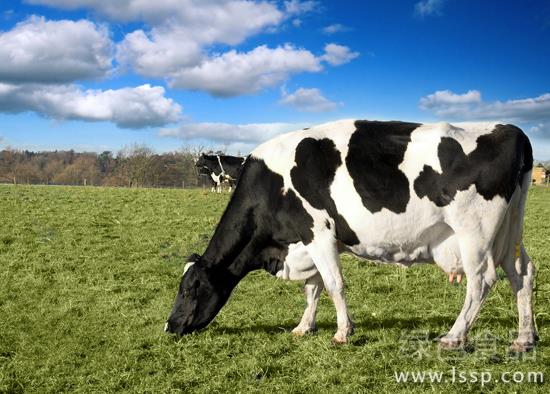
Dairy cows
Udder edema is a perinatal metabolic disorder in dairy cows. The symptoms are edema of the whole udder or part of the udder, with the skin appearing shiny, no pain, and a dough-like consistency; when the udder is pressed with the fingers, a depression appears. The teats become thick and short due to swelling, making milking difficult. In more severe cases, the cow's udder droops, causing the hind limbs to stand spread apart, making movement difficult and making injuries likely. Udder edema in dairy cows leads to decreased milk production and causes mammary atrophy.
Causes: obstructed lymphatic return, increased permeability, and enhanced endocrine function in the cow's body; excessive feeding of high-concentrate feed before calving, imbalanced mineral ratios, abnormal antioxidant function, and disordered endotoxin metabolism.
Prevention: First, strictly control the amount of concentrate fed to dairy cows; generally, the daily feeding amount before calving should be controlled at 4-6 kg. Second, limit the amount of salt, generally at 1% of the complete daily ration. Third, the concentrate should be nutritionally balanced; it is best to use a pre-calving feed.
Treatment: massage the cow's udder 3 times a day for 15-30 minutes each time, and apply a hot compress to the udder after massage. Furosemide (furosemide) can also be injected intramuscularly, with each dose of 200 mg, used twice consecutively. A 25% glucose solution 500 ml, 10% calcium gluconate solution 500 ml or 5% calcium chloride solution 250 ml, and 10% caffeine sodium benzoate 30 ml can also be given in one intravenous injection, injected for 3 consecutive days. Fresh plantain can also be fed to dairy cows.