-

Why do agricultural products become unsalable? A deep analysis of the main causes
Since the start of summer this year, reports about unsalable agricultural products have once again appeared frequently. From nectarines in a certain northern province to lychees in some southern regions, this should have been a season of bumper harvests, yet farmers were divided between joy and worry.
-
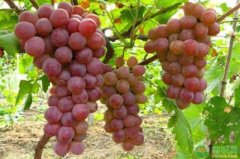
What are the main grape diseases? Cause analysis and pest and disease control methods
What are the ecological causes of the main grape diseases? Each main grape disease occurs in a different period. Besides understanding its occurrence period, one must also grasp the optimal conditions for the onset of each individual disease. For example, grape downy mildew occurs in Taiwan, China from May to November. Continuous rainfall during the plum rain season and typhoon season is most favorable for the onset of downy mildew. Once it occurs, the pathogen multiplies rapidly and in large quantities and spreads quickly with wind and rain, followed by severe outbreaks.
-
What to Do About Yellow Leaves on Fruit Trees? Cause Analysis and Treatment Methods
Abstract Improving soil: In the orchard, leguminous crops can be intercropped and a suitable amount of organic fertilizer can be added to improve the soil, which can effectively control yellow leaf disease in fruit trees. Choose disease-resistant rootstocks: Choose rootstocks with strong adaptability, resistance to yellowing, and tolerance to saline-alkali conditions. Reasonable irrigation: Saline-alkali plots and sandy
-
Camellia Has Buds but Won't Bloom: Cause Analysis and Variety Selection
When camellias bloom, seen from a distance, flowers dot the dense foliage, red ones like clusters of bright red fireballs, white ones like pure white clouds. These camellias race to bloom, bringing boundless spring vitality. But some camellias have flower
-
What to Do When Shiitake Mushroom Logs Rot? Cause Analysis and Control Measures
Shiitake mushroom, also known as flower mushroom, monkey head mushroom, fragrant mushroom, fragrant trust, fragrant fungus, winter mushroom, fragrant mushroom, is the fruiting body of the plant Xiangxun of the Pleurotaceae family. Shiitake is the world's second largest [1] edible fungus, and is also one of our country's specialties, long known among the people as a mountain treasure. It is a kind of fungus that grows on wood
-
What to Do About Eggplant Flower and Fruit Drop? Cause Analysis and Countermeasures
Eggplant, also known as aubergine, and by the alternative name "luosu," is one of the few purple vegetables and a very common home-style vegetable on the dining table. In parts of Jiangsu, Zhejiang and Anhui it is called luosu, while in Guangdong and Guangxi it is called "aigua." It is an annual herbaceous plant of the genus Solanum in the nightshade family, and perennial in the tropics.
-
What to Do About Root Rot in Spring Cabbage Seedlings? Cause Analysis and Control Methods
Cabbage is a very ancient vegetable; people were already turning it into delicious dishes during the ancient Greek and Roman era more than 4,000 years ago. In Europe today, wild cabbage can still be seen growing on those barren, cold chalk grasslands. Cabbage
-
What to Do About Low Potato Yields? Cause Analysis and Countermeasures
Potato (scientific name: Solanum tuberosum), a perennial herbaceous plant of the Solanaceae family, whose tubers are edible, is the third most important food crop in the world, after wheat and maize. Potato is also known as di dan, ma ling shu, yang shan yu, etc., the tuber of a Solanaceae plant. With
-
What to Do When Bean Sprouts Rot? Cause Analysis and Prevention Methods
Bean sprouts, also known as sprouting vegetables, are edible sprouts cultivated from the seeds of various grains, legumes and trees, and are also called "living vegetables." Common sprouting vegetables include: Chinese toon sprouts, buckwheat sprouts, alfalfa sprouts, Sichuan pepper sprouts, green black bean sprouts, acacia
-
What to Do About Sponge Gourd Flower Rot? Cause Analysis and Countermeasures
Sponge gourd (Luffa) is an annual climbing herbaceous plant of the Cucurbitaceae family. The stems and branches are rough, with ridged grooves, covered with fine soft hairs; the branches are angular, smooth or with coarse hairs on the angles, and have tendrils. The stem tendrils are stout, covered with short soft hairs, usually 2-4 branches. The leaves are simple and alternate, with long petioles; the leaf blade is palmately cordate, 8-30 cm long,
条件筛选