-

Why Does Shrimp Farming Lose Money? Real Case Analysis
In order to summarize the experience and lessons of crayfish farming, the author recently surveyed more than 20 shrimp farming ponds covering nearly 1,000 mu in the urban area. According to the survey statistics, in 2011, 80% of shrimp farmers made a profit, with an average profit of 750 yuan per mu, and the highest reaching 1,050 yuan. But nearly 20% of farmers suffered losses.
-
Case Analysis of Diagnosis and Treatment of Gosling Plague in Young Geese
Diagnosis and Treatment of an Outbreak of Gosling Plague in Young Geese
-
Case Analysis and Technical Key Points of Ecological Loach Farming
Case Analysis of Ecologically Farmed Loach
-
Case Analysis of Fish Disease Outbreak Prevention and Control in a Small Reservoir
In early October 2005, an outbreak of hemorrhagic disease occurred in the fish farmed in Tuonan Reservoir in our town. Through our active treatment, the disease was basically brought under control. The prevention and control situation is summarized as follows: 1. Basic information. Under normal conditions, Tuonan Reservoir has a water area of 100 mu, and 150 mu during the high-water period, with an average water depth of 3 m and a maximum depth of 6 m. Artificial aquaculture in this reservoir began in the early 1990s, mainly with conventional fish species, with supplementary stocking of freshwater shrimp, yellow catfish, and others. The reservoir water is clear and has no history of epidemic disease.
-
Case Analysis of Intraperitoneal Fluid Therapy for Moldy Feed Poisoning in Pigs
1. Clinical symptoms: The sick pigs were depressed, had weakened vision and slow responses, unsteady staggering gait, and diarrhea with grayish-yellow feces (some mixed with blood). Some sick pigs vomited, and a few circled or pressed their heads against the wall. Red patches appeared on the skin at the base of the ears, abdomen, and inner sides of the limbs. The body temperature of the sick pigs was 37.8-38.5°C. 2. Necropsy changes: The liver of the dead pigs was significantly enlarged, pale yellow, and brittle; the gallbladder was enlarged, and the lymph nodes were edematous. 3. Diagnosis: Upon inquiry, it was learned that the pig
-
Case Analysis of Diagnosis and Treatment of Swine Lungworm Disease
Swine lungworm disease is an endemic form of swine metastrongylosis caused by Metastrongylus. The disease mainly affects piglets weighing 30-50 kg. It causes pneumonia and bronchitis in pigs, severely affecting their growth and development and even leading to death. 1. Incidence situation: The vast majority of farmers in the Enshi region of Hubei raise pigs mainly through free-range methods, feeding them mostly feed, wild forage and farm vegetables, and most green feed is simply rinsed with water or not washed at all, so pigs are highly susceptible to parasitic infection. On May 20, 2008
-
Case Analysis and Summary of Chronic Swine Erysipelas
I. Cause: The pathogen is Erysipelothrix rhusiopathiae (swine erysipelas bacillus), which exists in all organs of diseased pigs and in the tonsils, intestines and bile of carrier pigs. Because the secretions and excretions of diseased pigs contaminate the environment, it becomes an endemic disease. II. Case: Feng's pig weighed about 90 jin and had been ill for several days when it was brought in for diagnosis and treatment; its body temperature measured 39.5-40 degrees C. The symptoms were generally a normal or slightly elevated body temperature; some pigs had swollen arthritis of the limbs and limped when walking; some often developed endocarditis, cardiac weakness, rapid breathing and coughing; some developed skin necrosis, with the ears and abdomen appearing purplish-blue, and sometimes diarrhea occurred.
-
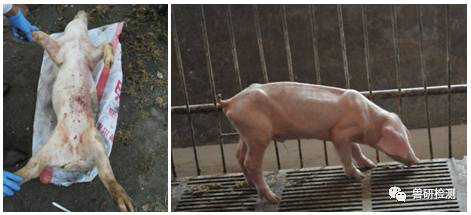
Detection Methods and Case Analysis of Porcine Circovirus Disease
Porcine Circovirus Disease and Detection Case Analysis
条件筛选