-

Detailed Explanation of the Causes of Onion Bulb Rot and the Prevention and Control Methods
Onion, also known as scallion bulb, originated in the West Asia region, and is now planted and cultivated in all regions of our country, with a relatively huge market demand and remarkable economic benefits, and nowadays it has attracted many farmers to plant it. However, many problems are encountered during planting that affect the yield and marketability, and onion bulb
-
What causes onion bulb rot? Cause analysis and control methods
Onion bulb rot is relatively common in onion-growing areas and has caused serious economic losses for farmers, so farmers should strengthen their understanding of this disease and do a good job of prevention and control. So how should onion bulb rot be controlled? Follow the editor to learn about it. 1. Vari
-
Occurrence Characteristics and Control Methods of Soft Rot in Lily Bulbs
Lily, a perennial herbaceous bulbous plant of the genus Lilium in the family Liliaceae, is mainly distributed in temperate regions of the Northern Hemisphere such as eastern Asia, Europe and North America. More than one hundred varieties have been found worldwide, and China is its most important center of origin, with more than fifty native species, making it the natural distribution center of the genus Lilium.
-
Symptoms and control of pseudobulb rot in orchids, and orchid care tips
Symptoms and control of pseudobulb rot in orchids
-
Symptoms and Control Methods of Tulip Bulb Rot Caused by Sclerotium tuliparum
Symptoms: The disease affects tulip seedlings and bulbs. In the early stage of the disease, the outer scales of the infected bulbs develop soft rot, and many white silky mycelial strands grow on the diseased parts and the nearby soil surface. In the later stage of the disease, many sclerotia form. The sclerotia are round or irregular in shape, initially white, later turning brown to black, with a lighter interior color and tightly packed tissue. After seedlings are infected, the small leaves die as soon as they emerge. Pathogen: The pathogen is Sclerotium tuliparum Kleb, belonging to the Deuteromycotina, Hyphomycetes.
-
Tulip Cut Flower Bulb Rot: Symptoms and Control Methods
It is mainly spread through the bulbs, infecting new shoots during the sprouting process of tulips and causing disease in the above-ground parts. The optimum temperature for infection is 10°C to 15°C, which coincides with the early growth temperature of tulips. The disease occurs more frequently during the period from bulb sprouting to the unfolding of the first leaf, and can continue until flowering. In the early stage of the disease, the spots on the leaves appear water-soaked or grayish-white; in severe cases, the epidermis separates from the mesophyll, causing cracking that exposes the mesophyll, and yellow spots form on the bulbs. Control methods: promptly pull out and destroy infected plants, and broadcast agricultural streptomycin on the surrounding soil; seed bulbs should be
-
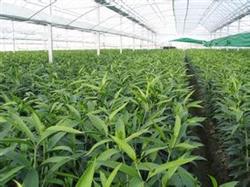
How to prevent and control lily bulb stalk rot? Sharing practical tips
(1) For soil preparation, choose loose, fertile loam soil with good drainage. During soil preparation, broadcast fully decomposed organic fertilizer at 5 cubic meters per mu, and deep plow 30-35 cm. Then make beds at a width of 110-120 cm with 50 cm walkways, and then broadcast 10-15 kg of calcium superphosphate, 4-6 kg of potassium sulfate and 0.8-1.0...
-

What to Do About Onion Bulb Rot? Causes and Control Methods
Causes of Onion Bulb Rot and Control Methods
-
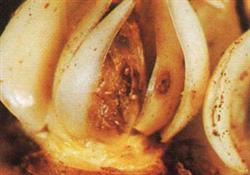
What Is Lily Bulb Rot? What You Need to Know About Growing Lilies
What is lily bulb rot? What methods can be used to prevent and control lily bulb rot? Please help introduce the methods. Lily bulb rot is caused by fungi of the phylum Basidiomycota. Its disease characteristics are that the mycelium persists on diseased and residual tissue, and the pathogen can directly or indirectly invade the base of the lily stem. During the seedling stage, continuous overcast days, temperatures below 2...
条件筛选