How to prevent and control lily bulb stalk rot? Sharing practical tips
(1) For soil preparation, choose loose, fertile loam soil with good drainage. During soil preparation, broadcast fully decomposed organic fertilizer at 5 cubic meters per mu, and deep plow 30-35 cm. Then make beds at a width of 110-120 cm with 50 cm walkways, and then broadcast 10-15 kg of calcium superphosphate, 4-6 kg of potassium sulfate and 0.8-1.0...
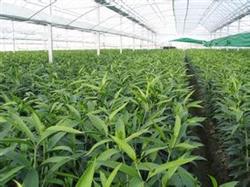 Lily bulb stalk rot is caused by fungi of the phylum Basidiomycota. Its disease characteristics are that the mycelium remains on diseased residue, and the pathogen can directly or indirectly invade the base of the lily stem. During the seedling stage, when there are consecutive cloudy days, temperatures below 20°C, and high humidity conditions, or when the soil is heavy and clayey, the disease occurs severely. Control methods should strengthen cultivation management, apply fertilizer and water reasonably, and enhance plant resistance. In addition, rational close planting, regulating ventilation and light penetration, and paying attention to drainage during the rainy season are also very important. In the early stage of the disease, spray or drench with 20% tolclofos-methyl emulsifiable concentrate at 1200 times dilution or 40% quintozene powder at 500 times dilution. In severe cases, 40% quintozene can be used, evenly spread on the soil surface and then raked into the soil for chemical soil treatment, which is also effective.