-

Breeding science and technology enterprises need more loan support
Insufficient funds and difficulty in obtaining loans have restricted and affected the development of crop breeding science and technology enterprises. Liu Fengzhi, a member of the National Committee of the Chinese People's Political Consultative Conference and director of the Fruit Research Institute of the Chinese Academy of Agricultural Sciences, said: At present, the financial institutions that provide loans to crop breeding science and technology enterprises are basically all commercial
-
China has initially established a breeding technology system for resin-producing pines
Recently, the resin-producing Masson pine (Pinus massoniana) and slash pine (Pinus elliottii) breeding technology system jointly built by the Research Institute of Subtropical Forestry of the Chinese Academy of Forestry, the Guangxi Academy of Forestry Sciences and the Fujian Academy of Forestry Sciences passed an on-site review by the Department of Science and Technology of the State Forestry Administration, marking that China has initially established a breeding technology system for resin-producing pines.
-
How can breeding technology make seed production simpler?
The core competitiveness of a corn variety is mainly reflected in 3 aspects. The first is ease of seed production, that is, the seed production technology is simple and easy to operate, and the seed production yield is high, making it easy to ensure all quality parameters; the second is field performance, with high yield, stable yield, multiple resistance, and wide adaptability; the third is grain
-
Important breakthrough achieved in high-efficiency hybrid soybean breeding and seed production technology
A research group led by researcher Wei Baoguo of the Shanxi Academy of Agricultural Sciences, after more than 30 years of unremitting efforts, has achieved an important breakthrough in high-efficiency hybrid soybean breeding and seed production technology, opening up broad prospects for the utilization of heterosis in soybeans in China and even the world. Led by the Shanxi Academy of Agricultural Sciences
-
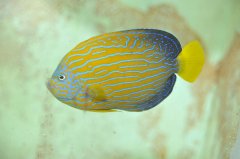
Breakthrough in Artificial Breeding of Blue-banded Angelfish Fry, Creating Value While Balancing Ecology
Brilliant colors and dazzling postures, with schools of fish swimming gracefully underwater, are extraordinarily therapeutic, and have also made the ornamental aquarium industry a star industry under trends such as the stay-at-home economy and physical and mental stress relief; according to the Food and Agriculture Organization of the United Nations (FAO)
-
How to cultivate double-cropping peaches? A full share of planting experience
With the progress of breeding technology, extremely early-maturing peaches (such as Siyuehong peach and Wuyuecui peach) and extremely late-maturing peaches (such as Xuetao, Shengtao and Dongtao) have appeared one after another, creating favorable conditions for extending the market supply period of peaches and improving the economic benefits of peach growers. However, in actual
-
A Detailed Explanation of Black-spotted Frog Breeding Technology and Management Key Points
Abstract: The breeding environment for the black-spotted frog (Rana nigromaculata): the pond is required to have high dissolved oxygen content, the suitable growth temperature is 20-30°C, and it likes to live in a warm, humid environment overgrown with weeds. Daily management: it fears direct sunlight, so concealed places can be set up in the pond, and vegetables etc. can be planted around it
-
How to Raise Jianchang Ducks? Key Points on Breeding Technology and Feeding Management
Abstract At the beginning of raising Jianchang ducks, site selection must be done well; it is better to choose a place with flat terrain and a clean water source. Then choose healthy and vigorous ducklings to raise. During raising, 23 hours of light and a temperature of about 31 degrees are needed for brooding. Drinking water
-
Jinding Duck Breeding Technology and Key Points of Feeding Management
Abstract During the brooding period, Jinding ducks need to be fed six times a day, mainly with high-protein food, and the water quality must be clean. During the growing period, reduce protein feed, allow appropriate foraging, and inject duck plague vaccine. During the young duck period, increase feed with tolerance to coarse fodder, allow appropriate free-range foraging, and do a good job of
-
Key Points of Lindian Chicken Breeding Technology and Scientific Feeding Methods
Abstract Temperature: High-temperature brooding. During the brooding stage, strong light can be used, which helps the eyesight of the chicks. In winter, Lindian chickens should be injected with about 0.4-0.5 mL of new stream oil vaccine. Density: It should not be too dense. As the chickens grow, the density becomes smaller, and the chickens should be divided into groups.
条件筛选