-

Fast Breeding Methods and Key Technical Points for the Golden Coin Turtle
The three-striped box turtle (Cuora trifasciata), also known as the golden coin turtle, is a national second-class protected animal with high medicinal value. As wild turtles are becoming increasingly scarce, our farm carries out artificial breeding to protect wild resources. The techniques are as follows: 1. Construction of the turtle pond. Depending on the type of turtle pond, one may choose the burrow style or the land-and-water combined style. Since the latter is convenient to manage, it is more readily adopted. It consists of a water pool, land area, egg-laying pool and turtle nest. The turtle nest must be shaded from light and must prevent escape, prevent predators and be easy to clean and replace. The rearing density for adult turtles is about
-
Detailed Explanation of Carnation Hybrid Breeding Methods and Key Technical Points
Carnation (Dianthus caryophyllus), also known as carnation, belongs to the family Caryophyllaceae, genus Dianthus. Its flower colors are delicate and brilliant, and a single flower has a relatively long blooming period, making it an important cut flower plant of the modern era. Carnation originated in southern Europe, the northern coast of the Mediterranean, and the area from France to Greece, and is now widely cultivated around the world, with major production areas in Italy, the Netherlands, Poland, Israel, Colombia, the United States, and others. With the commercialization of carnation production, many companies specializing in breeding and propagation have emerged.
-
Detailed Explanation of Natural Breeding Methods and Technical Key Points for Koi
Selecting excellent broodstock is the key to successful koi breeding. To use natural breeding, the first step is to select broodstock that meet the standards. In the north, koi previously kept as breeding stock are moved to outdoor ponds in mid-to-late March after spending the winter indoors. At this time, broodstock should be further carefully selected to obtain excellent offspring. (1) Selection of broodstock: Broodstock used for breeding should generally have the following: a strong physique, bright and crystalline coloration, pure lineage, distinct breed characteristics, clearly defined color patch margins with no blurred edges, no blemishes, smooth and neat scales,
-
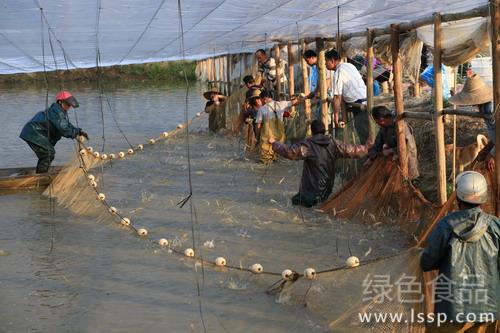
Artificial breeding methods for freshwater shrimp: water quality cultivation is key
Artificial breeding methods for freshwater shrimp: water quality cultivation is key
-
Clownfish Breeding Techniques and Methods Explained in Detail
Turban snails, five-claw scallops and the like, just like the abalone (jiukong shellfish) we commonly eat, can be artificially bred: when the gonads are mature, a simple method of raising or lowering the temperature can be applied to stimulate them to release eggs and sperm. First take out the mature broodstock, with a male-to-female ratio of about 1:3, use a heater or ice cubes to slowly raise or lower the water temperature by about 4°C, then rapidly lower or raise it by 2°C, then place them back in the original tank to return to room temperature, and a large amount of white smoke-like sperm and egg granules can be seen being released. In most shellfish, females slightly outnumber males. Taking the abalone as an example,
-
Chinese Box Turtle (Yellow-margined Box Turtle) Breeding Methods and Key Points of Daily Feeding Management
The yellow-margined box turtle (Cistoclemmys flavomarginata), also known as the broken-plate turtle, snake-eating turtle, clamp-plate turtle, and yellow-plate turtle. Its taxonomic position is the family Geoemydidae, genus Cuora, species Cistoclemmys flavomarginata. Within China it is distributed in Anhui, Henan, Macao, China, Hong Kong, China, Taiwan, China, Fujian, Hunan, Jiangsu, Zhejiang, Guangdong, Guangxi, and elsewhere. Outside China it is distributed in Japan. [Morphological characteristics] The head is smooth, the front of the snout is flat, and the upper beak has a distinct hook-like curve. The top of the head is olive-colored, with a yellow "U"-shaped arc stripe behind the eyes. The carapace is dark reddish-brown and rather
-
Breeding Methods and Key Technical Points for White Raccoon Dogs
White Raccoon Dogs and Their Characteristics. Raccoon dogs in nature have always been dark brown; this common, ordinary color type is genetically known as the wild type. In 1974, the Harbin Zoo in Heilongjiang Province acquired a rare male white raccoon dog (with pale pink eyes and muzzle), and in 1980, white raccoon dogs or piebald raccoon dogs with yellowish-brown or pale blue eyes and black muzzles were successively found among domestic raccoon dog populations in the three provinces of Northeast China. These special color types, distinct from the wild-type coat color, are called mutant types. The Institute of Special Animal and Plant Sciences of the Chinese Academy of Agricultural Sciences used these valuable white raccoon dog mutant genes
-
How do pufferfish breed? A detailed explanation of breeding methods and techniques
1. Selection of broodstock: The broodstock selected must be strong, with fully mature gonads, and the female and male broodstock used must be in heat at the same time. The broodstock must have the characteristics of the species, and the female and male broodstock should normally appear affectionate with each other. Avoid selecting tropical fish from the same brood or with close blood relations as broodstock, to prevent inbreeding from causing degeneration in the quality of the offspring. Tropical fish with torn fins, disabilities, or deformities should not be used as broodstock. 2. Preparation of the breeding tank: Because broodstock species differ, the breeding tank also differs. Generally, for tropical fish that lay floating eggs
-
Introduction to the Breeding Methods of the East Asian Scorpion "Shenlong No. 1"
The East Asian scorpion "Shenlong No. 1" is a new breed developed through hybrid vigor. Its advantages are large body size, high venom yield, short growth cycle, high litter rate, and high reproduction rate, and it has improved immunity to the original diseases and pests and adaptability to the growth environment, which facilitates feeding management. I. Characteristics: The features of this breed are similar to other East Asian scorpions. The trunk (from the anterior abdomen to the cephalothorax) is flat and elongated oval, and the posterior abdomen is tail-shaped. The entire body resembles a pipa shape, and the whole body surface is a highly chitinized hard skin. The body is
-
Swordtail Fish Breeding Methods and Precautions Explained
Swordtail fish are ovoviviparous fish. Swordtail fish have very strong reproductive capacity. At 6-8 months of age, they enter sexual maturity. The male fish begins to chase the female fish, mating with her using the gonopodium to complete internal fertilization. The fertilized eggs hatch into fry inside the female fish's body and are then expelled. Swordtail fish are easy to breed and require no special management. When breeding, select broodstock over 5 cm, with a male-to-female ratio of 1:1 or 2:1. Lay more soft-leaved aquatic plants on the bottom of the tank and feed plenty of live bait. After the female fish becomes pregnant, her abdomen begins to swell and dark gravid spots appear. At this point, the male fish should be removed.
条件筛选