-

Identification and Control Methods of the Red Pine Pest Red Wood Borer Weevil
Why is the red wood borer weevil considered an important pest of young red pine trees? Because the larvae of the red wood borer weevil bore under the bark of red pine branches and shoots, causing the main shoot and side shoots to be damaged and die. This not only affects the growth of red pine, but can also cause the branches and trunk to crack and exude resin, weakening the tree's vigor and allowing other pests and diseases to invade and cause harm. Moreover, because this insect spends most of its life cycle under the bark of branches, it is difficult to control. Once it occurs in a forest, it may bring serious consequences of forest destruction. How to identify the red wood borer weevil? The adult of this insect is a small beetle, belonging to
-
Occurrence and Integrated Control Methods of the Eggplant Yellow Spot Borer
Since the 1990s, eggplant has developed rapidly in Jingning County, and the county's planting area has now exceeded 1,300 hectares, with an annual total output of more than 51,000 t. At the same time, the eggplant yellow spot borer has shown an increasing trend of damage in the county, affecting the development of eggplant production. For this reason, the author conducted a preliminary study on the occurrence pattern and integrated control techniques of this pest. 1 Occurrence and damage characteristics The eggplant yellow spot borer, also known as the eggplant borer, belongs to the order Lepidoptera, family Pyralidae. Its larvae bore into and damage eggplant flower buds, stamens, ovaries, tender stems, tender shoots and
-
Identification and control methods of the tea shot-hole borer
The adult and larval stages of the tea shot-hole borer both bore into the branches and trunks of lychee and longan, with branches 1-2 cm in diameter being the most heavily affected, and numerous nearly circular small entrance holes visible on the exterior. If an affected branch is cut open, several nearly ring-shaped horizontal small galleries will be found in the xylem, and dark brown beetles smaller than a grain of rice, or milky white legless larvae and pupae, are commonly seen. Because the transport of water and nutrients in the affected branches is blocked, the trees weaken in vigor and often produce dead branches and broken branches, and entire young trees have even been found killed by the damage. In recent years the tea shot-hole borer
-
How to control the peach fruit borer? A detailed guide to practical control methods
The peach fruit borer, also known as the peach stem borer or peach spotted borer, is an omnivorous pest found throughout the country. Its larvae damage the fruit or seeds of many fruit trees, including winter jujube, peach, plum, persimmon, chestnut, apple, pear, pomegranate and hawthorn. When fruit is damaged, it becomes filled with insect droppings and rots; in severe cases, the impact on both yield and quality is very great. Control methods: 1. In early spring, scrape the bark and plug tree holes. Use black light traps to kill adult moths. 2. During the adult emergence period and peak egg-laying period, spray a 1000-fold dilution of 50% phoxim, or a 1200-fold dilution of 50% dichlorvos emulsion
-
How to scientifically control the first generation of the second-brood striped stem borer in single-season rice
Control recommendations 1. For early-sown and early-transplanted single-season rice fields, carry out a full control treatment once from June 20-25, targeting mainly stem borers and small brown planthoppers, and also controlling early-occurring leaf folders and rice thrips. Use 5% fipronil (Regent) suspension concentrate at 40-50 ml/mu, diluted in 30 kg of water for spraying. 2. For fields where rice stripe disease has occurred, on the basis of pulling out and removing diseased plants, promptly apply chemicals to control small brown planthoppers. Use 40% chlorpyrifos (Xinnongbao, Saiben) at 100 ml/mu, diluted in 30 kg of water for spraying, and repeat the treatment after an interval of 5-7 days.
-
Moderate to slightly light occurrence of the second generation of rice stem borers in Suijiang County in 2007
Rice stem borers in our county include the yellow stem borer (Scirpophaga incertulas), the striped stem borer (Chilo suppressalis), and the giant stem borer (Sesamia inferens). In the riverside area, 3 generations occur per year; in the mid-mountain area, 2 generations occur per year. At present, the first generation in the riverside area has ended, and the second generation is beginning to occur successively. According to observations at our station's Fengchi pest and disease monitoring point, this year's second-generation moth flight began on June 10, 1 day earlier than last year and 2 days later than normal years, with the peak day on June 18, 1 day later than last year and 8 days earlier than the historical average; by June 25, a cumulative total of 234 moths had been trapped, with the yellow stem borer, striped stem borer, and giant stem borer accounting for 94.9
-
A Detailed Explanation of the Occurrence Patterns and Control Methods of the Ginger Borer
The ginger borer (also known as the corn borer, belonging to the Lepidoptera order and the Pyralidae family) is a major pest harming ginger. It has a very diverse diet; when causing damage, its larvae bite and feed on tender stems, then bore into the stalk (with frass and insect droppings accumulating at the entry hole), obstructing the transport of water and nutrients, causing the stems and leaves above the bore hole to turn yellow and wilt, and to break very easily under external force. 1. Occurrence patterns. The ginger borer generally produces 3-4 generations per year in our area, and its concentrated damage period coincides exactly with the vigorous growth period of ginger plants. Larvae move between plants to cause damage
-
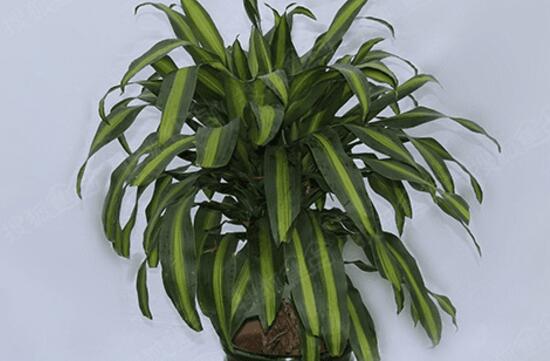
What to Do When a Dracaena fragrans Gets Bugs? Pesticide Methods for Controlling the Sugarcane Borer and Other Pests and Diseases
Dracaena fragrans, native to Guinea, has gradually begun to be cultivated in our country in recent years because of its sturdy, handsome form and its lovely, emerald-green leaves, and it has slowly become one of the most popular foliage plants today. However, because most of the flower lovers who grow Dracaena fragrans are beginners, improper care often occurs, causing the plant to get bugs and fall ill.
-
Control Methods and Medication Tips for Powdery Mildew, Brown Spot and Stem Borer Moth on Dahlia pinnata
Pest and disease control methods for Dahlia pinnata: powdery mildew breaks out heavily from September to October, control it with antifungalmycin 120; brown spot occurs from June to August, spray Bordeaux mixture or chlorothalonil; for viral diseases, prevent aphids and leafhoppers from transmitting the virus; for stem borer moth larvae, spray fenitrothion, so that Dahlia pinnata blooms more brilliantly.
-
Sincerely recruiting strong hands, urgently hiring physically strong laborers
Sincerely recruiting strong hands!
条件筛选