-
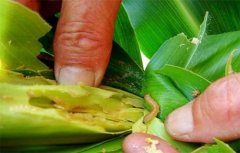
Corn borer damage symptoms, identification and control methods
The corn borer is a common pest that mainly damages crops such as sorghum and corn, hindering crop growth and worsening yield and quality problems. So how should it be controlled? Living habits: This insect is the main pest during the middle and late growth stages of sorghum, but
-
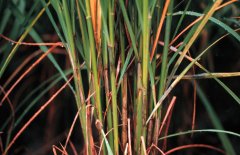
Timing and Methods for Controlling Rice Diseases at the Heading Stage and the Striped Stem Borer
In Changhua, Taichung and Nantou counties and cities, early-planted rice is about to enter the heading stage. Due to continuous rainfall in recent days, conditions are favorable for the occurrence of panicle blast and sheath blight, and monitoring data on the striped stem borer show that a relatively large number of adult moths have appeared since the 22nd, and the larvae that hatch after egg-laying will damage the rice.
-

How to Propagate Aloe arborescens? A Detailed Guide to Common Propagation Methods
The Aloe arborescens plant has thick, juicy leaves and is highly effective at strengthening the stomach, regulating the intestines and boosting metabolism, so it is commonly grown as a household potted plant. So, how do you propagate Aloe arborescens? 1. Division: the best time to divide Aloe arborescens is in spring
-
Grapevine Management Methods and Pesticides for Controlling Borer Pests
Grapes are a fairly common fruit with very thin skin and a sweet-and-sour taste that is well balanced, which is why they are so well liked. Many people now enjoy growing grapes, but during the growing process, grapes may also come under attack from pests, most commonly
-
Differences Between the Rice Stem Borer and the Yellow Stem Borer and the Timing of Yellow Stem Borer Control
Rice is the food we are most familiar with, and it is currently distributed in many parts of our country, and growing rice is also a fairly popular activity. However, when growing rice, there are also many points that need attention, such as the common rice yellow stem borer
-
A Detailed Guide to Growing and Caring for Aeonium arboreum 'Zwartkop'
Aeonium arboreum 'Zwartkop' is a succulent plant with extremely high ornamental value; its leaf color is beautiful, like a blooming flower, and in particular its color is a purplish black. Although the color is rather dark, it better reflects the solemn and aloof temperament of Aeonium arboreum 'Zwartkop', and it is deeply loved and
-
Sugarcane borers cause great damage; how can they be controlled scientifically?
Sugarcane (scientific name: Saccharum officinarum) belongs to the genus Saccharum and is a perennial tall solid herb. Its rhizomes are thick and well developed. The stalks are 3-5 (-6) m tall. It is widely cultivated in tropical southern regions such as Taiwan, China, Fujian, Guangdong, Hainan, Guangxi, Sichuan and Yunnan. Sugarcane
-
Comprehensive Control Methods for the Peach Borer Moth in Peach Cultivation
The peach borer moth larvae bore into and feed on peach fruit, causing gumming; the fruit discolors and drops, or the interior becomes filled with insect frass, making it unfit to eat, and this has a great impact on both yield and quality. I. Occurrence pattern. In Shandong, this pest occurs in 2-3 generations per year, mainly overwintering as mature larvae in cocoons inside damaged mummified peaches, bark crevices, gaps among loose stones in embankments, chestnut burs, sunflower heads, castor seeds, and corn and sorghum stalks, with a small portion overwintering as pupae. In Shandong, the first moth emergence of the overwintering generation occurs in mid-May, with the peak in early to mid-June; most eggs of the 1st generation are laid on early-maturing peach varieties, with the most eggs laid on the ventral (belly) side; the newly hatched larvae appear in mid-to-late June and mainly damage early-maturing peach fruit, boring into the fruit to feed; mature larvae spin cocoons and pupate at the stem cavity of damaged fruit and in bark crevices. The 1st-generation adults begin emerging in early July, with the peak from late July to early August; adults are highly selective in egg-laying, basically laying eggs on late-maturing peach varieties and pomegranates; newly hatched 2nd-generation larvae are found in mid-to-late July, with the peak in early to mid-August; by late July, larvae are already found maturing and pupating. The pupation peak is in mid-to-late August. As late-maturing peaches begin to be harvested, adults then move to other crops to lay eggs and continue causing damage.
-
What are the control methods for the peach fruit borer on jujube trees?
Also known as the peach borer moth and peach spotted borer moth, it is an omnivorous pest distributed throughout the country. Its larvae damage the fruits or seeds of many plants such as winter jujube, peach, plum, persimmon, chestnut, apple, pear, pomegranate and hawthorn. When the fruit is damaged, it becomes filled with insect droppings, causing rot, and in severe
-
What are the control methods for citrus flat-headed borer?
The citrus flat-headed borer (Agrilus auriventris) has one generation per year in the Chenggu area, overwintering as larvae of various instars inside the branches and trunks of citrus trees. In late March, the larvae bore into the xylem and begin to pupate; mid-to-late April is the peak pupation period, with the pupal stage lasting about 25 days. Early May is the peak emergence period for adults, and mid-May
条件筛选