-

Identification and Control of Rice Leaf Blast Symptoms
What is rice leaf blast? How to control it? Rice leaf blast is a common disease, and farmers should identify it carefully. This disease occurs on the leaves of seedlings after the three-leaf stage or on adult plants, generally breaking out heavily from the tillering stage to the jointing stage. The lesions on the leaves often differ in shape, size and color due to differences in weather and varietal disease resistance,
-
Fierce battle over ractopamine pork in the Legislative Yuan: the billions in funding and the origin labeling mark raise many problems; the opposition party blasts: domestic pork cannot contain ractopamine, yet they want our people to eat it!
Fierce battle over ractopamine pork in the Legislative Yuan: the billions in funding and the origin labeling mark raise many problems; the opposition party blasts: domestic pork cannot contain ractopamine, yet they want our people to eat it!
-
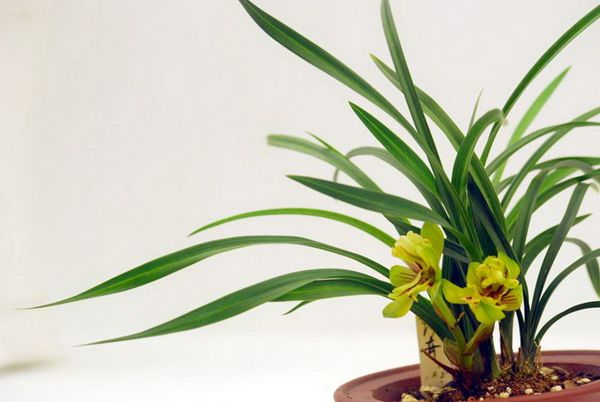
What causes bud blasting in orchids? Causes and prevention methods
Causes and prevention methods of bud blasting in orchids
-
Lean-meat American pork forced open, sparking outrage from Yunlin pig farmers who blast the Council of Agriculture for having no support measures
Lean-meat American pork forced open, Yunlin pig farmers angrily blast the Council of Agriculture for having no support measures, "they don't want to communicate, they just want to shut us up with money"
-
Edible Mushroom Cultivation Methods and Tips for Preventing Bud Blasting in Clivia
How to Prevent Bud Blasting in Clivia
-
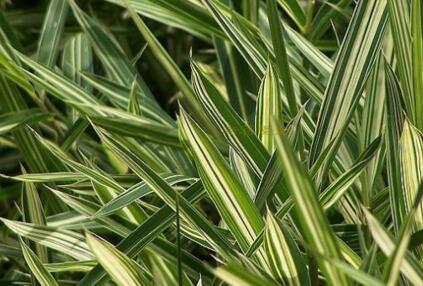
Is the world's smallest bamboo, Pleioblastus fortunei, a tree? Value and cultivation
Pleioblastus fortunei is one of the smallest bamboos in the world. Pleioblastus fortunei has little value for timber and shoots, but it has high ornamental value and forage value. So, is the world's smallest bamboo, Pleioblastus fortunei, a tree? What are its main values? How is it cultivated? Is the world's smallest bamboo, Pleioblastus fortunei, a tree?
-
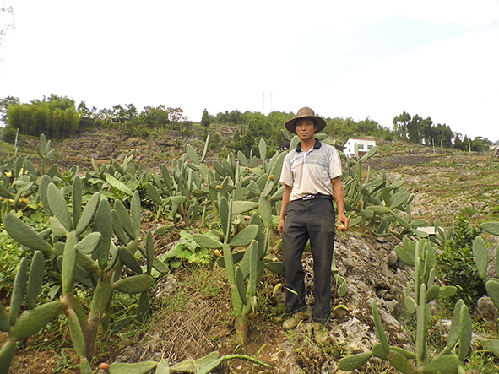
Yu Gong Pan Guanghua Blasts Through Mountains and Rocks to Carve Out a Road to Prosperity
"Yu Gong" Pan Guanghua: Blasting Through Mountains and Rocks to "Carve Out" a Road to Prosperity
-
Identification methods and control measures for ginger blast
Ginger blast, also known as ginger rot or bacterial wilt, is the most damaging disease in ginger production, generally causing 20-30% losses, and in severe cases destroying the entire crop, and it continues to cause damage during storage, leading to rot. This disease can affect stems and leaves, but mainly damages the underground rhizome. It usually occurs first at the stem base near the ground and the upper half of the underground stem; the lesions are initially water-soaked, dull dirty brown, and the internal tissue gradually softens and rots, leaving only the outer skin. Pressing the diseased part by hand can squeeze out a dirty white, foul-smelling fluid; roots, when affected, also become yellow-brown and rot. After the rhizome is damaged, the underground
-
Application methods of Shangnong Iprobenfos for controlling rice blast
Shangnong Iprobenfos is a systemic fungicide with a pre-harvest interval of more than 20 days and low toxicity to humans and livestock. Its formulation is a 40% emulsifiable concentrate. Shangnong Iprobenfos is mainly used to control rice neck blast, and is also effective against rice sheath blight (small sclerotium disease), small grain sclerotium disease, rice sheath blight, and planthoppers, and also has insecticidal and lodging-resistant effects. Application methods: To control rice blast, sheath blight, and small sclerotium disease, dilute 600-1200 times with water and spray. Precautions: (1) This agent is also a cotton defoliant, so when applying
-
Occurrence of Rice Blast and Rice Planthopper and Their Control Methods
I. OccurrenceRice blast: Rice leaf blast has now appeared in Helan, Qingtongxia and other places. The first appearance date was June 13, about 10 days earlier than last year. Especially after the rainfall on July 7 and 12, the field humidity was relatively high, which was very favorable for the development of leaf blast. A recent general survey in Qingtongxia showed an average diseased field rate of 16.7%, a diseased plant rate of 2.2%, and a diseased leaf rate of 0.68%. In Helan, it occurred sporadically in some drill-seeded fields. Ear-neck blast will appear at the end of July and the beginning of August. The meteorological forecast shows that in August the temperature across the region will be relatively high and precipitation in the irrigation area will be relatively low, which is unfavorable for the occurrence and development of ear-neck blast. It is expected that ear-neck blast will generally occur at a mild-to-moderate level, with moderate to severe occurrence in fields where large areas of susceptible varieties are planted in some localities. Even so, all rice-growing counties still must not take it lightly and should strengthen monitoring. For fields with disease centers, farmers should immediately be organized to spray pesticides to block the disease centers and control the spread of fungal spores. In mid- and late July, general control should be carried out in fields where leaf blast has already occurred and in fields with high density and vigorous growth, to control the development of leaf blast and prevent the occurrence of ear blast. In early and mid-August, fields where ear-neck blast has already occurred should be sprayed promptly to control the spread of the disease. Rice planthopper: A survey in Wuzhong on July 10 found a 42% insect-hole rate; in 50 sweep-net passes, there were 32 adult brown-backed planthoppers, 10 white-backed planthoppers, 37 long-winged forms, and 5 short-winged forms. There were 60 white-backed planthopper nymphs and 151 brown-backed planthopper nymphs. A survey in Qingtongxia on July 10 found 24 insects per 100 hills.
条件筛选