What causes bud blasting in orchids? Causes and prevention methods
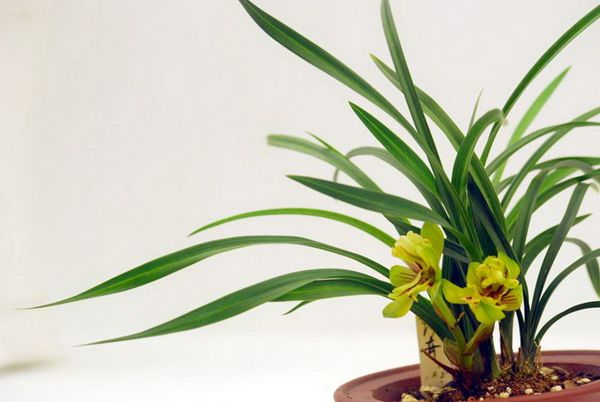
Orchid, also known as Chinese orchid, terrestrial orchid, and orchid grass, is a perennial herbaceous flower of the genus Cymbidium in the family Orchidaceae. It originated in China, where it is widely distributed in Yunnan, Guizhou, Sichuan, and Tibet. It is a traditional precious flower of China and also a famous flower of the world.
People have always regarded the orchid as a symbol of nobility and elegance, and together with plum, orchid, bamboo, and chrysanthemum it is called the "Four Gentlemen." The orchid, with its delicate fragrance and understated elegance, is ranked together with chrysanthemum, narcissus, and sweet flag as the "Four Elegant Flowers and Grasses," and the orchid ranks first among the four. The orchid is plain and unadorned, with evergreen leaves that are soft yet firm, and flowers with a delicate fragrance that carries far. It has extremely high ornamental value and is a treasure for display in living rooms, bedrooms, or as an accent in studies and entrance halls. A detailed introduction follows below.
Growing orchids, there are only 3 joys in a whole year: plenty of new shoots in spring; plenty of flower buds in autumn; and plenty of blooms the following year. But we often find that some flower buds turn black, dry up, and drop off as they grow. How can we prevent bud blasting in orchids?
Through many years of practical observation in orchid growing, the author has found that flower bud differentiation in orchids occurs during the maturation period of new shoots and lasts nearly 1 year. Generally, after a year of nutrient accumulation, the flower buds of orchids emerge from the soil. The flowering periods of different varieties are not the same. For Cymbidium goeringii (spring orchid), Cymbidium faberi (Faber's cymbidium), Cymbidium sinense (Chinese cymbidium), Cymbidium kanran (cold orchid), Cymbidium goeringii var. longibracteatum (spring sword), and Cymbidium tortisepalum (lotus-petal orchid), after the flower buds emerge from the soil, there is a relatively long process of growth, bud gestation, and vernalization. This process is as short as five or six months, and as long as 7 months. For Cymbidium ensifolium (four-season orchid) and summer cold orchid, the time from flower buds emerging from the soil to blooming is not long, as short as about 20 days, and as long as 30 days to 40 days.
Regardless of whether a variety has a vernalization period or not, attention must be paid to the management of fertilizer, water, and light during both the vegetative growth period and the reproductive growth period. There are many reasons why flower buds turn black, scorch, and drop off and die; most are caused by excessive humidity, too much fertilizer, lack of ventilation, and similar factors. Generally, flower bud differentiation is enough to show that nutrition is sufficient, so there is no need to continue applying fertilizer to the roots; only foliar topdressing is needed. The so-called attention to fertilizer and water management during the flowering period means promoting the flower buds to swell and reach full size, that is, paying attention to foliar topdressing. At the same time, during this period the temperature is on the high side and the orchid is still continuing to grow, so sterilization and disinfection should be strengthened. After the flower buds emerge from the soil, if you keep fertilizing and watering, and add occasional high temperature, stuffiness, and lack of ventilation, flower buds will turn black, scorch, and drop off and die.
During the bud gestation period of orchids, from the start of autumn to before the winter solstice, topdressing with phosphorus and potassium fertilizer should be strengthened to promote the flower buds to swell and reach full size. Whether for sterilization and disinfection or for spraying diluted fertilizer, the interval should be 7 days to 10 days; it must not be done too frequently or too concentrated, and the plants should be given appropriate exposure to sunlight, otherwise the flower buds will be damaged and the centers will rot. In addition, attention should be paid to water control and fertilizer control before flowering. When the flower buds are small, water should be withheld once or twice, which is directly related to the quality of flowering later. If you are not in a hurry to take part in an orchid exhibition, do not deliberately adjust temperature and humidity; let them bloom naturally.
During the vegetative growth period of new shoots, multi-element fertilizers mainly based on nitrogen fertilizer should be applied to promote robust plant growth, achieve disease resistance and drought resistance, and ensure the conditions for flower bud growth. Therefore, whether the flower buds can bloom normally is inseparable from earlier management.