Is It Feasible to Grow Mulberry Trees to Feed Pigs? Raising Pigs That Eat Mulberry Leaves Is More Profitable
The mulberry tree is a tree species with a very wide distribution. As everyone knows, mulberries are a highly popular seasonal fruit, and mulberry leaves can be used to raise silkworms. But there is a type of mulberry tree that people grow specifically to feed pigs. What is going on?
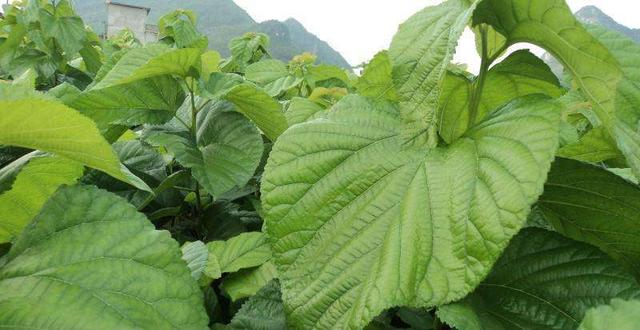
It turns out that this mulberry tree was specially bred for feeding livestock. This mulberry tree is also called "fodder mulberry." Fodder mulberry is different from the mulberry grown for raising silkworms. With mulberry grown for silkworms, the leaves are picked one leaf at a time. But this fodder mulberry is harvested one crop after another. It can be cut four times a year, with a yield of 3000 kg of fresh mulberry leaves per mu, and when dried into dry leaves, the yield per mu is about 800 kg.
The protein content of fodder mulberry is very high, reaching more than 20%. But the protein in mulberry leaves exists in the form of macromolecules, and these substances are difficult for pigs to digest and absorb, so they need to be fermented. After fermentation and decomposition, what becomes smaller is called amino acids, which makes it easier for the pigs to absorb more of it. Its nutritional value is higher, and the effect after the pigs eat it is better.
Pigs that have eaten mulberry leaves will have less subcutaneous fat, and the pork will be very firm and fine in texture. Although the nutritional value of fodder mulberry is very high, pigs are, after all, omnivorous animals. In addition to mulberry leaves, they also need to be reasonably matched with feeds such as soybean meal and bran so that the pigs grow faster.
Using mulberry leaves and tender stems as pig feed, the simplest, most applicable, and lowest-cost method is to cut them fresh and feed them directly. Dry mulberry leaves and tender stems can also be fed directly, and they can also be sun-dried, crushed, and used in combination with other feeds. Generally speaking, adding 25%-30% to pig feed is more suitable. These utilization methods are simple, easy to carry out, and applicable, and every household can do them.