-
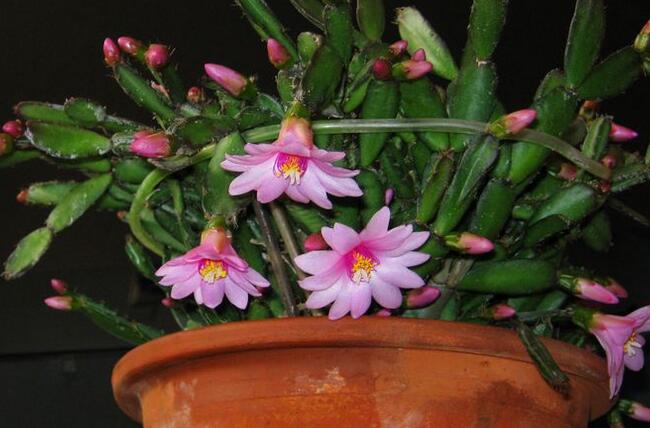
How to grow Rhipsalis rosea? A care guide written for beginner flower lovers
Rhipsalis rosea is native to southern Brazil, where it grows as an epiphyte on tree trunks and forks in subtropical forests. It likes a warm, humid, semi-shaded environment, needs shading and good ventilation in summer; in winter keep the room temperature above 10°C and give it plenty of light. So how do you grow Rhipsalis rosea? Below, the editor brings you the growing methods for Rhipsalis rosea
-
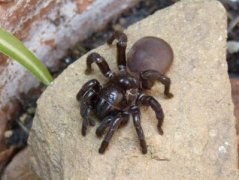
Getting Started with Tarantula Keeping: Essential Tools and Substrate for Beginners
What tools are needed for keeping tarantulas? What substrate is best for tarantulas. Essential tools for keeping 1. Enclosure: You can choose an acrylic box or a plastic enclosure, or even buy a storage box and drill holes in it. Basically, the size just needs to be 1 to 2 times the tarantula's leg span.
-

A Detailed Guide to Planting Crape Myrtle: Even Beginners Can Master It Easily
How to Plant Crape Myrtle
-

Five Essential Elements Every Pig Farming Beginner Must Know
Traditional pig farming emphasizes the four major elements of "epidemic prevention, feed, disinfection, and management," while current pig farming, in addition to the above four major elements, also requires a good health care system, which is the fifth major element. Regarding the arrangement of these major steps, the previous traditional arrangement had major flaws. Based on the actual situation of the current pig farming industry, we need to have a new understanding of the arrangement of pig farming elements.
-
After the Beginning of Autumn, cotton needs even more attention to foliar topdressing
Cotton foliar topdressing, commonly known as leaf spraying fertilizer, means spraying a fertilizer solution onto the stems and leaves of the cotton plant so that the stems and leaves absorb nutrients, thereby nourishing the whole plant (including the root system). It has the advantages of saving fertilizer, taking effect quickly, and not being limited by soil conditions. It is an important yield-increasing measure for quickly supplementing nutrients to the cotton plant in the late growth period, especially after the "Beginning of Autumn." Why is this said? Many studies have proven that nutrients absorbed by the leaves, like nutrients absorbed by the roots, can be transported
-
Detailed Guide to Azalea Cultivation: Beginners Can Easily Learn It Too
Azaleas are one of the representative acid-loving plants. They prefer a cool, humid, well-ventilated environment. The suitable growing temperature is 13°C to 25°C. During the growing period, the relative air humidity should be maintained at 60% to 70%, and as flowering approaches, the relative humidity can reach around 80%. Azaleas love light but cannot tolerate direct strong sunlight. In spring and autumn, shading should be appropriately increased, and in midsummer, shading should reach around 70%, with frequent spraying of water on the leaf surface to increase humidity and lower temperature. In summer, azaleas should be placed outdoors for care to facilitate ventilation. During the growing period, azaleas should be given light but frequent fertilizer, preferably farmyard manure
-
Northeast "Strange Rice" succeeds in trial planting in Heilongjiang and begins to be promoted to farmers within the province
Sitting on a pile of plump rice sacks with a beaming smile, Jin Yushi, a farmer from Xiangfang District, Harbin, is very gratified by the bumper harvest of the 8 mu of "Northeast Strange Rice" he planted this year. This year, low temperatures and scant sunshine caused reduced yields in some rice-producing areas of Heilongjiang Province. However, some rice growers who applied new technologies and new varieties still steadily achieved high yields. Among them, rice farmers Jin Yushi, Zhang Zibin and others obtained a good harvest by accepting the suggestions and guidance of scientific and technical personnel, introducing "Northeast Strange Rice" and applying biological technologies such as "three agents and two fertilizers",
-
A Beginner's Guide to Bonsai Appreciation: Learn to Appreciate the Beauty of Bonsai from Scratch
1. Root spread The primary requirement of an excellent bonsai is the root spread. The root spread can be said to be essential and very important in creating the natural tree form of the entire bonsai. Whether the root spread is beautiful or not has a decisive influence on the artistic value and appreciation value of the work. The beautiful root spread referred to in bonsai is the ground-level roots below the trunk base, extending in all directions, sometimes curving, sometimes hidden in the soil, clinging tightly to the ground surface, so as to keep the potted tree from wobbling in any way. The commonly mentioned "four-sided root spread" is precisely the most beautiful root spread. 2. Trunk base Under normal
-
Three Taboos Beginners in Bonsai Making Must Avoid
1. Never seek out raw material blindly. Many people always want to own a great many bonsai so that they can enjoy them at any time and relieve their "hunger" and "thirst." But when they first begin learning the craft, their appreciation skills are not yet sufficient, so when collecting tree stumps in the wild they grab every stump they see and carry out "carpet-style" digging, which both wastes resources and damages the ecology. When buying at markets they likewise pay no attention to good or bad, superior or inferior, and buy in bulk. The result is mostly crude, substandard pieces that waste time, effort and money. Therefore, although a beginner's eagerness for stumps is understandable, one must have guidance from someone experienced, so as to avoid getting half the result with twice the effort. 2. Growing the stump
-
What are the key points of adult fish farming management after the beginning of autumn
After the beginning of autumn, the water temperature begins to drop, and the fish gradually feed vigorously again. This is also a golden period for fish production and growth, so management should be strengthened. The following key points should be grasped in particular: First, strengthen bait feeding. At this time, feeding should focus on concentrated feed, with emphasis on fattening the bottom-feeding fish. At the same time, attention should be paid to the combination of varieties in concentrated, coarse and roughage feeds to ensure that the fish feed is fully and comprehensively nutritious. Grass carp should be properly fed green grass, black carp should be fed snail feed, and silver carp and bighead carp should also be properly fertilized. After the beginning of autumn, fertilizer should be applied in small amounts and frequently, mainly inorganic fertilizer, and it should also be specifically controlled according to the condition of the fish, the fertility of the water, the weather, and so on.
条件筛选