-
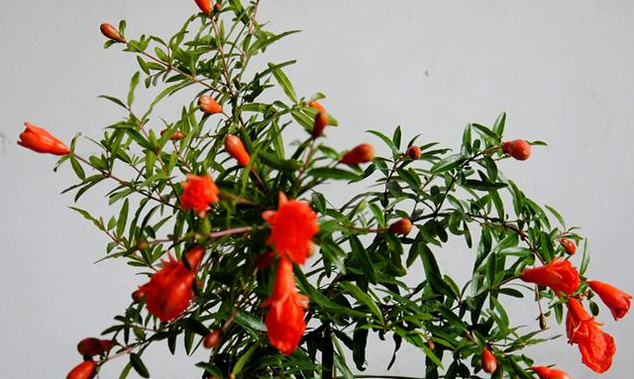
What to do if a potted pomegranate does not bloom or bear fruit, and how much does it cost
When it comes to the pomegranate, many people absolutely love eating it. The pomegranate is just that delicious, and it can also be grown in pots. What should you do if a potted pomegranate does not bloom or bear fruit? How much does a potted pomegranate cost: What to do if a potted pomegranate does not bloom or bear fruit: Actually
-
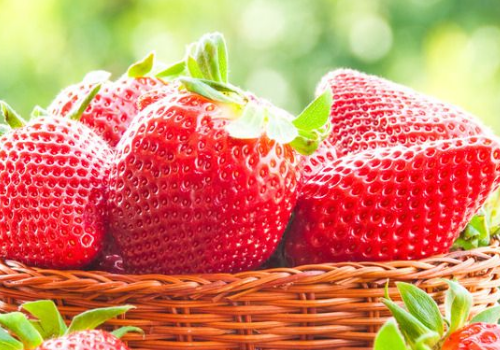
How to Grow Strawberries on a Balcony and When They Bear Fruit
Strawberries are a fruit that many people love to eat, and they are so delicious. So how do you grow strawberries on a balcony? How long does it take for strawberries to bear fruit? How to grow strawberries on a balcony: 1. The environment strawberries need: Strawberries need to be grown in a sunny, warm environment. In addition, the soil must have good drainage.
-
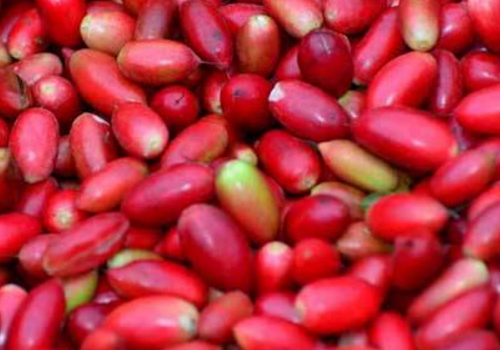
When does the miracle fruit bloom? How many years of growing before it bears fruit
Miracle fruit, a fruit introduced from abroad, is quite prone to failing to bear fruit. When does the miracle fruit bloom? How many years of growing before it bears fruit? When does the miracle fruit bloom: The fruit of the miracle fruit does not ripen uniformly, and the peak fruiting periods are usually March, June and October. The fruit is small and oval, and when ripe it is bright red
-
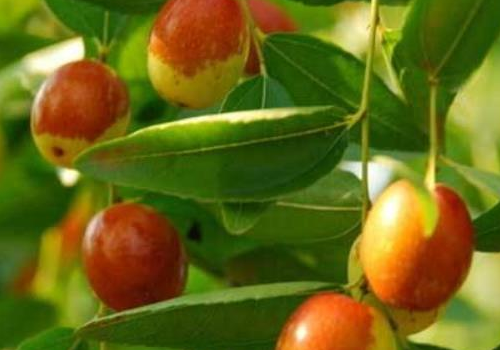
How many years until a jujube tree bears fruit, and how long is its lifespan generally
The jujube tree is something many people know about; it can generally be seen along roadsides, so how many years until a jujube tree bears fruit? And how long is its lifespan: How many years until a jujube tree bears fruit: After a jujube sapling is planted, it generally bears fruit in the second year. As the saying goes, peaches take three years, plums four, pears five, walnuts and persimmons six or seven, and mulberry trees can feed silkworms in seven years
-

Key cultivation techniques for growing peach, apricot and plum that flower and bear fruit on the same tree
To meet people's need for enjoying both flowers and fruit, we used peach trees as rootstock and grafted early-, mid- and late-maturing plums, apricots and peaches onto the same tree. After 4a (years) of trials, complete success was achieved: in the year of grafting a certain crown formed and flowering occurred, in the 2nd year each tree bore 70-80 fruits, the flowering period lasted about 45d (days), the full-bloom period reached about 25d (days), and the fruit-bearing period lasted as long as 6 months. It allows enjoyment of both flowers and fruit, and the fruit can be eaten as well, and it is deeply loved by the general public. The key techniques are summarized below.
-
What are the methods for quickly shaping fruit-bearing bonsai?
At present, as people's living standards rise day by day, fruit tree bonsai that offer the beauty of fruit, form, and trunk are increasingly favored by people. However, because cultivating fruit tree bonsai takes a long time and involves complex techniques, it often daunts people. According to the author's years of practice, it can be cultivated and shaped in just 2-3 years. It is introduced as follows: 1. Selection of containers. The most suitable container is a fine unglazed clay pot, which needs good water permeability and air permeability to ensure the oxygen requirements for root growth and to prevent root rot caused by water accumulation in the container. Generally, round shapes are preferred.
-
How to Choose a Bearded Collie? Detailed Selection Tips
(1) Before buying, you can visit a home that keeps this breed to observe the dog's appearance and the characteristics of each part with your own eyes, so as to avoid choosing a puppy of a different breed. (2) When selecting, first check whether the height and weight of the dog being chosen roughly match the breed standard. Those whose height and weight exceed the standard by too much should not be chosen. If a puppy has been kept for only a short time and has not yet grown to the standard height and weight, you may consider buying it based on the actual situation. (3) This breed's skull should be broad and flat, and the ears should normally
-
Red Pearl Schisandra bears many fruits, with a yield twice as high
Recently, the reporter learned during an interview that Dai Ping, a villager from Fenghuangshan Village, Fengshan Economic Management District, Fengcheng City, has grown high-yield Schisandra. For ordinary varieties, the average fresh fruit yield per plant is usually 2.5-3 kg; while the average fresh fruit yield per plant grown by Dai Ping is 7-8 kg, twice as high as ordinary varieties. This high-yield variety is a Schisandra called "Red Pearl" that Dai Ping purchased from the Institute of Special Animal and Plant Sciences of the Chinese Academy of Agricultural Sciences after consulting several experts. According to Dai Ping, to make Schisandra high quality and high yield, the variety
-
Pruning Methods for Goji Trees in the Late Full-Bearing Stage
In the late full-bearing stage, the tree grows weakly, produces fewer shoots, and has short branches, with a marked decline in yield. At this time, the main task of pruning is to strengthen the tree's vigor. In addition to the general pruning carried out for trees in the full-bearing stage, the weakened scaffold branches or branch groups should also be renewed and rejuvenated. The specific method is to pinch off the growing tips of water sprouts in summer, and after side branches emerge, train them into new branch groups, while cutting back the scaffold branches above the water sprouts. If there are no water sprouts, cut back in spring pruning to the middle of 3-5 year old scaffold branches, or even a bit more severely, to stimulate the latent buds below the cut to sprout water sprouts,
-
Detailed Explanation of Daily Management Points for the Three-Yellow Bearded Chicken
The Three-Yellow Bearded Chicken is a famous local chicken breed in China, characterized by tender meat, fine bones, crisp skin, delicious flavor, and the three-yellow bearded features. The Three-Yellow Bearded Chicken is a famous excellent meat-type local chicken breed in China. It is tolerant of coarse feed and has strong disease resistance. It originated in the Huiyang region of Guangdong Province, with Zijin, Boluo, Longmen, Huidong, Huiyang and other counties (cities) as the main production areas. It is renowned at home and abroad for its tender meat, fine bones, crisp skin, delicious flavor, excellent meat quality, and its unique appearance featuring three yellows (yellow feet, yellow beak, yellow feathers) and long beards on the lower jaw. Its live chicken export volume is large and its economic value is relatively high. In the Hong Kong, China and Macao, China markets
条件筛选