-

Yam Detailed Introduction: Basic Knowledge and Main Characteristics
What is yam? Can someone introduce yam to me? Morphological characteristics: The rhizome is thick, growing straight, and can reach up to 1 m in length. The leaves are alternate, becoming opposite above the middle, rarely in whorls of 3. Bulbils (aerial tubers) often grow in the leaf axils. The leaf blade shape is highly variable, from triangular-ovate to triangular-broadly ovate, often 3-lobed to deeply lobed. The flowers are female...
-

-
What is Brassica napus? A guide to the basics
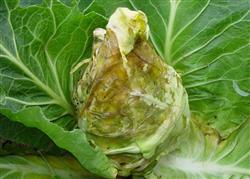
Control of soft rot in cabbage A vegetable grower asked: the base of the cabbage stem is rotting and smells bad, what disease is this and how should it be controlled? This is cabbage soft rot, a bacterial disease. It is prone to occur under conditions of high temperature and high humidity, and this disease generally occurs during the head-forming stage, initially appearing on the outer leaves or at the base of the head...
-

A complete guide to the basics of southern rice black-streaked dwarf disease
Rice seedling rot is the collective term for seed rot, bud rot and dead seedlings that occur at the seedling stage. Rice seedling rot can be divided into two types: physiological and infectious. Physiological seedling rot is mainly caused by low temperatures and mistakes or poor management practices in the seedling nursery; infectious seedling rot is caused by pathogen infection, and the main diseases include rice cottony rot, rice putrefactive disease and rice...
-

What are the basic facts about Ophiopogon japonicus? This article will give you a rundown
Ophiopogon japonicus is a new and superior ground cover plant promoted and planted by China's landscaping departments in recent years. It is enjoyed for its flowers in summer and its greenery in spring, autumn and winter. Its tuberous roots are used in medicine and have the effects of moistening the lungs to stop coughing and benefiting the stomach to promote fluid production. Ophiopogon japonicus is a perennial evergreen herbaceous plant of the Liliaceae family, with spindle-shaped tuberous roots at the ends of the roots. The leaves are velvety, 15 to 20 cm long. The flower stems emerge from the leaf clusters, with racemes in spike form, bisexual flowers, and 6 tepals. The flowers are light purple when they first open and gradually turn white. It can be used as ground cover under trees. The flowering period is July to August; the fruiting period is September to October. Ophiopogon japonicus
-
What are the basic facts about lotus root? A comprehensive guide
Lotus root is divided into three parts: the lotus head, the lotus body, and the rear section. The lotus head is the terminal bud of the swollen rhizome, possessing leaf buds and mixed buds, and is wrapped in a bud sheath to overwinter; the lotus body is the swollen rhizome of the 2nd to 3rd node near the lotus head, and is the main part of the product organ; the rear section is the last, slender rhizome node. According to the utilization value of the product organ, it can be divided into three types: lotus root lotus, seed lotus, and flower lotus. According to adaptability to water depth, it can be divided into shallow-water lotus root and deep-water lotus root. Shallow-water lotus root is suitable for cultivation in shallow ponds or paddy fields with a water depth of 30-50cm, and most are early-maturing varieties,
条件筛选