-

How to Grow Little Ball Rose So It Thrives with Abundant Flowers and Lush Leaves? A Detailed Guide to Planting Methods
A detailed introduction to the planting methods and care techniques for Little Ball Rose, including how to grow Little Ball Rose, soil mix, light and watering, propagation methods, fertilizing and pruning, pest and disease control, and other practical content.
-
A Detailed Guide to Planting Balloon Flowers: Grow Them This Way for Abundant Flowers and Lush Foliage
A detailed introduction to balloon flower planting methods and care techniques, including how to grow balloon flowers, soil preparation, light and watering, propagation methods, fertilizing and pruning, pest and disease control, and other practical content.
-
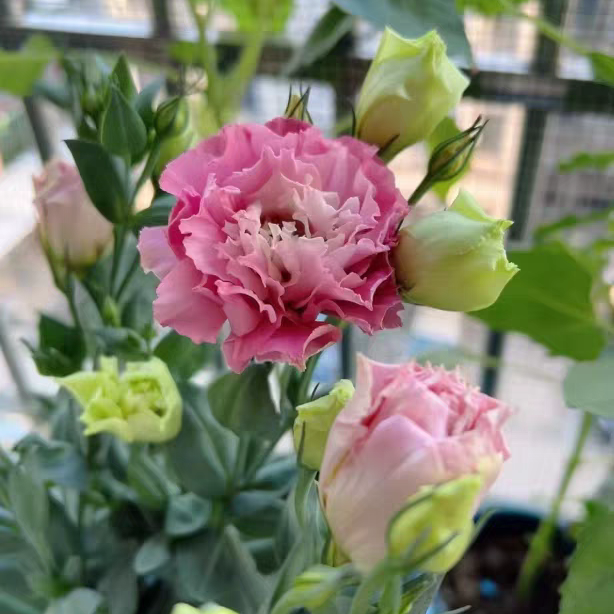
The differences between balloonflower and lisianthus.
Balloonflower and lisianthus, although both have "balloonflower" in their names, are actually two completely different plants. I. Plant classification
-

Cactus balls do bloom: three drought-tolerant, easy-care varieties with stunning flowers
Among the many plants out there, plenty of people wonder whether cactus balls can actually bloom. In fact, not only do they flower, but under the right conditions their blooms can deliver a truly stunning visual effect. Today, let's talk about three cactus ball varieties that are drought-tolerant, easy to grow, and produce breathtaking flowers. The cactus ball, as a
-

Differences Between Chinese Balloon Flower and Lisianthus and Their Propagation Methods
Whether it is the elegance of the Chinese balloon flower or the romance of the lisianthus, they both add endless color and joy to our lives. Let's talk about the Chinese balloon flower. This is truly a treasured flower of our Chinese land! Its blooms are graceful in form, like fairies dancing lightly, with petals that are airy and spreading, revealing a classical charm
-

Is Chinese balloon flower worth buying? With growing methods and precautions
Friends who know a little about traditional Chinese medicine will all recognize the Chinese herb "balloon flower" (Platycodon grandiflorus), whose root has the effects of clearing heat and detoxifying, and resolving phlegm and relieving cough. Today I will take you through the "Chinese balloon flower" with its small purple flowers. Chinese balloon flower is also known as bellflower and bundle flower; its flower shape resembles a five-pointed star, and its petals are pointed. In daily life there are
-
The Latest Planting Techniques and Method Tutorial for Balloon Flower
Balloon flower, also known as baofu flower, lingdang flower, daolaji, etc., is a perennial herb of the genus Platycodon in the Campanulaceae family. Its root is used as medicine and has the functions of dispersing lung qi, dispelling cold, eliminating phlegm, and discharging pus. Balloon flower prefers a mild climate, is cold-tolerant and sun-loving, and is best suited to loam, sandy loam, clay loam, and
-
Latest Analysis of the Flower Language and Legends of the Balloon Flower
Anyone who has seen Inuyasha knows that Kikyo is the name of the female protagonist in it. In everyday life, the balloon flower is an ordinary flower, yet it is also a medicinal herb used in traditional Chinese medicine. Among the people, the flower language and legends of the balloon flower have always been passed down, and a thought-provoking story unfolds just like this.
-
Is Platycodon grandiflorus (balloon flower) toxic? Latest safety assessment
Platycodon grandiflorus can be eaten as a vegetable and also used as medicine. It is a perennial herbaceous plant, and its root can be used as medicine, with effects such as relieving cough and phlegm, dispersing lung qi, and expelling pus. It is produced in most parts of China and has no direct relationship with oranges or the Citrus genus. Below, let us take a look
-
Where are the production areas of Platycodon grandiflorus distributed? A list of the latest main production areas
Platycodon grandiflorus, also known as balloon flower, bellflower, and monkshood flower, is a perennial herbaceous plant mainly produced in China, the Korean Peninsula, Japan and eastern Siberia. Its root can be used as medicine, with effects such as relieving cough and phlegm, ventilating the lungs and draining pus. It is a commonly used medicine in traditional Chinese medicine. Below we
条件筛选