-
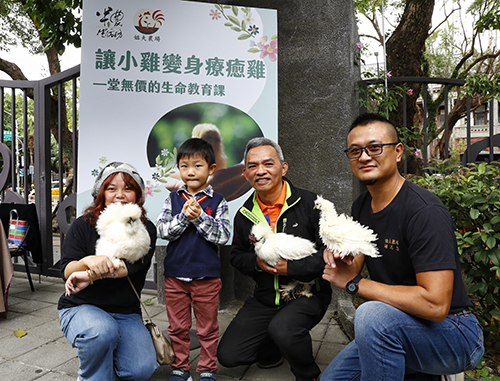
Odor-Free Backyard Chicks on the Balcony: A Returnee Female Young Farmer and a Chicken Farmer Co-Create an Online Life Education Course
(Taiwan TB News/Reporter Chen Mingzong) In response to the arrival of the post-pandemic era, Half-Farmer Living Workshop and Brother-in-Law Farm have jointly developed an online plus hands-on course on raising chicks on the balcony, experiencing the life lesson of caring for life, loving and being loved; you can even raise chickens and hatch eggs odor-free at home...
-

Pig prices fluctuated unpredictably in 2017: how can backyard raisers avoid losing money and being forced out
In 2017 pig prices fell again after holding steady, overall showing a downward trend, but piglet prices ran high, so the risks for professional fattening pig farmers and those doing secondary fattening will increase greatly, and only by sticking to breeding and raising their own stock can they make any partial profit. So what should backyard raisers do to avoid losing money and being forced out?
-
Practical experience sharing on raising roe deer in a backyard
The roe deer, commonly known as the roe deer, is a ruminant of the deer family, and is distributed across the mountainous areas and grasslands of northern China. Roe deer are quick to react, lively in temperament, fond of living in groups, and timid and easily startled. Roe deer have no fat on their bodies and enjoy the reputation of "king of lean meat"; their meat is tender and delicious. Roe deer have a wide range of food sources
-
How can small-scale backyard pig farmers do a good job of disinfection?
How can backyard farmers properly disinfect the farm site and pig pens? (1) After culling diseased pigs and pigs in the same group, the site must be cleaned and disinfected. (2) Before cleaning and disinfecting, protective clothing must be put on. (3) The manure in the pig pens should be completely removed, and pig manure scattered in the yard should be collected and treated by sealed pile fermentation or incineration. (4) When clearing piled poultry manure, water should be sprinkled on it, and manure dust must not be raised. (5) Thoroughly disinfect the site and poultry houses with disinfectants, and used personal protective items such as gloves, plastic bags and masks should be centrally destroyed. (6) Reusable items must be washed twice with detergent to ensure they are clean. (7) Soak the clothes worn during culling in hot water above 70°C for more than 10 minutes, then wash them with soapy water and dry them in the sun. (8) After handling contaminated materials, wash hands and take a shower. The highly pathogenic porcine reproductive and respiratory syndrome virus has poor survival ability in the external environment. As long as disinfection measures are appropriate, commonly used disinfectants in pig production practice, such as aldehydes, chlorine-containing disinfectants, phenols, oxidants, alkalis, etc., can all kill the virus in the environment. Using the following disinfectants for the farm and housing environment gives relatively good disinfection results: (1) Aldehyde disinfectants: including formaldehyde, paraformaldehyde, etc., among which fumigation disinfection with formaldehyde is the most commonly used. For enclosed pens, fumigation disinfection can be carried out by adding 7-21 grams of potassium permanganate per cubic meter and 14-42 milliliters of formalin. During fumigation disinfection, the room temperature generally should not be lower than 15°C, and the relative humidity should be 60%-80%. Potassium permanganate can first be added to the container, then formalin added. Close doors and windows for more than 7 hours to achieve the disinfection purpose, then open doors and windows for ventilation to eliminate residual odor. (2) Chlorine-containing disinfectants: including inorganic chlorine-containing disinfectants and organic chlorine-containing disinfectants. The disinfection effect depends on the content of available chlorine; the higher the content, the stronger the disinfection ability. A 5% bleaching powder solution can be used to spray animal pens, cages, feed troughs and vehicles for disinfection. (3) Alkaline preparations: mainly sodium hydroxide and quicklime, etc. Most sodium hydroxide preparations used for disinfection are crude alkali liquor containing 94% sodium hydroxide. When used, they are often heated and prepared into a 1%-2% aqueous solution, used for disinfection of poultry house floors, walls, exercise yards and contaminated materials polluted by the virus, and also used for disinfection of floors in slaughterhouses, food factories and transport vehicles and vessels. After spraying for 6-12 hours, rinse clean with clear water.
-
Is it good to plant an apricot tree in the backyard? These points you should know
Summary From a feng shui perspective, the backyard is actually not suitable for planting an apricot tree, because the apricot tree is a kind of tree that can "harm people," especially its white flowers, which carry an inauspicious meaning and represent an evil omen. And the well-known saying "the red apricot leans over the wall" also makes it unsuitable for planting in the courtyard
-
What are the main reasons backyard chicken brooding techniques fall short?
Main reasons backyard chicken brooding techniques fall short
-
条件筛选