-

How to Grow Baccaurea Seeds? Detailed Planting Methods and Tips
Baccaurea is an evergreen tree plant of the Baccaurea genus in the Euphorbiaceae family. The fruit is egg-shaped or nearly spherical, containing 1-3 seeds that are flat-oval or nearly round in shape. It can be grown. So, how do you grow Baccaurea seeds? 1. Seed selection:
-
How Many Years Until Baccaurea ramiflora Seedlings Bear Fruit? A Detailed Explanation of the Fruiting Time
The Baccaurea ramiflora tree is an evergreen tree, mainly distributed in the southern regions of our country, and is a tropical rainforest plant. Its fruit tastes delicious and also has medicinal uses. How many years until Baccaurea ramiflora seedlings bear fruit? 1. How many years until Baccaurea ramiflora seedlings bear fruit. After Baccaurea ramiflora seedlings are planted, they can bear fruit in 5-6 years.
-
How many years does it take for a Baccaurea ramiflora to bear fruit after planting, and how much does it cost per jin on the market?
In recent years, in addition to common fruits such as apples, bananas and pears, quite a few artificially cultivated wild fruits have also come into public view on the fruit market, and Baccaurea ramiflora is one of them. So how many years does it take for a Baccaurea ramiflora to bear fruit after planting? How much does it cost per jin on the market? 1. Baccaurea ramiflora
-
How to Propagate Baccaurea ramiflora? The Latest Methods Explained in One Article
Baccaurea ramiflora is an evergreen tree of the subfamily Phyllanthoideae. Its tree form has very beautiful ornamental value and is used by many gardens in China as raw material for landscaping. Its fruit is also a fairly well-known fruit, with a sweet and sour taste, containing rich
-
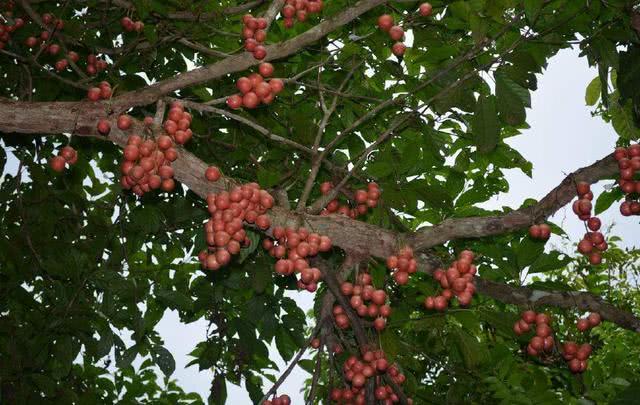
The Baccaurea tree has an elegant form and delicious fruit, making it a multi-purpose tree species for ornamental, edible and medicinal use.
Baccaurea ramiflora is an evergreen tree of the genus Baccaurea in the family Euphorbiaceae. This genus has about 80 species, distributed in India and Malaysia. In China it is mainly distributed in low- and mid-elevation valleys, dense or sparse mountain forests in the south. It is one of the representative species of tropical rainforest plants...
-
-

-
Cultivation Methods and Key Points of Pest and Disease Control for Lycoris aurea
Lycoris aurea, also known as Iron-Colored Arrow and Yellow-Flowered Stone Garlic, is a perennial herbaceous plant of the genus Lycoris in the Amaryllidaceae family. In landscaping, it can be used as understory ground cover flowers, planted in groups in flower borders, or naturally planted among rocks. Because it blooms when it has no leaves, it is best paired with other shade-tolerant herbaceous plants. It has characteristics such as sturdy scapes and long flower stems.
-
What kind of growing environment suits Lycoris aurea and Lycoris radiata?
I. The growing environment of Lycoris aurea. Lycoris aurea does not have high demands on the environment; its adaptability is extremely strong and it has no great requirements for soil, so it can grow on all kinds of land. Lycoris aurea likes sunlight and can tolerate cold, so it can be said to be a very tough plant.
-
How to plant Lycoris aurea? Detailed explanation of planting methods and care techniques
1. Planting time: The highest summer temperature should not exceed 30°C, with an average temperature of 24°C being most suitable. In winter, the average temperature should be above 8°C, with a minimum temperature of 1°C. However, if transplanting, remember not to do it in winter or early spring after the leaves have grown. 2. Planting environment: The cultivation site requires high terrain and good drainage
条件筛选