The Baccaurea tree has an elegant form and delicious fruit, making it a multi-purpose tree species for ornamental, edible and medicinal use.
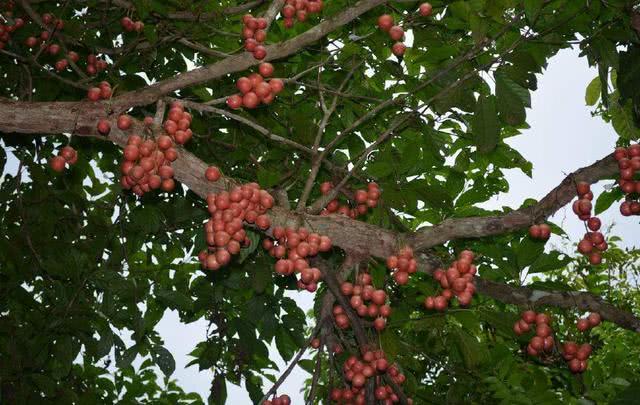
Baccaurea ramiflora
Evergreen tree of the genus Baccaurea in the family Euphorbiaceae. This genus has about 80 species, distributed in India and Malaysia. In China it is mainly distributed in low- and mid-elevation valleys, dense or sparse mountain forests in the south. It is one of the representative species of tropical rainforest plants. The Baccaurea tree has an elegant form and delicious fruit; it is a multi-purpose tree species combining ornamental, edible and medicinal uses, and also a plant with extremely high potential for economic value development.
Morphological characteristics
Evergreen tree, 5-15 m tall, DBH up to 60 cm; bark grayish-brown; branchlets covered with rough stiff hairs, later becoming hairless.
Leaves papery, obovate-oblong, oblanceolate or oblong, 9-15 cm long, 3-8 cm wide, apex shortly acuminate to acute, base cuneate, margin entire or shallowly wavy, green above, yellowish-green beneath, hairless on both surfaces; lateral veins 5-7 per side, flat above, raised beneath; petiole 1-4.5 cm long.
Flowers small, dioecious, apetalous; racemose panicles axillary or cauline, sparsely pubescent, male inflorescences up to 15 cm long, female inflorescences up to 30 cm long; bracts ovate or ovate-lanceolate, 2-4 mm long, brownish-yellow; male flowers: sepals 4-5, oblong, sparsely pubescent outside; stamens 4-8; pistillode cylindrical, deeply 2-cleft; female flowers: sepals 4-6, oblong-lanceolate, pubescent outside; ovary ovoid or globose, densely covered with rusty strigose hairs, style very short or absent, stigma flat, 2-cleft.
Berry-like capsule ovoid or nearly globose, 2-2.5 cm long, 1.5-2 cm in diameter, yellow turning purplish-red, indehiscent, containing 1-3 seeds; seeds flat-elliptic or nearly round, 1-1.3 cm long. Flowering March-April, fruiting June-October.
Distribution
Distributed in Guangdong, Hainan, Guangxi and Yunnan in China, and also in India, Myanmar, Thailand, Vietnam, Laos, Cambodia and Malaysia. It grows in mountain forests at elevations of 100-1300 m. The type specimen was collected in Vietnam.
Growth habits
Baccaurea ramiflora is not very demanding regarding soil and can grow in ordinary soil, but deep, well-drained, slightly acidic soil is preferable; it requires good ventilation, is shade-loving and drought-tolerant, light-loving and shade-tolerant, with relatively strong stress resistance. It is a typical middle- and lower-storey forest species of tropical rainforests.
Propagation methods
Seed propagation: after harvesting fresh fruit, remove the peel and pulp, and set up two treatments - removing the outer seed coat and not removing the outer seed coat - then sow directly in a sand bed or sand tray. The results showed that seeds with the outer seed coat not removed began to germinate after 16 days, with a germination rate of 68. Seeds with the outer seed coat removed began to germinate after 9 days, with a germination rate of 86-94.
Cutting propagation: one- or two-year-old or perennial branches were used, divided into two groups and treated with ABT rooting powder No. 1 and naphthaleneacetic acid at 500, 1000 and 1500 mg/L respectively. After treatment, buds grew first and good callus tissue formed, but roots never developed. Further research is still needed.
Air layering propagation: select vigorous two-year-old branches free of pests and diseases, make a ring cut 2 cm wide and deep to the xylem; after 1 hour, dip the ring cut in 1000 mg/L rooting powder, wrap the outside with toilet paper to retain moisture, then pack the ring cut with thin mud, then sprinkle carbofuran on the outside of the thin mud to prevent termites and other pests, wrap tightly with plastic film and tie both ends securely; after 35 days callus tissue forms, roots develop after 40 days, and after 60 days it can be cut off and transplanted.
Cultivation status
In China, Baccaurea ramiflora is mostly distributed in the wild in low- and mid-elevation valleys and mountain forests, and has not yet been cultivated artificially on a large scale. In Guangxi, Guangdong, Hainan and Yunnan it is generally grown sporadically in courtyards for ornamental use, fresh eating and medicinal use. The Dongxing area has a history of more than 50 years of cultivating Baccaurea ramiflora, and 2 superior clones have been selected, but there has been no large-scale promotion or commercial cultivation. The Xinglong area of Wanning City, Hainan Province, also has a history of more than 10 years of planting superior clones of Baccaurea ramiflora, but only a few households interplant a small amount with areca palm. In the Xishuangbanna area of Yunnan Province, planting is mainly of seedling trees by Dai people and farm workers, and mostly sporadic cultivation at field edges and around houses.
Related research
Seedling growth: fruits were collected in August 1990, the seeds were taken out, washed and raised as seedlings. After the first true leaf emerged, they were moved into nutrient bags. By April 25 of the following year, the seedlings had grown for 8 months; the plant heights of white-bark Baccaurea ramiflora and purple-bark Baccaurea ramiflora were 15.3 and 17.9 cm respectively, and the diameters were 0.39 and 0.44 cm respectively. Judging from the average monthly growth of seedlings, the variation in height growth of the two types of Baccaurea ramiflora was relatively small, and the diameter growth rates were similar.
Young tree growth: planted in June 1991; after 10 years (December 2001), observations showed that the tree heights of the two types, white-bark Baccaurea ramiflora and purple-bark Baccaurea ramiflora, were 6.15 and 6.75 cm respectively, and the diameters were 7.94 and 9.19 cm respectively. The differences between the two types in height growth and diameter increase were relatively small. In the 3rd year after planting, tree height and stem diameter grew relatively fast, and after 10 years the growth increment had basically stabilized.
Flowering and fruiting: Baccaurea ramiflora begins to flower and fruit after 6 years of planting; buds appear from early February to late February, flowering begins in early March, full bloom occurs from early March to early April, young fruit from early April to mid-July, and fruit ripens in mid-to-late July.
Existing problems
Lack of superior varieties
At present, the planting materials used in production in Hainan and Guangxi are all superior clones selected by fruit growers themselves, and still cannot meet the conditions for variety recognition by relevant departments, while the planting materials in Yunnan are wild seedling trees. The lack of recognition of superior varieties and their promotion and application is one of the key factors restricting the development of Baccaurea ramiflora production.
Low level of cultivation management
Due to the lack of scientific and technological support, there is a serious lack of supporting technologies related to Baccaurea ramiflora production, and the management of Baccaurea ramiflora planted in various places is generally extensive. The phenomenon of "on-year and off-year" is relatively common, mainly because in high-yield years tree management was not carried out in time, causing the plants to consume a large amount of nutrients, while timely and effective material supplementation was lacking, ultimately resulting in low yield the following year; pest and disease control is lacking, especially leaf-eating pests, which often reduce photosynthetic area and cause yield reduction.
Storage and transport measures are difficult to match
Although the fruit of Baccaurea ramiflora is sweet and sour and has a good flavor, after harvest it can only be stored at room temperature for 2-3 days, with poor storability and a short shelf life. Practice shows that under low-temperature conditions of 8-12 degrees C, the storage period of Baccaurea ramiflora fruit can be extended to 10-15 days, but using low-temperature storage and transport significantly increases commodity costs, making economic benefits difficult to guarantee. At present, Baccaurea ramiflora fruit is mostly sold locally, market consumption capacity is limited, and prices lack market-based regulation, which is also a major restrictive factor affecting the development of the Baccaurea ramiflora planting industry.
Potential value has not yet been fully developed
The Baccaurea tree is elegant in form and beautiful in fruit shape. It is a subtropical tree species combining tree viewing, flower viewing and fruit viewing, with relatively high ornamental value, but there are no reports of research and development on it so far. Although the medicinal properties of Baccaurea ramiflora have long been recorded, they are mostly limited to folk use and lack commercial exploration and development.
Value
The Baccaurea tree is very elegant in form and evergreen throughout the four seasons, making it very suitable as a material for garden landscaping.
The ornamental effect of group planting is also very good.
Fruit trees generally bear their fruit in the upper part of the plant, mainly because their flowers always bloom at the tips of branches. However, in the multi-layered and multi-species forest structure of tropical rainforests, the upper part of the forest has dense branches and leaves, making it difficult for plants to carry out pollination activities in this space, while the lower layer is relatively open and suitable for insect activity, causing some tropical plants to flower and fruit on roots and stems.
Although Baccaurea ramiflora is not a Ficus plant, it is also a cauliflorous plant that flowers and fruits on the stem. When it fruits, the trunk and old branches are hung with abundant fruit clusters.
Its fruit is about the size of a plum, red or orange-yellow when ripe, with 3 segments inside the skin wrapping the seeds in the flesh; the flesh is sweet and sour and tasty, and it is a wild fruit of some renown.
As a landscape plant, Baccaurea ramiflora is cultivated in courtyards or on lawns in scenic areas. The fruit grows on the middle and lower parts of the plant, close to the ground, giving it an affinity with people and easily arousing visitors' curiosity for viewing, making it suitable for photography and painting.