Centaurea cyanus cultivation methods and care tips
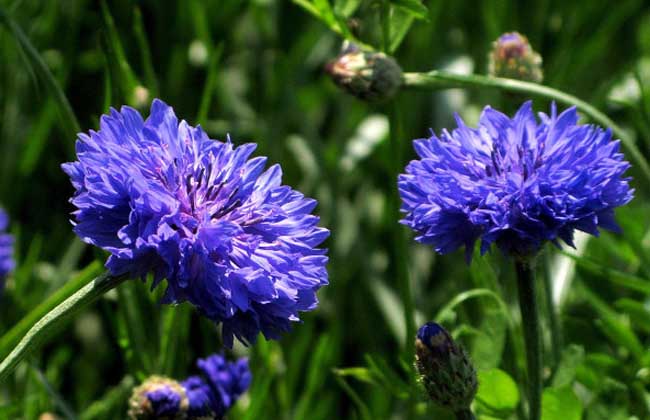
Centaurea cyanus, also known as blue cornflower, emerald blue, and lettuce-leaf aster, is an annual or biennial herbaceous plant of the genus Centaurea in the Asteraceae family. It has extremely high ornamental value. Tall varieties have upright plants and long pedicels, making them suitable for cut flowers and also as border planting material. Dwarf varieties grow only 20 cm tall and can be used for flower beds, edging lawns, or potted flower displays. Let us take a look at the cultivation methods for Centaurea cyanus below!
Growth habits of Centaurea cyanus
The homeland of Centaurea cyanus is Europe. It was originally a wild flower, and after many years of cultivation by people, its "wild" nature diminished, the flowers became larger, and the colors became more varied, with purple, blue, light red, and white varieties, among which purple and blue are the most prized. In Germany, it can be found everywhere on hillsides, in fields, by watersides, along roadsides, and around houses, and is regarded as the national flower of Germany. It has strong adaptability and likes sufficient sunlight, and does not tolerate shade and moisture; it must be planted in a sunny place with good drainage, otherwise it often dies from shade and dampness. It is relatively cold-tolerant, prefers cool conditions, and dislikes heat. It prefers fertile, loose, and well-drained sandy soil.
Propagation methods for Centaurea cyanus
Centaurea cyanus seeds are generally sown in spring and autumn, with autumn being better, roughly from mid-August to mid-to-late September. When planting, sow the seeds in an open-air seedbed, press lightly, then water an appropriate amount, cover with grass, and they can germinate quickly; after sprouting, remove the grass on top. When the leaves grow to 6-7, they can be transplanted. They can be planted out in November, after which apply a 1:5 diluted decomposed human manure urine once every 10 days or half a month until February to March of the following year. Potted sowing requires fertile and loose soil; it is recommended to add mixed soil such as leaf mold.
Cultivation methods for Centaurea cyanus
1. Planting out: After the Centaurea cyanus seedlings survive planting out, pinch the tips once to encourage more branching and more flowers. Conversely, if there is too much branching, some lateral buds should be removed when necessary to obtain larger flowers. Because of its taproot nature, direct sowing is preferable; sow in autumn in open ground, cover for overwintering, and it will bloom in early summer. If overwintered in a cold frame, it can bloom in late spring; spring sowing should be done as early as possible. It blooms in June.
2. Potting soil: The potting soil for Centaurea cyanus should be loose and fertile. It is advisable to choose fertile sandy soil with good looseness and drainage. It is best to use garden soil, leaf mold, plant ash, etc., mixed together as the growing medium. It is best to maintain good ventilation to facilitate drainage. If the soil is too clayey, 30-40% snakewood chips or perlite can be mixed into the soil.
3. Temperature: Centaurea cyanus has strong cold tolerance. In East China it can be planted in open ground, while in North China it needs covering to overwinter. When cultivated for cut flowers, greenhouses are usually used to force flowering: sow in August, plant out in September, and flowers can be produced in February of the following year. In warm areas within the passes, it is generally sown in August to September, covered in open ground for overwintering, planted out in early spring of the second year, and blooms in early summer. In Northeast China, it is sown in spring in greenhouses.
4. Watering: Centaurea cyanus does not tolerate shade and dampness. Generally, watering once a day is enough to meet its needs. However, during hot and dry summer weather, water once in the morning and once in the evening to meet its moisture needs and cool the soil at the same time. Be careful not to water too much and cause accumulation in the pot.
5. Fertilizing: Centaurea cyanus likes abundant fertilizer and needs fertile soil. During the growing period, apply a diluted solution of the three major nutrients once a month. If the leaves are too lush, reduce the proportion of nitrogen fertilizer, and before flowering it is advisable to apply more phosphorus and potassium fertilizer so as to obtain relatively large flowers with beautiful colors.
Precautions for Centaurea cyanus
1. Centaurea cyanus is robust, relatively cold-tolerant, likes sunlight, and requires fertile, loose, and well-drained soil.
2. Before planting out Centaurea cyanus, apply base fertilizer. Because Centaurea cyanus has a taproot system and does not tolerate transplanting, a relatively large soil ball must be kept when transplanting.
3. The stems of Centaurea cyanus are slender and weak and prone to lodging, so the planting distance should not be too dense. Prevent excessive growth density and poor ventilation, which can cause lodging.
4. During the seedling stage, Centaurea cyanus needs topping and pinching to encourage more branching and dwarf the plant, so that it flowers more and has a graceful plant shape.
5. During the growth period of Centaurea cyanus, apply liquid fertilizer once every 20 days, but note that too much nitrogen fertilizer should not be applied; appropriately apply more phosphorus and potassium fertilizer to make the stems firm and the flower colors vivid.
6. Water Centaurea cyanus in moderation, not too much. During the rainy season, be sure to drain promptly, otherwise it will cause root rot and affect the normal growth of the plant.