-

Explanation of the Artificial Cultivation Models for Edible Fungi Under Forest Canopies and Related Issues
Discussion of the Artificial Cultivation Models for Edible Fungi Under Forest Canopies and Related Issues
-
Key Points for Introducing Edible Fungi and Technical Measures for Frost Protection and Cold Resistance in Artificial Cultivation
Technical Measures for Frost Protection and Cold Resistance in Artificial Edible Fungus Cultivation
-
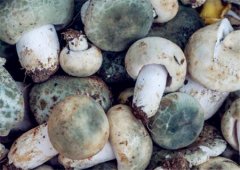
Can Green-headed Russula Be Eaten Raw? A Detailed Guide to Cultivation Methods and Prices
The green-headed russula, like the double ninth mushroom, is a purely wild mushroom species, because the growth of the green-headed russula depends on the nutrients of termite nests and has extremely high environmental requirements, so it cannot yet be cultivated individually. The green-headed russula grows in summer and autumn each year, and generally yields more after rain. Green head
-
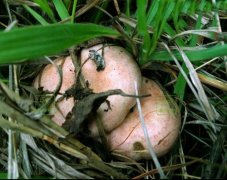
What month does the verdigris mushroom grow, can it be cultivated artificially, and what is its nutritional value
The verdigris mushroom is a fungus that grows in pine or coniferous forests, broadleaf forests or mixed woodlands. Can the verdigris mushroom be artificially cultivated? At present, artificial cultivation is not yet possible. So in which month can the verdigris mushroom be harvested? Each year, summer and autumn are its growing season, and the yield is abundant after rain
-
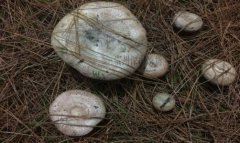
Can Lactarius deliciosus be cultivated artificially? Detailed explanation of cultivation techniques and growing conditions
Can Lactarius deliciosus be cultivated artificially? Yes, it is possible, but this mushroom is very difficult to cultivate because its spawn is relatively hard to collect. It also has many different names, such as pine mushroom, Chongyang mushroom, etc. So how do you go about artificial cultivation? Let's take a look together at artificial
-
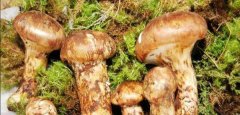
Can matsutake be cultivated artificially? Differences from wild ones and how much per jin
Can matsutake be cultivated artificially? Yes, it can, but artificially cultivated matsutake is very different from wild matsutake, so let's take a look at their differences below. Also, the prices of fresh and dried matsutake. Differences between artificial matsutake and wild matsutake: the color is different; wild matsutake
-
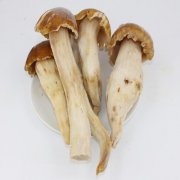
Can chicken-of-the-woods mushroom (Termitomyces) be cultivated artificially? With cultivation techniques and price per jin
Can Termitomyces be cultivated artificially? Yes, it can be cultivated artificially. Termitomyces is an edible mushroom with relatively high nutritional value. So how much does it cost per jin? Let's take a look below at how to cultivate Termitomyces artificially. Step one, culture substrate formula
-
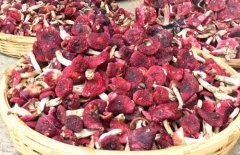
Differences Between Russula vinosa and the Emetic Russula, and Cultivation Techniques
Russula vinosa and the emetic russula are very similar, so how do you tell them apart? Can Russula vinosa be cultivated artificially? What are the cultivation techniques for Russula vinosa? Let's take a look. Russula vinosa and others have fruiting bodies that are generally medium-sized; the emetic russula, also known as the vomiting russula, looks similar to
-
Artificial inoculation methods for log cultivation of shiitake mushrooms
When the logs are sufficiently dried, inoculation should be carried out promptly. The inoculation time for shiitake is generally above 5°C and below 20°C, with a monthly average temperature of around 10°C being ideal. In the region south of the Yangtze River in China, inoculation of shiitake logs takes place from late February to early April, with the optimal period being from February to mid-March. There are sawdust spawn, stick spawn and wedge spawn; most log cultivation in China uses sawdust spawn. High-quality pure shiitake spawn has white and dense mycelium, the distinctive aroma of shiitake, aerial hyphae capable of climbing the container wall, and no discoloration or obvious inhibition lines in the substrate. Some
-
Detailed Explanation of Artificial Cultivation Techniques for the Tea Tree Mushroom
In nature, animals, plants, and fungi stand as three pillars, complementing one another. If plants are nature's producers, animals are nature's consumers, and fungi are nature's decomposers. It is precisely the coordination among these three that maintains the ecological balance of nature. Among these three, our understanding of animals and plants has reached over 80%, while our understanding of fungi has only reached 5%, which shows that our knowledge of fungi has only just begun. Experts predict that edible fungi, as a future supplementary food, are a way to
条件筛选