-
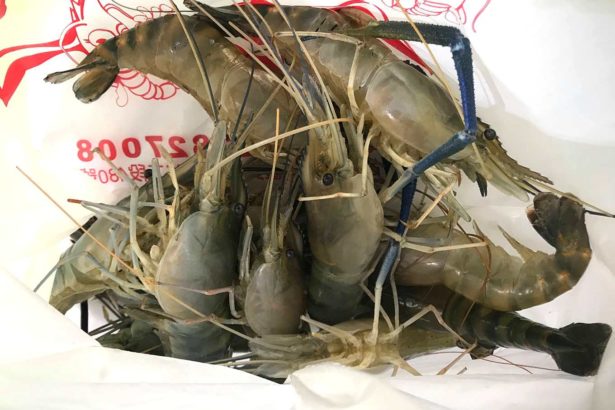
A third of shrimp from shrimp-fishing ponds exceed antibiotic limits, with the highest at 15 times the limit; doctors say this raises allergy risk
Shrimp at 3 out of 10 shrimp-fishing ponds exceed antibiotic limits, with the highest at 15 times the limit; doctors: increased allergy risk
-

Why the breeding industry must not abuse antibiotics
The breeding industry must not abuse antibiotics
-
-
The problem of antibiotic abuse in farming and livestock breeding must be taken seriously
Be alert to antibiotic abuse in farming and livestock breeding
-
What type of pollution do antibiotic residues in fresh milk belong to, and how long do they remain in the body?
How can antibiotic drug residues in fresh milk be completely eliminated?
-
Which manufacturer's conventional antibiotics work well in practice?
Which manufacturer's conventional antibiotics do you all find work better in practice?
-
Antibiotics Should Be Used with Caution for Autumn and Winter Diarrhea in Piglets
Use Antibiotics with Caution for Piglet Diarrhea in Autumn and Winter
-
Are there national standards for antibiotic content in feed?
Are there national standards for antibiotic content in feed?
-
Detailed Explanation of Lincosamide Antibiotics Commonly Used in Geese
Source and properties: This product is extracted from the culture broth of a Streptomyces variant. It is a white crystalline powder, alkaline, bitter in taste, and soluble in water. Its hydrochloride salt is easily soluble in water. Both the aqueous solution and the dry product are relatively stable. Actions and uses: The antibacterial action of this product is similar to that of erythromycin, but its antibacterial spectrum is narrower than that of erythromycin. It has strong antibacterial action against most Gram-positive bacteria such as Staphylococcus aureus, Streptococcus, Clostridium welchii, etc., and also has a significant effect on mycoplasma. Clinically, it is mainly used to treat mycoplasmosis, necrotic enteritis, staphylococcosis
-
What polypeptide antibiotic drugs are commonly used in geese
Colistin source and properties: This product is extracted from the culture fluid of Bacillus polymyxa. It has five components, A, B, C, D, and E, belongs to the polypeptide compounds, and has similar basic chemical structures. In clinical application, colistin B and E are mainly used. Its sulfate is a white or light yellow powder, easily soluble in water. Action and uses: This product has a strong antibacterial effect on Gram-negative bacteria, inhibiting bacteria at low concentrations and killing bacteria at high concentrations. It is mainly highly effective against Escherichia coli, Salmonella, Shigella, Pseudomonas aeruginosa, Pasteurella, and others
条件筛选